
Diving at Hidden Lake Sink (United States)
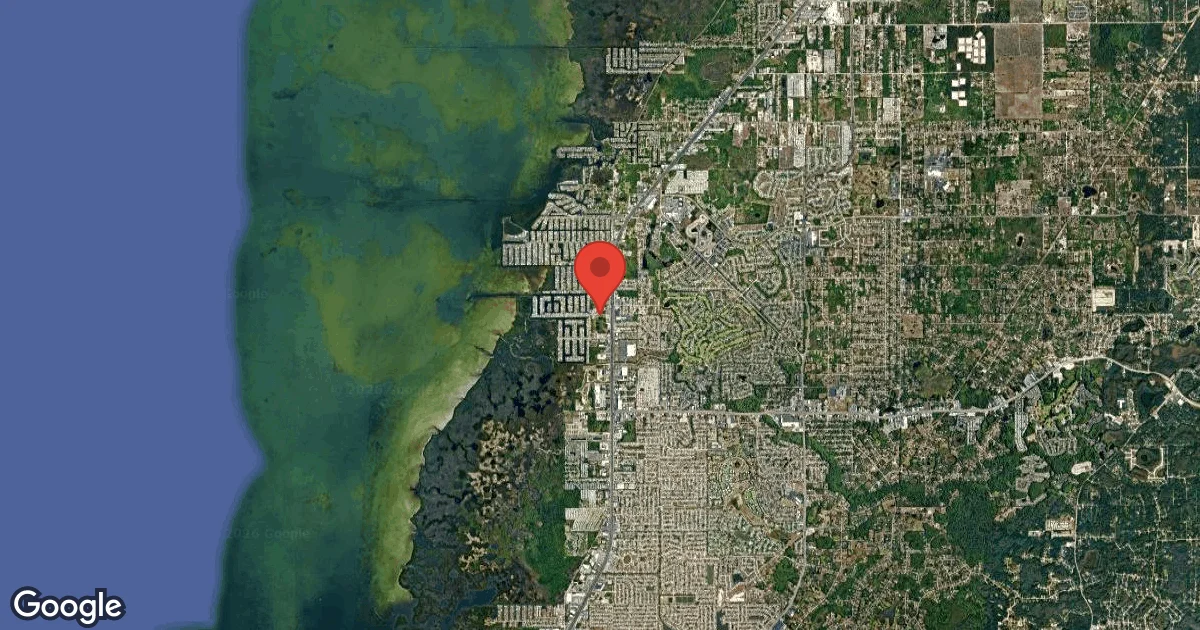
Hidden Lake Sink offers a distinct freshwater dive experience, contrasting with Florida's more common coastal reefs. Tucked away in Tarpon Springs, FL, this submerged sinkhole provides a geological exploration beneath a residential landscape. Despite an unassuming exterior, it plunges divers into a dark, tannic environment where natural formations dictate the dive. Access often involves local permission, adding to its secluded feel, making it a unique inland adventure for those seeking geological complexity.
As evening covers Hidden Lake Sink, the local air temperature is measured at 24.5°C. The current wave height at the surface is recorded at 0.5 m. These late-day readings characterize the surface conditions for the night.
Dive Site Location & Key Facts
Dive Site Overview
Hidden Lake Sink reveals an hourglass-shaped profile, plunging into a dark, tannic water column. This natural formation measures approximately 30 m (100 ft) across at its rim.
Divers often begin by descending a line into the main basin. An undercut, starting around 4.5-6 m (15-20 ft) down, defines the upper structure. This feature forms a distinct ceiling, leading deeper into the chamber.
Diving continues to a silt floor at a maximum depth of 24 m (80 ft). Navigating the sinkhole requires attention to buoyancy, especially when exploring beneath the undercut or near a narrow solution tube.
A small, 0.3 m (1 ft) wide vertical passage, encountered during previous explorations, adds a complex element to the sink's topography. Its unique structure, defined by distinct geological features and varying visibility, ensures a dive focused on exploration rather than expansive vistas. Environment here is raw and demands respect for its natural state.
Conditions are Good
Optimal conditions expected
Current conditions near Hidden Lake Sink show 25° air, 31° sea temperature, 0.3 m waves, and 24 km/h wind. Forecast data is refreshed regularly to ensure accuracy.
Best Time to Dive
Visibility at Hidden Lake Sink is primarily influenced by the surrounding wooded buffer and its dark tannic water, making it less dependent on coastal weather patterns. Consistent dive scores from January to June, rating as 'Good' (8) suggest stable conditions throughout these months. Air temperatures are comfortable, ranging from 14°C (57°F) in January to 27°C (81°F) by June, minimizing surface discomfort. Rainfall averages are generally lower in late spring, such as 1.39 mm in April, which could reduce runoff into the lake, potentially leading to slightly clearer conditions, though the tannic nature will persist. From May through September, expect the warmest air temperatures, peaking around 28°C (82°F) in August, making pre and post-dive activities more pleasant. Given the sink's sheltered nature, external factors like wind and wave height have minimal impact on underwater conditions, allowing for reliable dive planning year-round.
PEAK SEASON SCORE
Scores combine air & water temps, waves, wind & rainfall for overall conditions.
BEST MONTHS TO DIVE
Monthly records compiled from satellite and marine observation nodes over the last 3 years. Data provided by Open-Meteo and MET Norway.
Dive Experience & Conditions
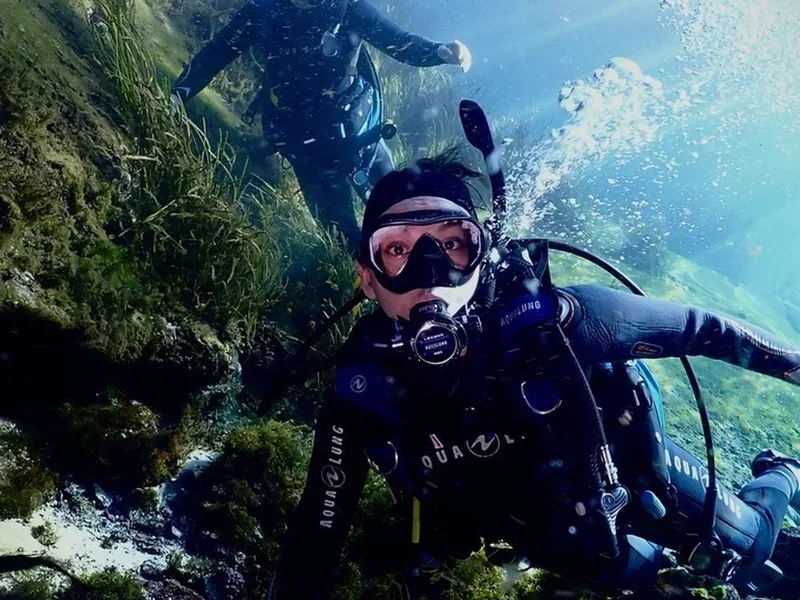
A dive in Hidden Lake Sink is defined by its enclosed, dark environment. Conditions are characterized by dark, tannic water, which naturally limits visibility. This requires divers to maintain close proximity to their dive buddy and use effective lighting. Descending into the sink, divers will notice the distinct undercut around 4.5-6 m (15-20 ft) down, creating an overhead environment. While strong currents are not consistently reported within the main basin, any water movement is typically subtle, mainly influenced by groundwater flow or surface agitation from entry. A silt floor at the maximum depth of 24 m (80 ft) demands careful finning to avoid disturbing sediment and further reducing visibility. This colder, calmer dive compared to open water shifts focus to navigation and maintaining awareness in confined spaces.
Dive Difficulty & Safety Guidelines
Primary hazards at Hidden Lake Sink include the overhead environment of the undercut and a narrow 0.3 m (1 ft) wide solution tube, demanding appropriate training and experience. Divers exploring beyond the open water section or into overhead zones should hold a cavern or full cave certification. Silting is a significant concern on the bottom at 24 m (80 ft); precise buoyancy control is essential to prevent disturbing the fine sediment and compromising visibility for everyone.
Obtaining access requires prior permission, often from private property owners near the lake, so contacting them beforehand is necessary. Always dive with a reliable buddy and carry redundant light sources. Dark tannic water makes adequate illumination crucial for safe navigation.
Recommended Equipment
- Dive Computer
This gear list is based on verified equipment signals for Hidden Lake Sink, United States. Always confirm final gear choices with your dive operator, guide, or liveaboard.
Recommended Dive Suit
Divers visiting Hidden Lake Sink today can expect water conditions around 31°C (87°F). Surface air temperatures are resting at 25°C (76°F).
Dive skin or rash guard is generally considered suitable for water temperatures like this. Consider warmer surface protection (like a boat coat) due to brisk winds.
Forecast trends indicate similar diving conditions over the next few days.
Due to technical issues with our weather providers, live updates are temporarily delayed. The data above reflects the conditions at the time of the last successful fetch.
Emergency & Medical Support
Essential information to help you plan your dive trip to Hidden Lake Sink.

Hyperbaric chambers are a critical part of dive safety infrastructure. Availability varies significantly by region, and not all dive areas have immediate access.
Before diving, it's recommended to:
- confirm nearest medical facilities
- check emergency procedures with local dive operators
- ensure dive insurance covers evacuation if required
Divers Alert Network
Diving emergency assistance available through DAN World.
+1-919-684-9111- 24/7 emergency hotline
- Diving medical assistance
- Evacuation coordination
Emergency contacts are provided for reference. Always verify local emergency services before diving.
Marine Life at Hidden Lake Sink
The underwater landscape of Hidden Lake Sink, characterized by its dark tannic water and silt floor, contributes to a distinct aquatic environment. Specific reports of diverse marine life within Hidden Lake Sink are limited in available data.
While inland Florida sinks can host various freshwater species, this particular site's deep, confined nature, coupled with its dark water, often shifts a diver's focus towards the geological formations rather than abundant faunal displays. Observations primarily involve the structural elements of the sink itself, with any aquatic inhabitants being an occasional discovery rather than a predictable highlight.
Dive Sites Near Hidden Lake Sink
View all dive sites in United StatesDiscover more underwater gems in this area.
Dive Centers Near Hidden Lake Sink
Today: 11:00 - 19:00
Nearest Airports
Nearest airports to help plan travel to this dive area.
Search Flights
Check available flights and routes on Expedia, using the nearby airports listed in this section.
Search Flights on Expedia
Plan Your Stay
Looking for a place to stay for your dive trip? Explore hotels, stays, and vacation rentals for dive groups near Tarpon Springs.
Dive Navigator may earn a commission from these links at no extra cost to you.
Frequently Asked Questions
What defines the geological structure of Hidden Lake Sink?
The sink is hourglass-shaped, approximately 30 m (100 ft) across at the rim, with an undercut starting at 4.5-6 m (15-20 ft) down. A narrow 0.3 m (1 ft) wide solution tube also characterizes part of its structure.
What is the maximum depth reachable at Hidden Lake Sink?
Divers typically reach a silt floor at a maximum depth of 24 m (80 ft). This depth allows for recreational and technical diving within its limits.
What are the typical visibility conditions?
Visibility is generally limited due to the dark, tannic water of the lake. Divers should be prepared for lower visibility, requiring good lighting and close buddy contact.
What level of dive certification is recommended for Hidden Lake Sink?
Due to the presence of an undercut and potential overhead environments, advanced open water certification is a minimum. Cavern or full cave certification is recommended for exploring beyond the main basin or into any overhead sections.
How can divers access Hidden Lake Sink?
Access often requires permission from private property owners, particularly the house at 1103 Ashland Ave, as entry is typically from a dock. It's crucial to arrange access beforehand.
Are there strong currents within the sinkhole?
Significant currents are not consistently reported for Hidden Lake Sink. Any water movement is typically subtle, often related to groundwater flow or minor surface disturbances.
What marine life can be observed in Hidden Lake Sink?
Reports of diverse marine life specifically within Hidden Lake Sink are limited. The dive is primarily focused on geological exploration, with any aquatic inhabitants being an incidental discovery.
Planning to dive Hidden Lake Sink?
Send one inquiry and receive offers directly from the best verified local dive operators.
Conditions are Good
Optimal conditions expected
Current conditions near Hidden Lake Sink show 25° air, 31° sea temperature, 0.3 m waves, and 24 km/h wind. Forecast data is refreshed regularly to ensure accuracy.