
Diving at Broadhurst Corals (Australia)
A long boat ride out from Denham, Broadhurst Corals is a chain of three shallow reef formations spread across Shark Bay, dropping to only about 5 m / 16 ft. The real reason to make the trip is what grazes here: dugongs move through the seagrass alongside the coral. Rated beginner and open-water friendly, it's shallow, bright, and quietly special.
Tonight's objective overview for Broadhurst Corals shows an air temperature of 19°C. The measured surface conditions include wave heights around 0.5 m. This environmental data is logged for the close of the day.
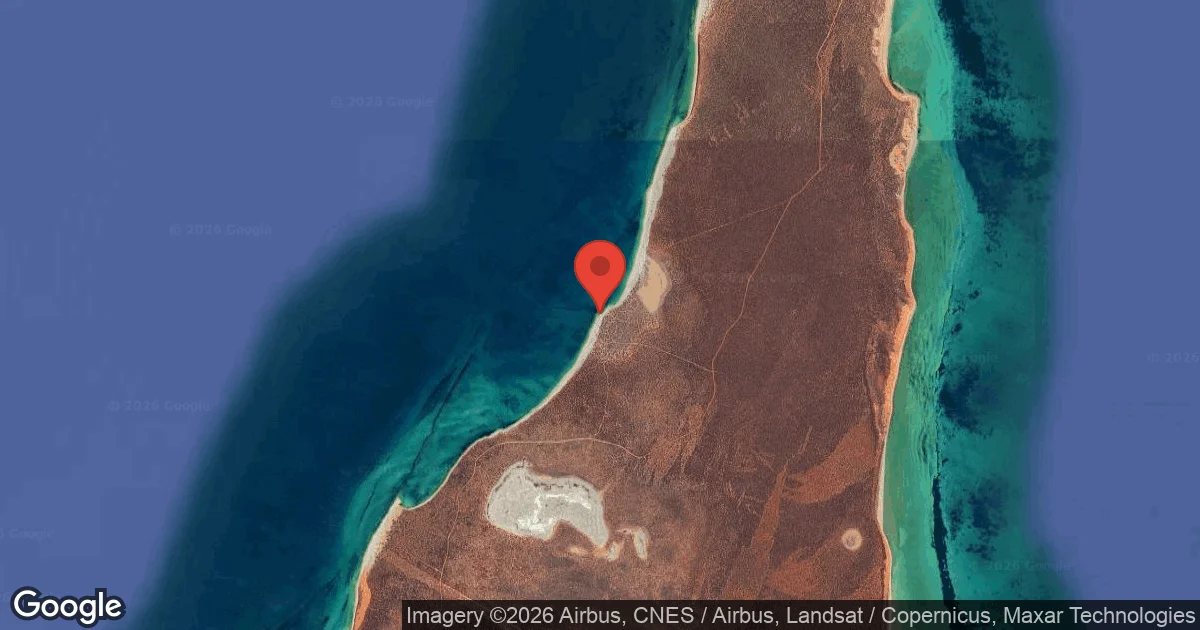
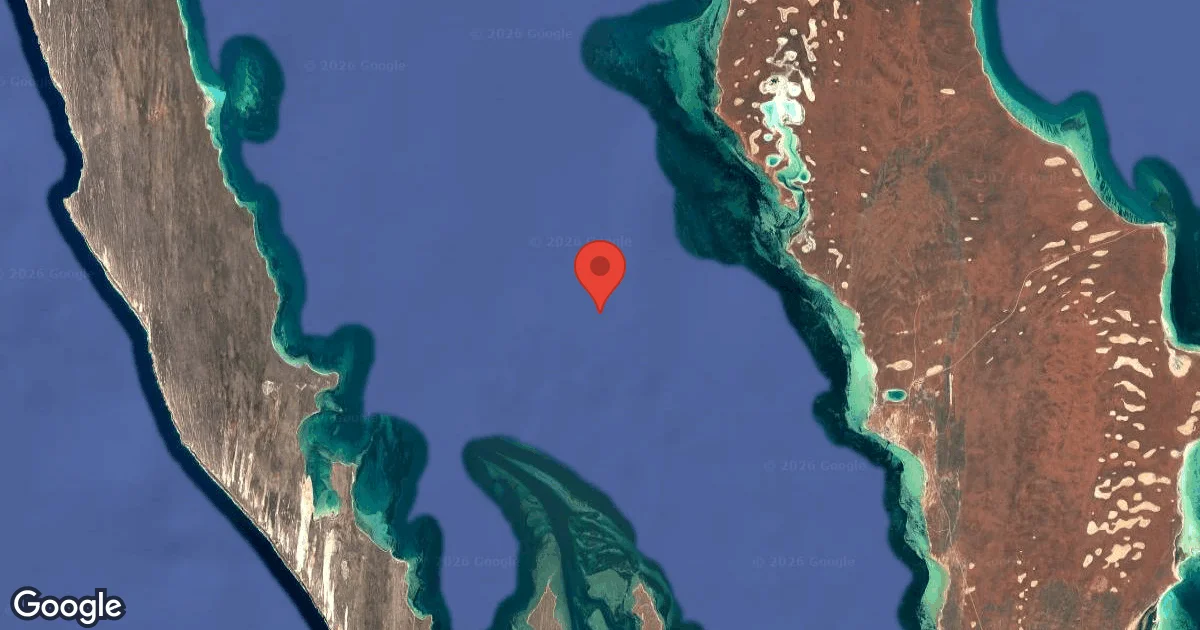
Dive Site Location & Key Facts
Dive Site Overview
Three reef formations run east to west across a wide stretch of Shark Bay, roughly 8 km by 2 km of sandy bottom, seagrass beds and rock, with hard and soft corals, staghorn and brain coral growing across the shallow ground. Maximum depth is only about 5 m / 16 ft, averaging closer to 3 m / 10 ft.
What sets it apart isn't the depth, it's the company. This is dugong country, and the seagrass that fills the gaps between the coral is exactly what they come to graze. Glimpse one moving across the grass and the long boat ride out justifies itself in a heartbeat. The diving itself is gentle: shallow, well-lit, easy to drift across, with the coral chain giving you structure to follow. It's a 40 km run from Denham by boat, so this is a planned trip, not a quick dip, and worth treating as one. The chain runs for kilometres, so each dive only samples a section of it, and the mix of coral, grass and sand keeps the scenery changing as you drift. Anchor on the sand patches and pick a stretch of reef to work slowly.
Conditions are Good
Optimal conditions expected
Current conditions near Broadhurst Corals show 19° air, 21° sea temperature, 0.7 m waves, and 35 km/h wind. Forecast data is refreshed regularly to ensure accuracy.
Best Time to Dive
Scores here are strong almost year-round and peak in autumn, around April through June. The water is warm too, topping out near 26°C / 79°F in late summer and cooling to about 19°C / 66°F in winter, so light protection works for most of the year. Wind is the local factor, blowing fresh and reaching 35 km/h / 22 mph in summer, but this part of the gulf stays remarkably flat, with wave height down around 0.6–1.0 m / 2–3 ft. Given the long boat ride out, you want a calm-wind day for the trip itself as much as for the dive, so keep an eye on the forecast and pick your moment. Given how far out it sits, a calm-wind forecast makes the long boat ride as easy as the dive itself.
PEAK SEASON SCORE
Scores combine air & water temps, waves, wind & rainfall for overall conditions.
BEST MONTHS TO DIVE
Monthly records compiled from satellite and marine observation nodes over the last 3 years. Data provided by Open-Meteo and MET Norway.
Dive Experience & Conditions
This is shallow, slow, look-around diving. With a maximum near 5 m / 16 ft, you've got endless bottom time, so the pace is yours: drift the coral chain, scan the seagrass, and stay alert for movement. That movement might be a dugong, which changes the whole tenor of the dive, so keep your distance and let it behave naturally instead of chasing the shot. The bottom is sand and grass between the coral formations, easy to cross and easy to navigate. The gulf keeps the surface calm despite the wind, and the boat anchors on the sand patches. Beyond watching for the bigger animals, there's little to manage, which is part of why it's such a relaxed dive. Keep your eyes on the grass between the coral, since that's where a dugong is most likely to show.
Dive Difficulty & Safety Guidelines
Shallow water and easy terrain make this a forgiving, beginner-friendly dive, and the structured notes confirm an open-water level. Swell exposure is listed, but the gulf's low wave height keeps that gentle in practice, so a calm-wind day is mostly about the long boat ride being comfortable.
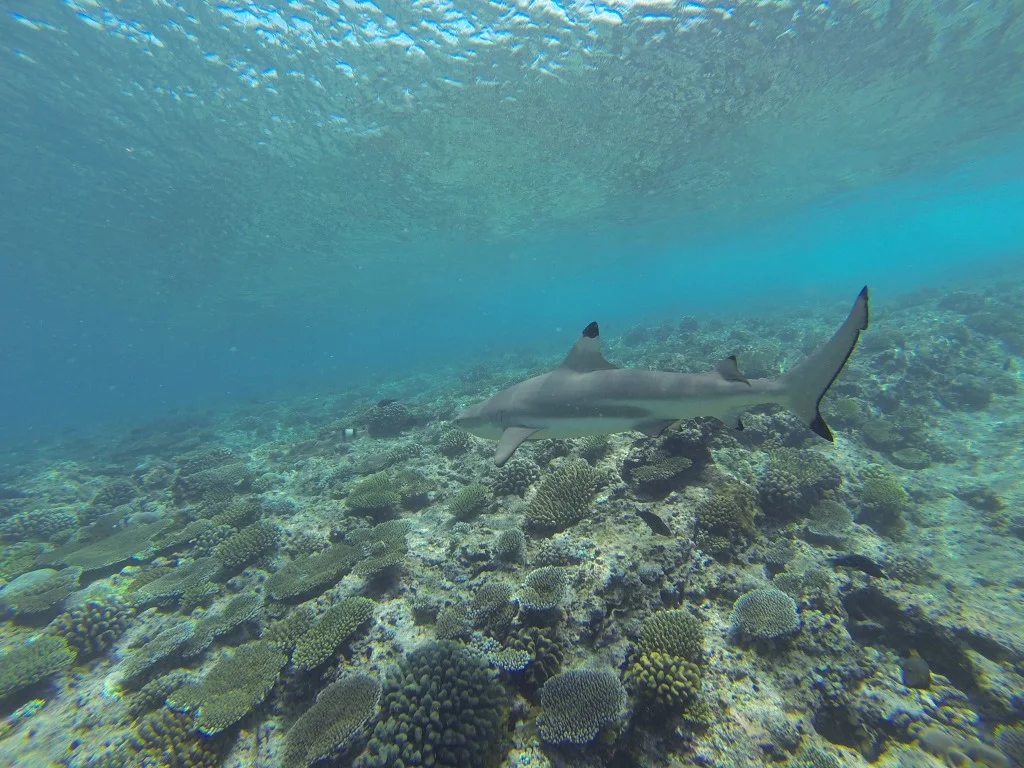
Sharks are noted in the area, which is normal for Shark Bay and not a reason for alarm; standard respectful behaviour applies. If you're lucky enough to share the water with a dugong, give it room and don't pursue it. With the coral so shallow, steady buoyancy protects both the reef and your fins. None of this raises the dive beyond an easy shallow drift in settled conditions.
Recommended Equipment
- Dive Computer
- DSMB
This gear list is based on verified equipment signals for Broadhurst Corals, Australia. Always confirm final gear choices with your dive operator, guide, or liveaboard.
Recommended Dive Suit
According to recent observations, water temperatures near Broadhurst Corals are approximately 21°C (70°F). Surface air temperatures are resting at 19°C (66°F).
Current forecasts indicate relatively stable conditions for the coming days.
Most divers exploring waters at this temperature rely on 3-5mm wetsuit for effective insulation. A hood or vest is suggested for sensitive divers due to surface winds. Surface intervals may feel cooler. Water temperature is only one factor influencing overall comfort during a dive.
Emergency & Medical Support
Essential information to help you plan your dive trip to Broadhurst Corals.

Hyperbaric chambers are a critical part of dive safety infrastructure. Availability varies significantly by region, and not all dive areas have immediate access.
Before diving, it's recommended to:
- confirm nearest medical facilities
- check emergency procedures with local dive operators
- ensure dive insurance covers evacuation if required
Divers Alert Network
Diving emergency assistance available through DAN World.
+1-919-684-9111- 24/7 emergency hotline
- Diving medical assistance
- Evacuation coordination
Emergency contacts are provided for reference. Always verify local emergency services before diving.
Marine Life at Broadhurst Corals
The standout is genuine: dugongs are recorded here, grazing the seagrass that runs between the reefs, and sharks are logged on the reef too. Sharing the water with a dugong is the kind of moment that stays with you long after the dive.
The coral itself is a draw, with staghorn and brain coral confirmed across the chain. Other accounts mention dolphins, sea snakes and tropical reef fish, though those sit in the less-certain column. Go for the habitat and the chance of a dugong, and treat the rest as welcome extras.

Dive Sites Near Broadhurst Corals
View all dive sites in AustraliaDiscover more underwater gems in this area.
Dive Centers Near Broadhurst Corals
No Dive Centers Local To Broadhurst Corals
Are you a dive center visiting this location? Get listed to reach divers.
Nearest Airports
Nearest airports to help plan travel to this dive area.
Search Flights
Check available flights and routes on Expedia, using the nearby airports listed in this section.
Search Flights on ExpediaFrequently Asked Questions
Will I really see dugongs?
Dugongs are recorded grazing the seagrass here, which is the site's signature draw. Sightings are never guaranteed, but this is genuine dugong habitat, so keep your distance and let them be.
How do I get there?
By boat, on a roughly 40 km run from Denham, so it's a planned trip best done on a calm-wind day.
How deep is it?
Very shallow, about 5 m / 16 ft at most and closer to 3 m / 10 ft on average, which makes it easy and snorkel-friendly.
Are sharks a concern?
Sharks are noted in the area, which is normal for Shark Bay. Standard respectful behaviour is all that's needed.
When are conditions best?
Scores peak in autumn around April to June, and the gulf stays flat year-round, so the main thing is picking a calm-wind day for the long trip out.
Planning to dive Broadhurst Corals?
Send one inquiry and receive offers directly from the best verified local dive operators.
Conditions are Good
Optimal conditions expected
Current conditions near Broadhurst Corals show 19° air, 21° sea temperature, 0.7 m waves, and 35 km/h wind. Forecast data is refreshed regularly to ensure accuracy.