
Diving at Latitude Rock (Australia)
Divers comfortable with boat entries and navigating isolated reef structures will find Latitude Rock a rewarding destination. This site accommodates PADI Open Water divers capable of managing variable conditions and offers excellent opportunities for refining buoyancy control. It's an engaging location for those seeking diverse marine life within a distinctive underwater topography.
Evening condition tracking at Latitude Rock features an air temperature of 13.5°C. We have recorded wave heights measuring 2 m during this period. These figures outline the environmental parameters currently present.
Dive Site Location & Key Facts
Dive Site Overview
A distinctive isolated reef system, Latitude Rock presents a compelling underwater topography for divers, significantly contrasting with surrounding shallower coastal areas. This natural rock feature forms an 8 m (26 ft) tall sloped reef, oriented east-west, rising dramatically from a sandy seabed.
Its structure facilitates two primary dive approaches: a northern wall and a southern slope. Dive teams frequently assess current swell and choose one side for a calmer experience, or conditions permitting, they might complete a loop around the entire formation. The southern aspect unfolds as a flat rock slope, descending from a 10 m (33 ft) ridge down to an 18 m (59 ft) sandy bottom.
This area is characterized by dense kelp beds and a network of intersecting gutters, which provide shelter and a foraging ground for smaller marine life. On the opposing northern side, the reef ridge transitions into a more dramatic vertical wall.
Here, divers encounter numerous intricate gutters, deep overhangs, and scattered bombora rocks, which break up the face and create a complex, textured environment. These varied formations—from the sheltered slopes to the exposed walls—create distinct microhabitats, collectively supporting a rich biodiversity.
Maximum reported depth here reaches 16 m (52 ft), making the site accessible while offering ample vertical exploration.
Conditions are Good
07:00 - 14:00
Optimal conditions expected
Current conditions near Latitude Rock show 13° air, 20° sea temperature, 1.1 m waves, and 20 km/h wind. Forecast data is refreshed regularly to ensure accuracy.
Best Time to Dive
Planning a dive at Latitude Rock is often best from June through March, aligning with the highest dive scores for these months. During this period, conditions are generally more favorable, offering a 'Good' rating consistently across the system data. While water temperatures vary from 16 to 24°C (61 to 75°F), the air temperatures are milder in summer, peaking around 23-23.5°C (73-74°F) in January and February. Cooler winter months from June to August see air temperatures around 13-14.5°C (55-58°F), though dive scores remain high. Wave heights average between 1.2 m (3.9 ft) and 1.6 m (5.2 ft) throughout the year, with winds typically ranging from 16-21 km/h (10-13 mph). Rain is usually minimal, especially from June to December, contributing to clearer periods.
PEAK SEASON SCORE
Scores combine air & water temps, waves, wind & rainfall for overall conditions.
BEST MONTHS TO DIVE
Monthly records compiled from satellite and marine observation nodes over the last 3 years. Data provided by Open-Meteo and MET Norway.
Dive Experience & Conditions
Conditions at Latitude Rock offer a dynamic underwater experience, varying significantly. Visibility fluctuates from 7 to 25 m (23 to 82 ft), influenced by recent weather and ocean currents. Water temperatures typically range between 16 and 24°C (61 and 75°F), making appropriate thermal protection essential. Daily swell conditions largely dictate whether the north or south side of the reef provides a calmer dive. The southern slope, characterized by its flat rock and kelp beds, often attracts schooling silvers. Contrasting this, the northern wall, textured with shellfish and brown algae, exhibits abundant sponge growth in vibrant pinks, oranges, and yellows, sheltering considerable macro life. Maximum depth here reaches 16 m (52 ft), accessible for a range of certified divers.
Dive Difficulty & Safety Guidelines
Approaching Latitude Rock requires divers to maintain awareness of their surroundings and show respect for marine inhabitants. It's crucial to be mindful of other boats operating in the area, particularly near the surface. When encountering Grey Nurse Sharks, especially in the gutters, divers should maintain a respectful distance, ideally staying at 5 m (16 ft) along the slope in the kelp beds to avoid disturbance.
Useful training for this site includes the PADI Open Water Diver certification and the PADI Peak Performance Buoyancy specialty, which helps in navigating the reef's varied topography without impacting the delicate ecosystem.
Recommended Equipment
- Dive Computer
- DSMB
This gear list is based on verified equipment signals for Latitude Rock, Australia. Always confirm final gear choices with your dive operator, guide, or liveaboard.
Recommended Dive Suit
Temperatures look set to gradually increase over the next several days. A warming trend is expected over the next few days.
Divers who prefer a balanced level of warmth often select 5mm wetsuit in water temperatures like this. Consider warmer surface protection (like a boat coat) due to brisk winds. A thermal robe or jacket is recommended between dives.
At Latitude Rock, the water is currently sitting around 20°C (68°F). Surface air temperatures are resting at 13°C (56°F).
Due to technical issues with our weather providers, data hasn't been fetched for over 48 hours. The data above reflects the conditions at the time of the last successful fetch.
Emergency & Medical Support
Essential information to help you plan your dive trip to Latitude Rock.

Hyperbaric chambers are a critical part of dive safety infrastructure. Availability varies significantly by region, and not all dive areas have immediate access.
Before diving, it's recommended to:
- confirm nearest medical facilities
- check emergency procedures with local dive operators
- ensure dive insurance covers evacuation if required
Divers Alert Network
Diving emergency assistance available through DAN World.
+1-919-684-9111- 24/7 emergency hotline
- Diving medical assistance
- Evacuation coordination
Emergency contacts are provided for reference. Always verify local emergency services before diving.
Marine Life at Latitude Rock
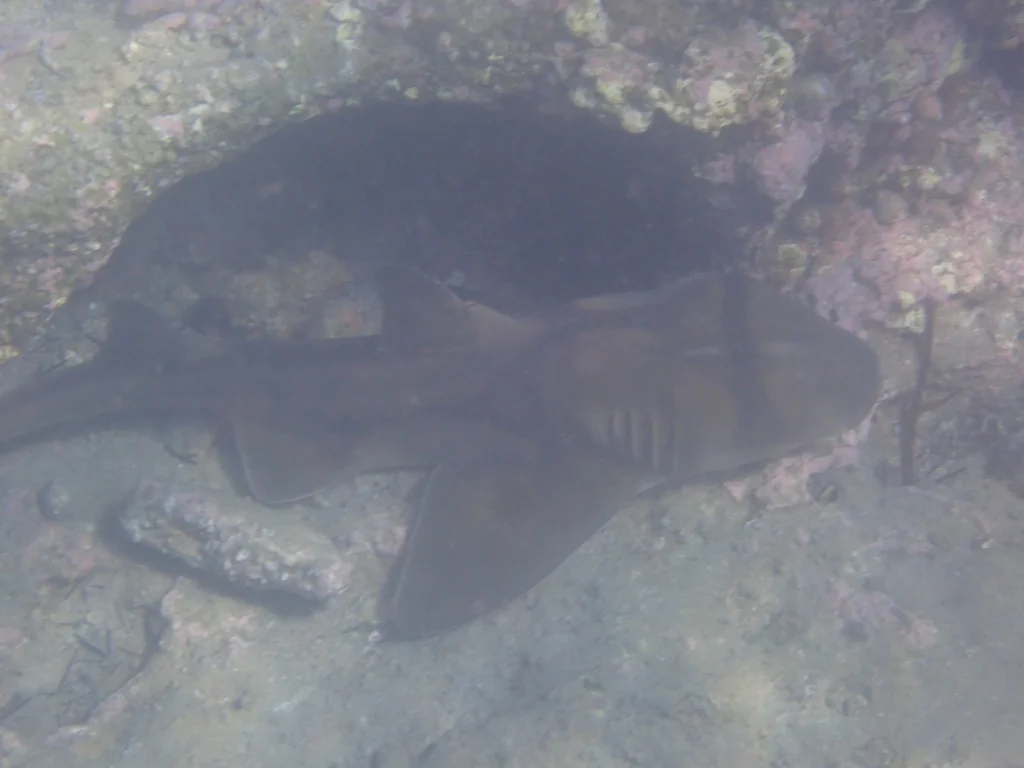
Latitude Rock's marine ecosystem proves particularly vibrant, offering rich encounters for divers keen on sharks and macro subjects. Its gutters frequently shelter Grey Nurse Sharks, Port Jackson Sharks, and Wobbegong Sharks.
Sightings of fiddler rays, shovelnose rays, and turtles also occur. Eastern blue grouper often follow divers around the reef.
Extensive sponge growth on the northern wall supports a variety of macro life, while southern kelp beds host red morwong and schooling silvers.

Dive Centers Near Latitude Rock
No Dive Centers Local To Latitude Rock
Are you a dive center visiting this location? Get listed to reach divers.
Nearest Airports
Nearest airports to help plan travel to this dive area.
Search Flights
Check available flights and routes on Expedia, using the nearby airports listed in this section.
Search Flights on ExpediaFrequently Asked Questions
What is the typical depth range for diving at Latitude Rock?
Diving at Latitude Rock typically ranges from 10 m (33 ft) to a maximum reported depth of 16 m (52 ft). The reef itself slopes from 18 m (59 ft) on the sandy bottom up to a ridge at 10 m (33 ft).
What marine life can I expect to see at Latitude Rock?
Divers often encounter Grey Nurse Sharks, Port Jackson Sharks, and Wobbegong Sharks, particularly within the reef's gutters. You might also spot Eastern blue grouper, fiddler rays, shovelnose rays, and various macro life sheltering in the sponges and kelp beds.
Is Latitude Rock suitable for beginner divers?
Latitude Rock is suitable for certified PADI Open Water divers who are comfortable with boat entries and navigating varying conditions. Divers with strong buoyancy control will find it particularly rewarding, especially when exploring the delicate reef structures.
What are the usual water temperatures at Latitude Rock?
Water temperatures at Latitude Rock typically range between 16 and 24°C (61 and 75°F). Divers should consider appropriate thermal protection based on the season and their personal comfort.
How clear is the water at this dive site?
Visibility at Latitude Rock can vary considerably, ranging from 7 to 25 m (23 to 82 ft). Conditions depend heavily on recent weather patterns and oceanic currents.
Are there any specific safety guidelines to follow when diving at Latitude Rock?
Yes, divers should always be aware of other boat traffic in the area. When observing Grey Nurse Sharks, it's important to maintain a respectful distance, staying approximately 5 m (16 ft) away along the gutter slopes to avoid disturbing them. Good buoyancy control is always beneficial for protecting the reef.
Planning to dive Latitude Rock?
Send one inquiry and receive offers directly from the best verified local dive operators.
Conditions are Good
07:00 - 14:00
Optimal conditions expected
Current conditions near Latitude Rock show 13° air, 20° sea temperature, 1.1 m waves, and 20 km/h wind. Forecast data is refreshed regularly to ensure accuracy.