
Diving at Hornbæk Plantage (Denmark)
Hornbæk Plantage presents a dynamic shore diving experience along Denmark's northern coast of Zealand. Mild currents are typically encountered, making it suitable for newer divers navigating its unique blend of shallow rock reefs and expansive sandy stretches. The site is a well-regarded entry for those exploring Danish coastal waters, providing a gentle introduction to its underwater topography. Conditions here generally remain calm, allowing for pleasant exploration.
As evening covers Hornbæk Plantage, the local air temperature is measured at 14°C. The current wave height at the surface is recorded at 0.7 m. These late-day readings characterize the surface conditions for the night.
Dive Site Location & Key Facts
Dive Site Overview
Hornbæk Plantage stands out as a favored dive location due to its accessible shore entry and diverse underwater terrain, offering a distinctive experience among Danish coastal sites. Positioned on Zealand's northern coast, it draws divers seeking to explore its varied topography.
From the water's edge, approximately 100 meters offshore, a prominent stone reef begins to unfold. Beyond the initial stone reef, a captivating mix of sandy bottoms and rocky formations establishes a rich tapestry of underwater landscapes. Upon descending, dense, life-supporting rock reefs emerge, gradually yielding to expansive sandy patches.
While the primary reef structures are often encountered in shallower areas, the site's profile permits exploration down to a maximum depth of 18 m (59 ft) in specific sections, comfortably within standard recreational diving limits. Within deeper zones, opportunities arise to observe the interplay between hard substrates and soft sand.
Distinct geological features, combined with the way light interacts with these formations, make both day and night dives particularly rewarding. Navigating the mixed rocky and sandy bottom offers constant discovery for macro life enthusiasts.
Conditions are Good
Optimal conditions expected
Current conditions near Hornbæk Plantage show 14° air, 16° sea temperature, 0.8 m waves, and 30 km/h wind. Forecast data is refreshed regularly to ensure accuracy.
Best Time to Dive
Planning a dive at Hornbæk Plantage is often most rewarding during the summer and early autumn months, specifically June through September. During this period, divers typically experience the most favorable conditions, enhancing overall enjoyment. Air temperatures in July and August average around 17°C (63°F), while September still holds a pleasant 15°C (59°F), creating comfortable surface conditions for preparations. Rain incidence is lower in these months, generally ranging from 2.15 to 3.59 mm per day. Wave heights also tend to be less significant compared to the colder seasons, usually below 0.6 meters (2.0 ft), contributing to calmer entry and exit conditions from the beach. This combination of warmer air, reduced rainfall, and milder sea states ensures a consistently good to excellent dive experience.
PEAK SEASON SCORE
Scores combine air & water temps, waves, wind & rainfall for overall conditions.
BEST MONTHS TO DIVE
Monthly records compiled from satellite and marine observation nodes over the last 3 years. Data provided by Open-Meteo and MET Norway.
Dive Experience & Conditions
Beginning the dive at Hornbæk Plantage involves a straightforward shore entry, often via a forest path. Divers should be mindful of larger rocks near the immediate entry area, delaying fin donning until past these initial sections. Descending, water temperature varies considerably; summer months see temperatures between 15–20°C (59–68°F), while winter can bring colder readings of 4–8°C (39–46°F). Visibility typically ranges from 5.0 to 15.0 meters (16 to 49 ft), depending on recent weather and water movement. The initial shallow exploration reveals the first rock reef, about 100 meters from the shoreline, before gradually deepening towards the site's maximum recreational depth. Gentle currents are generally the norm, making navigation relatively unchallenging across the mixed sandy and rocky bottom.
Dive Difficulty & Safety Guidelines
For divers approaching Hornbæk Plantage, understanding the site's characteristics in the context of skill level is key to a safe outing. This location is well-suited for beginners due to its generally mild currents and accessible shore entry. While considered beginner-friendly, divers should still hold an Open Water Diver certification or equivalent to safely explore to its maximum depths.
A crucial guideline involves exercising caution during entry: large rocks are present close to shore, so waiting to put on fins until beyond the immediate entry area is advised. Constant awareness of surroundings, especially during ascents and descents over the mixed rocky and sandy terrain, helps prevent accidental contact with the substrate.
Recommended Equipment
- Dive Computer
- Hard-soled Dive Boots
This gear list is based on verified equipment signals for Hornbæk Plantage, Denmark. Always confirm final gear choices with your dive operator, guide, or liveaboard.
Recommended Dive Suit
Current diving conditions indicate water temperatures around 16°C (61°F) at Hornbæk Plantage. Surface air temperatures are resting at 14°C (57°F).
Forecast models indicate that diving conditions should remain largely unchanged.
In water temperatures like these, 5-7mm wetsuit typically offers sufficient warmth for most recreational dives. A hood or vest is suggested for sensitive divers due to surface winds. A thermal robe or jacket is recommended between dives. Some divers naturally tolerate cooler water better than others. Surface intervals may feel noticeably cooler once you exit the water.
Emergency & Medical Support
Essential information to help you plan your dive trip to Hornbæk Plantage.

Hyperbaric chambers are a critical part of dive safety infrastructure. Availability varies significantly by region, and not all dive areas have immediate access.
Before diving, it's recommended to:
- confirm nearest medical facilities
- check emergency procedures with local dive operators
- ensure dive insurance covers evacuation if required
Divers Alert Network
Diving emergency assistance available through DAN Europe.
+39 0642115685- 24/7 emergency hotline
- Diving medical assistance
- Evacuation coordination
Emergency contacts are provided for reference. Always verify local emergency services before diving.
Closest Listed Hyperbaric Chambers
Showing listed hyperbaric chamber facilities within 200 km of this dive site.
Distances are approximate straight-line distances and may not reflect emergency travel time.
Rigshospitalet Copenhagen University Hospital
24/7 ListedICU CapableCopenhagen, Denmark•Approx. 44 km straight-line
Rigshospitalet Copenhagen University Hospital
24/7 ListedICU CapableInformation is provided for reference and planning purposes only. Dive Navigator does not verify operational status, staffing, availability, or quality of care at listed facilities. In an emergency, contact local emergency services, DAN, your dive operator, or the chamber directly. Do not travel to a facility without calling ahead.
Aarhus University Hospital, Noerrebrogade
24/7 ListedICU CapableAarhus C, Denmark•Approx. 142 km straight-line
Aarhus University Hospital, Noerrebrogade
24/7 ListedICU CapableInformation is provided for reference and planning purposes only. Dive Navigator does not verify operational status, staffing, availability, or quality of care at listed facilities. In an emergency, contact local emergency services, DAN, your dive operator, or the chamber directly. Do not travel to a facility without calling ahead.
Information is provided for reference and planning purposes only. Dive Navigator does not verify operational status, staffing, availability, or quality of care at listed facilities. In an emergency, contact local emergency services, DAN, your dive operator, or the chamber directly. Do not travel to a facility without calling ahead.
Marine Life at Hornbæk Plantage
Descending into Hornbæk Plantage, the first things to captivate a diver are the vibrant rock reefs, densely covered with sugar kelp and bladderwrack. These thriving algal communities form the backbone of the local ecosystem.
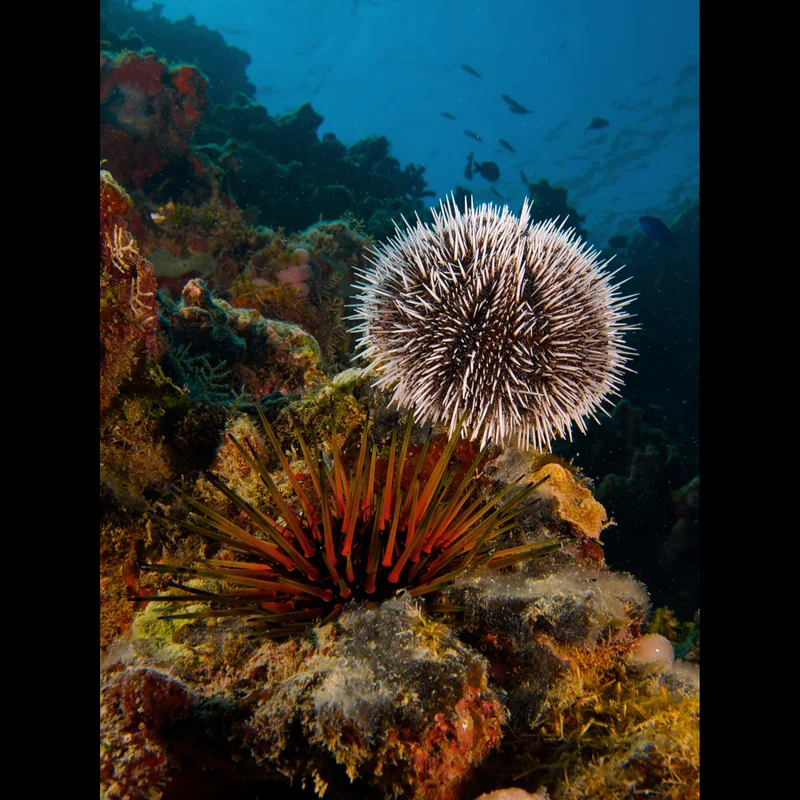
Within this kelp forest and among the mixed sandy and rocky bottom, divers frequently spot crabs scurrying across the substrate. Starfish cling to rocky outcrops, while sea urchins remain settled in crevices.
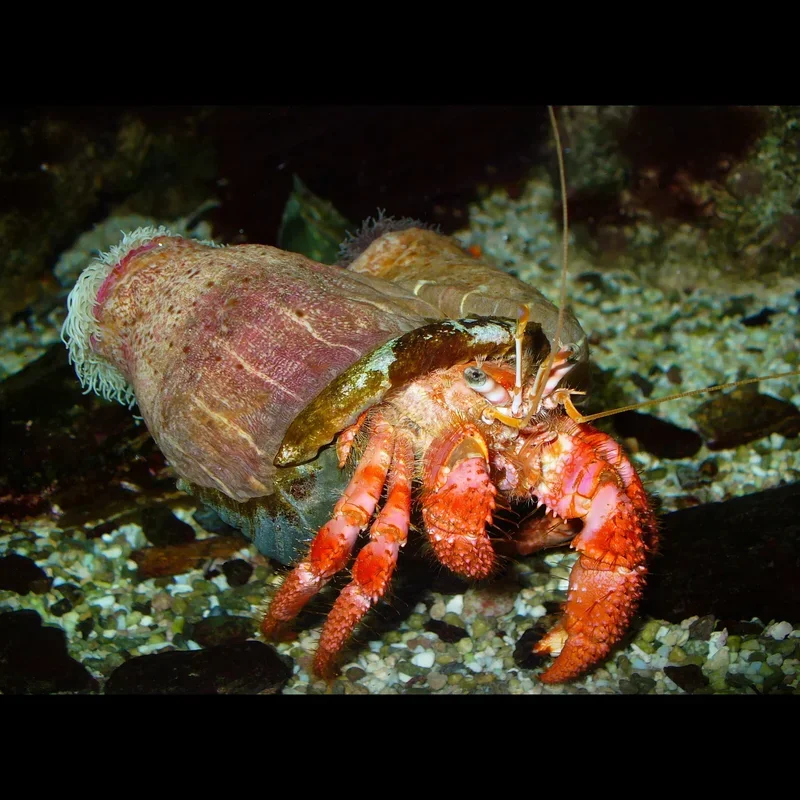
Look closely, and you might encounter flatfish camouflaged on the sand or observe hermit crabs moving along the bottom. There's also the chance to see various fish species and, with a bit of luck, even eels.

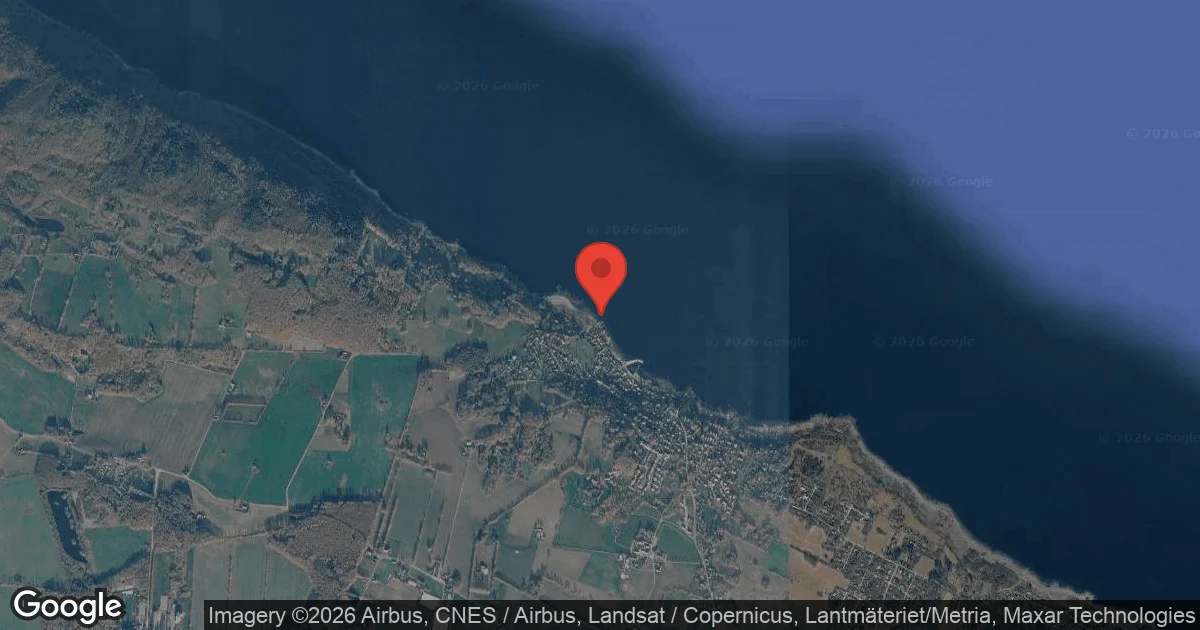
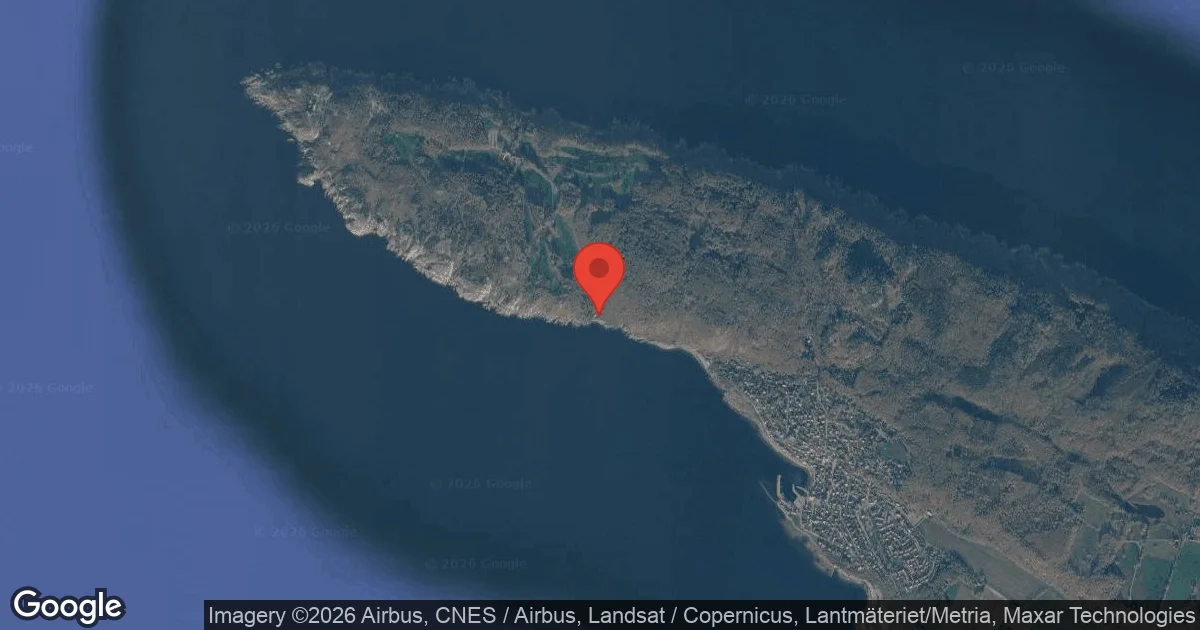
Dive Sites Near Hornbæk Plantage
View all dive sites in DenmarkDiscover more underwater gems in this area.
Dive Centers Near Hornbæk Plantage
Today: Open 24 hours

Nearest Airports
Nearest airports to help plan travel to this dive area.
Search Flights
Check available flights and routes on Expedia, using the nearby airports listed in this section.
Search Flights on ExpediaFrequently Asked Questions
What is the typical maximum depth for diving at Hornbæk Plantage?
Diving at Hornbæk Plantage generally reaches a maximum recreational depth of 18 m (59 ft). The primary rock reefs are typically found shallower, often around 6 meters deep, making it suitable for various skill levels.
What are the common entry methods for this dive site?
Entry to Hornbæk Plantage is directly from the beach, often accessed via a forest path. It's a shore dive, which means convenient access without the need for a boat.
What kind of marine life can I expect to see?
Divers commonly encounter crabs, starfish, sea urchins, hermit crabs, and various flatfish species. The rocky reefs are also covered in sugar kelp and bladderwrack, which support a diverse ecosystem and provide habitat for smaller fish and macro life.
Is Hornbæk Plantage suitable for beginner divers?
Yes, Hornbæk Plantage is well-regarded as a beginner-friendly dive site. Its mild currents and accessible shore entry make it an ideal location for divers to gain experience in controlled conditions.
What are the typical water temperatures?
Water temperatures vary significantly by season. During summer (June-September), temperatures range from 15–20°C (59–68°F). In winter, temperatures can drop to 4–8°C (39–46°F).
Can I do night dives at Hornbæk Plantage?
Yes, Hornbæk Plantage is described as being excellent for both day and night dives. The site's biodiversity and features make it interesting to explore under different lighting conditions.
What is the typical visibility at the site?
Visibility at Hornbæk Plantage can vary, typically ranging from 5 to 15 meters. Conditions like recent weather, surge, and particulate matter in the water can influence this.
Planning to dive Hornbæk Plantage?
Send one inquiry and receive offers directly from the best verified local dive operators.
Conditions are Good
Optimal conditions expected
Current conditions near Hornbæk Plantage show 14° air, 16° sea temperature, 0.8 m waves, and 30 km/h wind. Forecast data is refreshed regularly to ensure accuracy.