Loading...

Diving at The Invisibles (British Virgin Islands)
Published
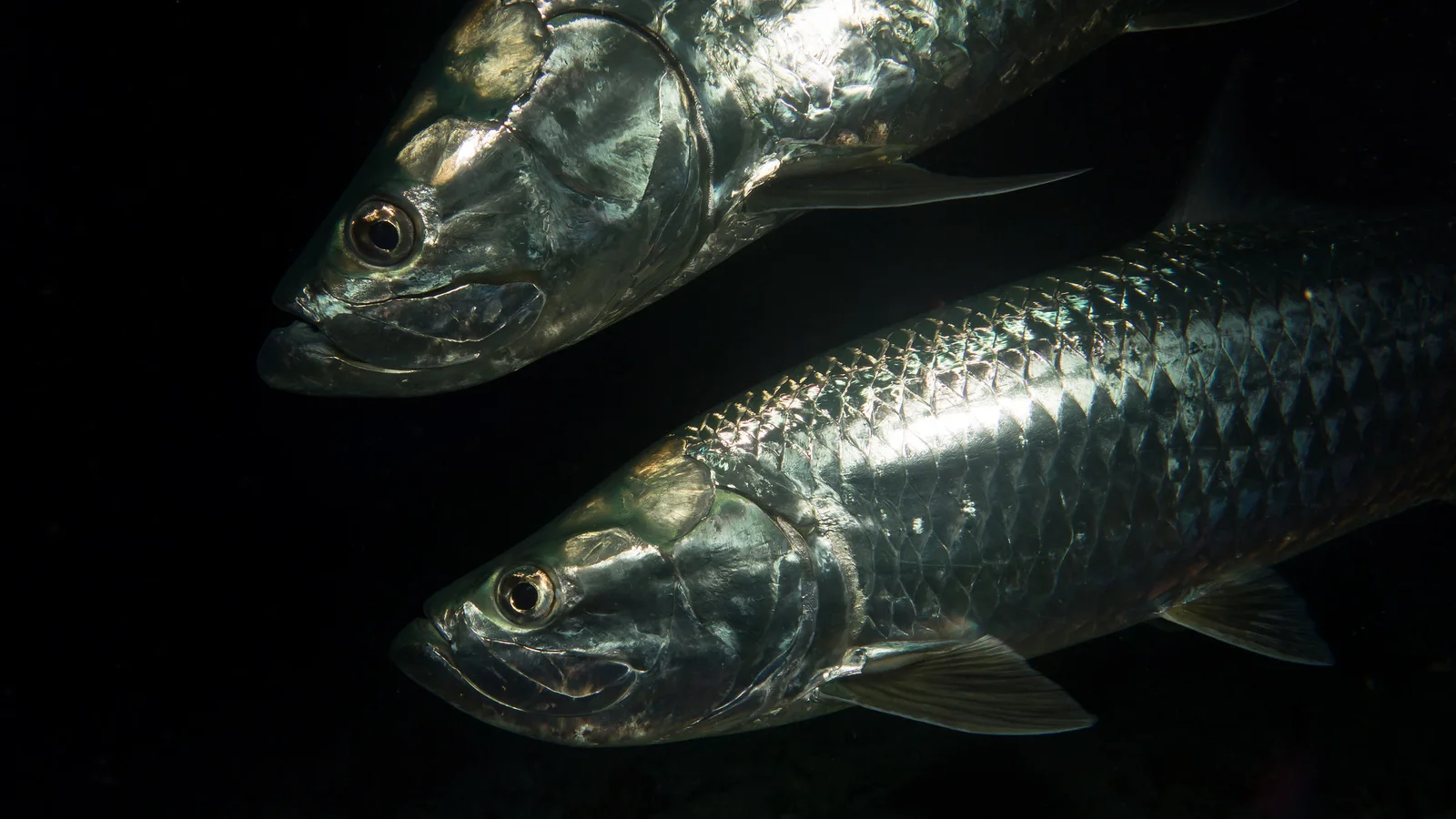
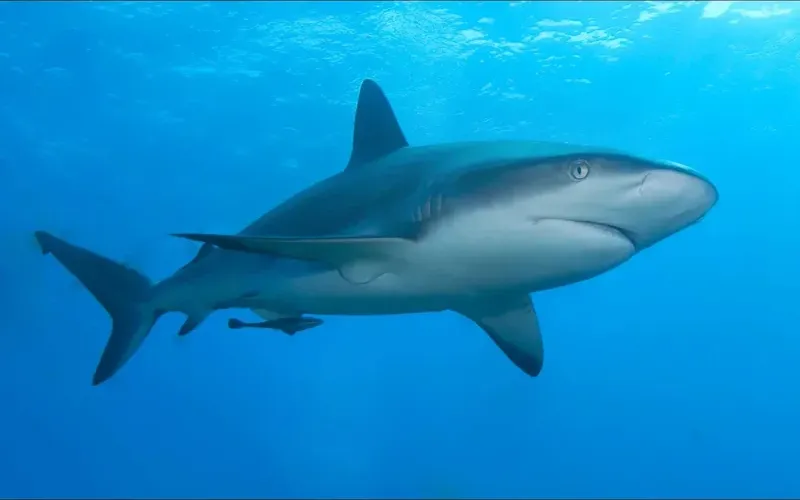
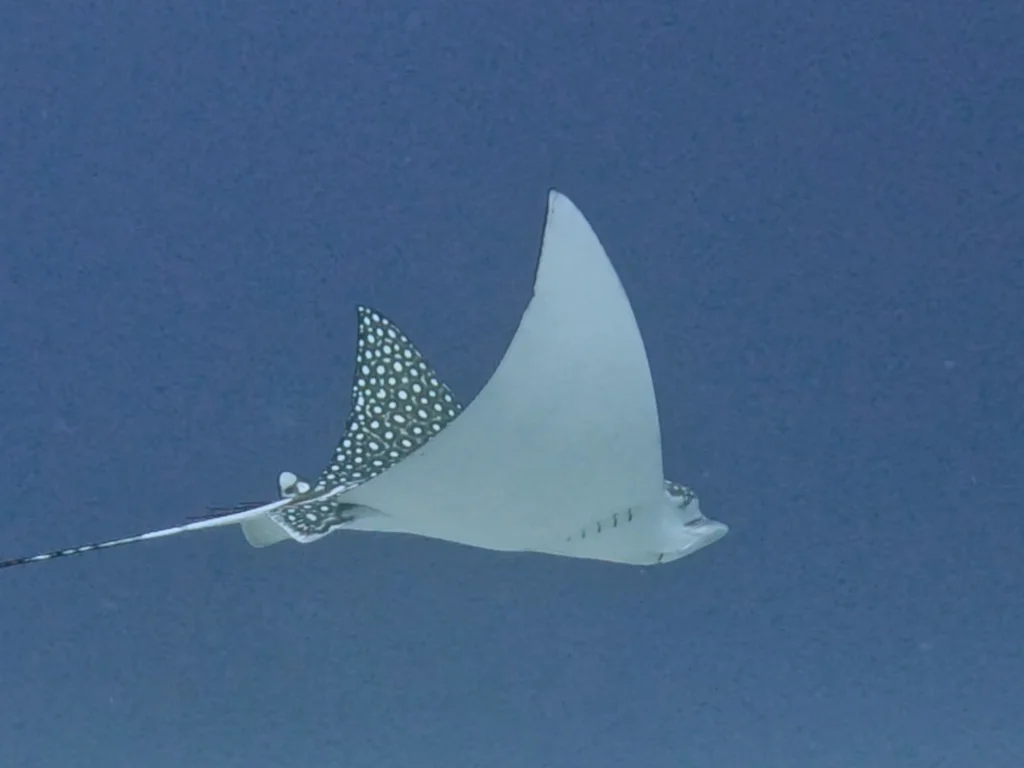
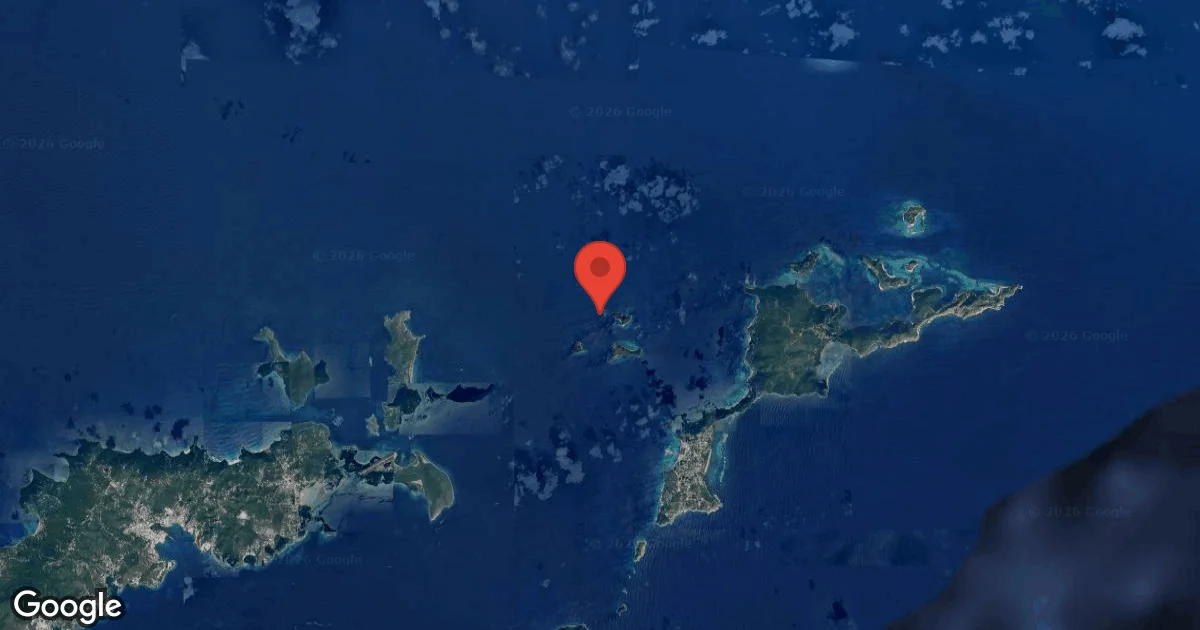
Rising abruptly from the Atlantic seabed roughly 0.8 nautical miles east of Necker Island off northern Virgin Gorda, The Invisibles consist of three steep submerged rocky pinnacles charted in NOAA United States Coast Pilot 5. Covered by just 1.2 to 1.5 m / 4 to 5 ft of water at their crowns yet plunging past 15 to 25 m / 50 to 82 ft along sponge-draped granite fissures, the spires stay hidden from passing vessels in calm seas. Reserved for Advanced Open Water boat divers during settled weather windows, the current-washed pinnacles gather Atlantic tarpon, spotted eagle rays, and Caribbean reef sharks.
As evening covers The Invisibles, the local air temperature is measured at 27°C. The current wave height at the surface is recorded at 0.8 m. These late-day readings characterize the surface conditions for the night.
Dive Site Location & Key Facts
Site Characteristics
Max Depth25m / 82ft
Entry Typeboat
Water Typesalt
Dive Types
DriftPinnacleReef
Dive Site Overview
Exposed directly to the open Atlantic Ocean northeast of Eustatia Sound and North Sound, The Invisibles stand out from the British Virgin Islands' sheltered Sir Francis Drake Channel reefs as a dramatic offshore seamount dive. Hydrographic soundings record 9 to 15 m / 30 to 50 ft of water in the channel separating the pinnacles from Necker Island, while the outer eastern and northern flanks drop cleanly to 20 to 25 m / 65 to 82 ft.
Between the three towering granite heads run deep vertical canyons, undercut ledges, and sunlit swim-throughs coated in encrusting sponges, gorgonian sea fans, and symmetrical brain corals. With no permanent mooring buoy or surface marker installed on the exposed rock, local captains read live current and swell carefully before deploying a coordinated live-boat drop.
All elasmobranchs cruising these outer waters enjoy full legal protection under the BVI Shark and Ray Sanctuary, reinforced by strict territory-wide bans on coral anchoring and spearfishing. Clear oceanic visibility around the three granite spires regularly reaches 20 to 30 m / 65 to 100 ft on calm days.
The Invisibles
Conditions are Good
7/10
Confidence: 8/10
Indicates meteorological model agreement and data availability.
Best Dive Window
Optimal conditions expected
06:12
18:45
H: 10:45
L: 16:20
Air / Sea Temp
27° / 29°
Wave Height
0.9 m
Wind Speed
26 km/h ESE
Rain Chance
50%
Current conditions near The Invisibles show 27° air, 29° sea temperature, 0.9 m waves, and 26 km/h wind. Forecast data is refreshed regularly to ensure accuracy.
Radius: ~12km
Updated: Nov 23, 2026, 08:56 local timeMARINE: OPEN-METEOWEATHER: YR.NO
Best Time to Dive
Completely open to North Atlantic groundswells from the north and east, The Invisibles offer their calmest surface windows in May through June and September through October (1.0 to 1.15 m swells), alongside settled spring days in March and April between cold fronts. Sea temperatures span 26.4 to 30.2°C / 80 to 86°F year-round per NOAA NCEI BVI coral records, paired with 20 to 30 m / 65 to 100 ft oceanic visibility.
From November through February, winter Atlantic fronts push heavy north swells and breaking surf across the shallow 1.2 to 1.5 m / 4 to 5 ft rock heads, frequently making the site undiveable, while peak summer trade winds in July (~35 km/h) can also chop the surface. Summer and autumn teams must track tropical storm advisories from June through November.
PEAK SEASON SCORE
66/100
ModerateScores combine air & water temps, waves, wind & rainfall for overall conditions.
BEST MONTHS TO DIVE
MAY
JUN
OCT
DIVE SCORE GUIDE (0–100)
Excellent (90–100)
Very Good (80–89)
Good (70–79)
Moderate (50–69)
Poor (30–49)
Not Recommended (0–29)
Monthly records compiled from satellite and marine observation nodes over the last 3 years. Data provided by Open-Meteo and MET Norway.
Dive Experience & Conditions
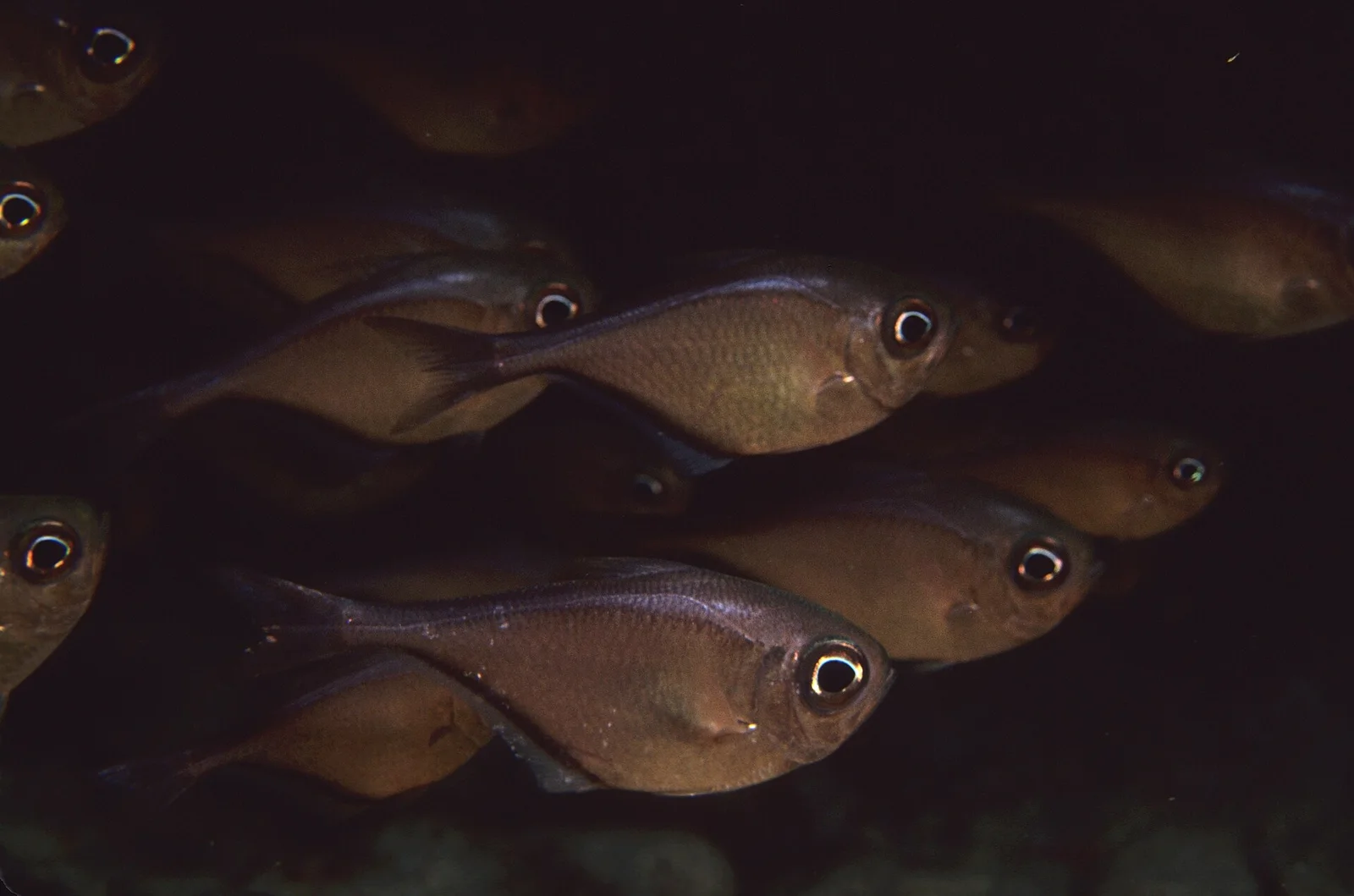
Dive boats run 15 to 25 minutes northeast out of Virgin Gorda's North Sound, executing a swift live-boat entry on the up-current side of the three granite spires or anchoring strictly on verified clean sand well clear of reef structure. Descending to 18 to 25 m / 59 to 82 ft along the outer slope lets teams wind through vertical granite fissures and coral-lined swim-throughs before spiraling steadily upward around the three rocky heads. Dense schools of silvery Atlantic tarpon and glassy sweepers hang effortlessly inside the shaded overhangs while big pelagics patrol the blue-water drop.
Moderate to brisk Atlantic currents of 1 to 2 knots sweep past the pinnacles, and even modest surface swell creates noticeable surge near the 1.5 to 6 m / 5 to 20 ft crowns. Teams avoid hovering directly over the shallowest rock tips during ascents, drifting slightly off the leeward flank to deploy a delayed surface marker buoy for live-boat pickup.
Dive Difficulty & Safety Guidelines
Open-Atlantic surge, moderate currents, and live-boat extraction without a fixed mooring make The Invisibles an Advanced Open Water dive requiring confident mid-water buoyancy and SMB deployment. Under the Virgin Islands Fisheries Regulations 2003 and BVI National Parks Trust conservation rules, anchoring on coral, spearfishing, and touching or collecting any coral, sponge, shark, or ray are strictly illegal across all territory waters. Never ascend directly above the 1.2 to 1.5 m / 4 to 5 ft pinnacle tops where unseen wave troughs can slam divers against encrusting rock.
The British Virgin Islands have no hyperbaric recompression chamber; on-water rescue runs 24/7 through Virgin Islands Search and Rescue (999 / 911 / VHF Channel 16) with initial stabilization at Dr. D. Orlando Smith Hospital on Tortola. Definitive recompression requires a cross-border sea or air medical evacuation ~30 to 35 nm WSW to Roy Lester Schneider Hospital on St. Thomas, USVI (or San Juan, Puerto Rico), making passports and active DAN evacuation coverage mandatory.
Recommended Equipment
Current and surface separation risk. Local briefing strongly recommended.
- Dive Computer
- DSMB
- Reel / Spool
This gear list is based on verified equipment signals for The Invisibles, British Virgin Islands. Always confirm final gear choices with your dive operator, guide, or liveaboard.
Recommended Dive Suit
Subtle variations in currents or depth can sometimes influence perceived water temperature.
Dive skin or rash guard tends to perform well in water temperatures like those currently observed here. A hood or vest is suggested for sensitive divers due to surface winds. Short-term weather patterns suggest stable conditions for divers visiting the area.
Divers heading to The Invisibles today should expect water temperatures around 29°C (84°F). Surface air temperatures are resting at 27°C (81°F).
The Invisibles conditions last reviewed: 08:56 local time (UTC-4), Nov 23, 2026
Emergency & Medical Support
Essential information to help you plan your dive trip to The Invisibles.

Hyperbaric chambers are a critical part of dive safety infrastructure. Availability varies significantly by region, and not all dive areas have immediate access.
Before diving, it's recommended to:
- confirm nearest medical facilities
- check emergency procedures with local dive operators
- ensure dive insurance covers evacuation if required
24/7 Available
Divers Alert Network
Diving emergency assistance available through DAN World.
+1-919-684-9111- 24/7 emergency hotline
- Diving medical assistance
- Evacuation coordination
Emergency contacts are provided for reference. Always verify local emergency services before diving.
Marine Life at The Invisibles
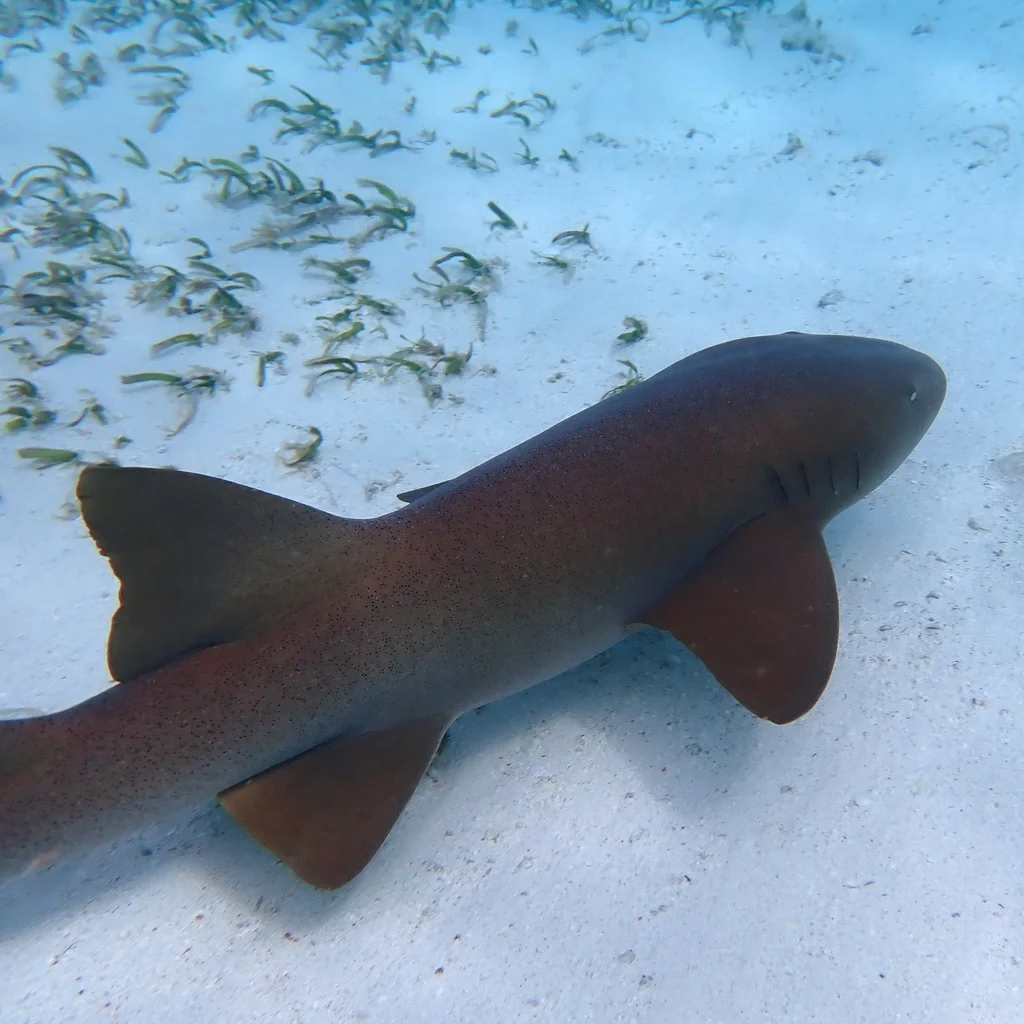
Swept by clean Atlantic water, the vertical granite pinnacles of The Invisibles are coated in giant barrel sponges, encrusting sponges, gorgonian sea fans, and symmetrical brain corals. Shaded granite fissures shelter glassy sweepers, Caribbean spiny lobsters, moray eels, and hovering packs of silver Atlantic tarpon alongside colorful angelfish, permit, and wrasses.
Out in the blue-water current, protected Caribbean reef sharks, resting nurse sharks, and soaring spotted eagle rays patrol the outer flanks under the BVI Shark and Ray Sanctuary.
1 / 2
Image contributors:NOAA Photo Library, Kris Mikael Krister + 6 more
Want to contribute photos or local dive knowledge? Learn how to contributeDive Sites Near The Invisibles
View all dive sites in British Virgin IslandsDiscover more underwater gems in this area.
Dive Centers Near The Invisibles
Working Hours
Sun08:00 - 17:00
Mon08:00 - 17:00
Tue08:00 - 17:00
Wed08:00 - 17:00
Thu08:00 - 17:00
Fri08:00 - 17:00
Sat08:00 - 17:00
Today: 08:00 - 17:00
Sun08:00 - 17:00
Mon08:00 - 17:00
Tue08:00 - 17:00
Wed08:00 - 17:00
Thu08:00 - 17:00
Fri08:00 - 17:00
Sat08:00 - 17:00
4.6| 10 reviews
129 km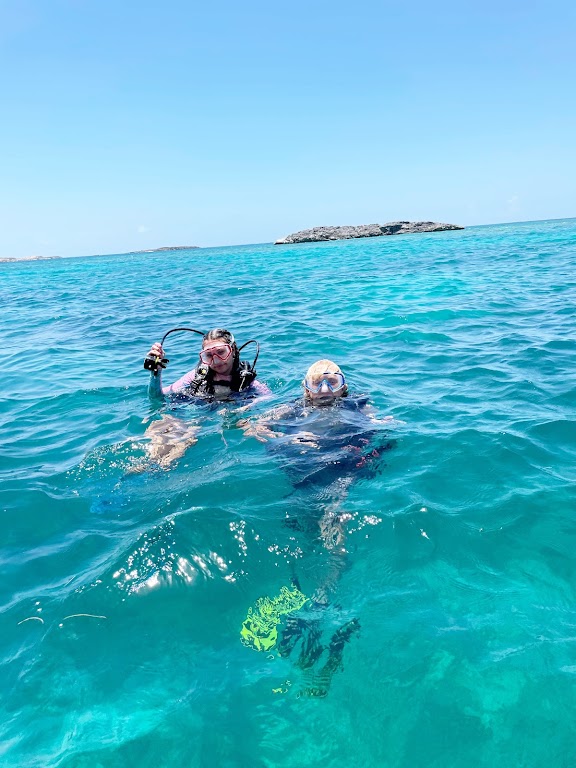
4.9| 45 reviews
138.8 km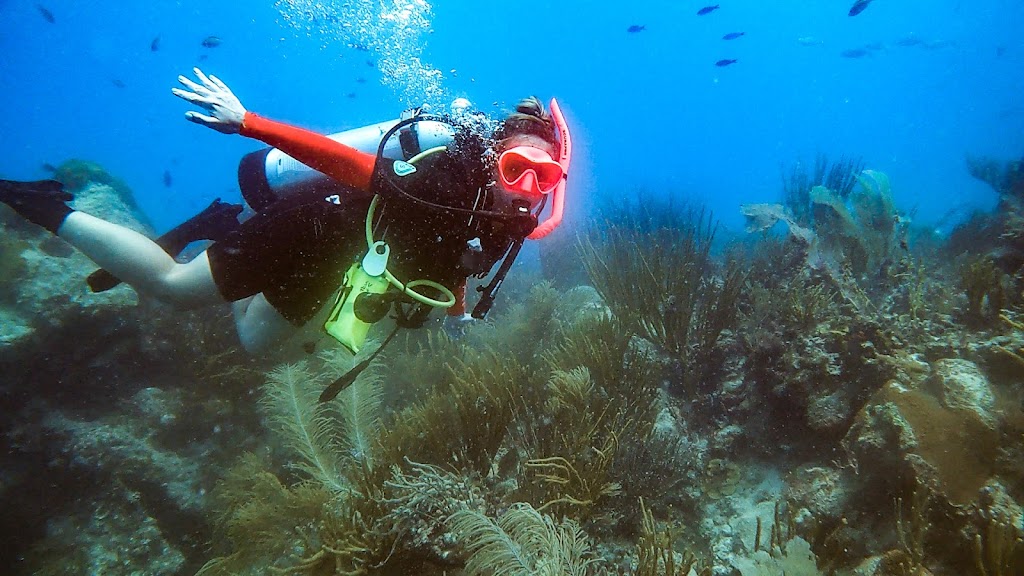
4.7| 733 reviews
138.9 kmNearest Airports
Nearest airports to help plan travel to this dive area.
Benjamin Rivera Noriega Airport CPX
105 km
Antonio Rivera Rodriguez Airport VQS
130 km
José Aponte de la Torre Airport NRR
141 km
💵 Currency: Local Currency
Search Flights
Check available flights and routes on Expedia, using the nearby airports listed in this section.
Search Flights on ExpediaAffiliate link · Dive Navigator may earn a commission at no extra cost to you.
Frequently Asked Questions
Why is this Virgin Gorda dive site called The Invisibles?
NOAA Coast Pilot charts describe three small submerged rocky heads covered by only 1.2 to 1.5 m / 4 to 5 ft of water with no surface marker buoy. In flat seas they stay hidden just below the surface, making them invisible to passing boats.
Are there National Parks Trust mooring buoys at The Invisibles?
No permanent NPT mooring buoy is installed on the exposed pinnacles. Dive boats perform a live-boat drop and pickup or anchor strictly on verified clean sand clear of coral, while nearby NPT buoys require a Marine Conservation Permit.
When is the best time of year to dive The Invisibles?
May through June and September through October offer the calmest North Atlantic sea states and highest chance of safely diving the exposed pinnacles. Winter swells from November through February frequently create breaking seas across the shallow rock tops.
Are sharks and rays protected around Virgin Gorda?
Yes. The entire territory is a BVI Shark and Ray Sanctuary prohibiting commercial fishing, possession, or harassment of any shark or ray species, alongside strict bans on spearfishing and coral anchoring.
Where is the nearest hyperbaric chamber to Virgin Gorda?
There is no hyperbaric chamber in the British Virgin Islands. After stabilization at Dr. D. Orlando Smith Hospital on Tortola, patients require cross-border sea or air medevac ~30 to 35 nm WSW to Roy Lester Schneider Hospital on St. Thomas, USVI.
Trip Inquiry
Planning to dive The Invisibles?
Tell us your dates and diving needs. We'll review your request and seek offers from relevant local dive centers.
Request Dive Offers Free request for offers • No booking obligation
The Invisibles
Conditions are Good
7/10
Confidence: 8/10
Indicates meteorological model agreement and data availability.
Best Dive Window
Optimal conditions expected
06:12
18:45
H: 10:45
L: 16:20
Air / Sea Temp
27° / 29°
Wave Height
0.9 m
Wind Speed
26 km/h ESE
Rain Chance
50%
Current conditions near The Invisibles show 27° air, 29° sea temperature, 0.9 m waves, and 26 km/h wind. Forecast data is refreshed regularly to ensure accuracy.
Radius: ~12km
Updated: Nov 23, 2026, 08:56 local timeMARINE: OPEN-METEOWEATHER: YR.NO


