
Diving at Big Georges Reef (United States)
Exploring Big Georges Reef presents an encounter with imposing artificial structures that have dramatically reshaped the underwater landscape. Its key site, the immense Spiegel Grove, provides a truly colossal dive experience. The sheer scale of these submerged features demands careful dive planning to fully appreciate their sprawling forms and the vibrant ecosystems they now host.
Early observations for Big Georges Reef report a surface air temperature of 27.5°C. The water surface is currently presenting wave heights of 0.7 m. Consider these environmental metrics before beginning your descent.
Dive Site Location & Key Facts
Dive Site Overview
Big Georges Reef presents an expansive underwater topography largely defined by deliberate artificial structures designed to foster thriving marine ecosystems. At its heart lies the formidable Spiegel Grove, a former Landing Ship Dock spanning an impressive 155 m (510 ft) in length and exceeding 24 m (80 ft) across its beam.
The Spiegel Grove rests distinctly on its starboard side, creating a unique 'wall dive' experience that begins in shallower sections, often around 15 m (50 ft). Due to its colossal dimensions, thoroughly exploring the exterior typically necessitates two separate dives. Beyond the Spiegel Grove, Big Georges Reef benefits from extensive artificial reef programs, which have deployed numerous other large ships and countless tons of concrete and reef modules.
These intentionally sunken structures transform barren seafloors into complex, vibrant habitats. Divers exploring these sites will find varying topographies, from open promenade decks to propeller sections closer to the seafloor, with some structures reaching depths of up to 55 m (180 ft).
Such a strategic approach significantly enhances local biodiversity and recreational diving opportunities.
Conditions are Excellent
07:00 - 14:00
Optimal conditions expected
Current conditions near Big Georges Reef show 27° air, 28° sea temperature, 0.7 m waves, and 20 km/h wind. Forecast data is refreshed regularly to ensure accuracy.
Best Time to Dive
The ideal time for diving Big Georges Reef often contrasts between the calmest conditions and higher air temperatures. While July and August typically offer the calmest wave conditions, averaging around 0.6 to 0.8 meters (2 to 2.6 ft), these months also bring the warmest air temperatures, ranging from 27.5-28°C (82°F). Dive scores are consistently 'Good' during these summer months. Conversely, spring months like May, with air temperatures around 24.5°C (76°F) and average wave heights of 0.8 meters (2.6 ft), also present 'Good' dive opportunities. Rainfall tends to be lowest in January, July, and December, typically around 1.3-1.6 mm. Stronger winds and higher waves, averaging 1.0-1.4 meters (3.3-4.6 ft), are more common from September through March, potentially limiting access or making surface conditions less comfortable. Optimal planning often involves targeting periods of lower wave action.
PEAK SEASON SCORE
Scores combine air & water temps, waves, wind & rainfall for overall conditions.
BEST MONTHS TO DIVE
Monthly records compiled from satellite and marine observation nodes over the last 3 years. Data provided by Open-Meteo and MET Norway.
Dive Experience & Conditions
Entering the water at Big Georges Reef immediately immerses divers into an environment shaped by substantial wrecks and artificial structures. While many artificial reefs accommodate various skill levels, the prominent Spiegel Grove is generally considered an advanced dive, particularly for those wishing to explore beyond its top deck. Depths can range significantly, with the top of the wreck accessible around 15 meters and deeper sections extending to 55 meters or more on other structures within the reef system. Water temperatures are not consistently reported but generally align with regional averages for the US coastline, potentially requiring appropriate thermal protection. Visibility can vary, influenced by local currents and seasonal conditions, but often provides clear views of the expansive structures and thriving marine life.
Dive Difficulty & Safety Guidelines
Navigating artificial reefs like those at Big Georges Reef requires adherence to specific safety protocols. Entry into the interior of any wreck, particularly a large vessel like the Spiegel Grove, demands proper Wreck Diver certification and specialized training. Without this, penetration should not be attempted.
All divers must be at least PADI Open Water certified, and it's generally recommended that divers have logged a dive within the last year to maintain current skills. If not, a refresher course is advisable.
Always plan dives within your certification limits and be mindful of potential strong currents, which can affect offshore sites. Dive computers are recommended for managing bottom time and deco limits, especially when exploring deeper sections or contemplating multiple dives on extensive structures.
Recommended Equipment
- Dive Computer
This gear list is based on verified equipment signals for Big Georges Reef, United States. Always confirm final gear choices with your dive operator, guide, or liveaboard.
Recommended Dive Suit
With water temperatures around 28°C (83°F), many divers find a 2-3mm shorty or light wetsuit provides comfortable protection.
Local dive briefings can provide the most accurate guidance.
The upcoming forecast points to generally steady conditions in the area.
Emergency & Medical Support
Essential information to help you plan your dive trip to Big Georges Reef.

Hyperbaric chambers are a critical part of dive safety infrastructure. Availability varies significantly by region, and not all dive areas have immediate access.
Before diving, it's recommended to:
- confirm nearest medical facilities
- check emergency procedures with local dive operators
- ensure dive insurance covers evacuation if required
Divers Alert Network
Diving emergency assistance available through DAN World.
+1-919-684-9111- 24/7 emergency hotline
- Diving medical assistance
- Evacuation coordination
Emergency contacts are provided for reference. Always verify local emergency services before diving.
Marine Life at Big Georges Reef
The fish life inhabiting the artificial reefs of Big Georges Reef, particularly around the Spiegel Grove, is widely reported as astounding. These intentionally sunken structures quickly evolve into vibrant underwater cities, providing essential habitat for a diverse array of reef fish and other marine organisms.
You'll observe various species sheltering within the nooks and crannies of the wrecks and schooling around their perimeters. The sheer volume of structure attracts a robust biodiversity, bolstering both fishing and diving opportunities within this enhanced ecosystem. Expect to encounter numerous resident species benefiting from the complex habitat created.
Dive Centers Near Big Georges Reef
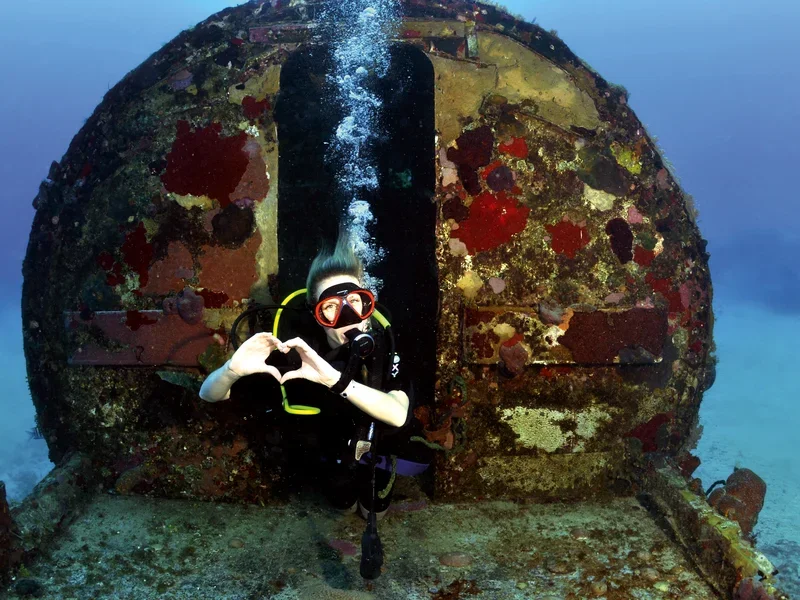
Today: 10:00 - 17:00
Nearest Airports
Nearest airports to help plan travel to this dive area.
Search Flights
Check available flights and routes on Expedia, using the nearby airports listed in this section.
Search Flights on ExpediaFrequently Asked Questions
What is the primary dive site at Big Georges Reef?
The most prominent dive site referenced for Big Georges Reef is the Spiegel Grove, a massive artificial reef. Its substantial size and unique orientation make it a focal point for divers in the area.
What certification level is needed for diving here?
All divers must be at least PADI Open Water certified for general trips. However, diving the Spiegel Grove is typically considered an advanced dive. Penetrating any wreck, including the Spiegel Grove, requires specific Wreck Diver certification and training.
What are the typical depths encountered?
The top sections of structures like the Spiegel Grove can be found around 15 m (50 ft). Deeper sections of various artificial reefs within the system can extend down to 55 m (180 ft).
Is Big Georges Reef solely composed of the Spiegel Grove?
No, Big Georges Reef encompasses a broader area that features numerous artificial reefs. Beyond the Spiegel Grove, other large ships, concrete modules, and various structures have been deployed to create extensive marine habitats.
How do surface conditions impact diving?
Surface conditions vary seasonally, with calmer waves generally expected in summer months (July-August). From September through March, higher waves and stronger winds are more common, which can affect dive accessibility and comfort.
Why were artificial reefs created in this area?
Artificial reefs were created to provide essential marine habitat where natural reefs are sparse. They also aim to boost tourism and economic development through enhanced fishing and diving opportunities, and to preserve historical vessels by giving them a second life as underwater attractions.
Is Nitrox recommended for these dives?
Nitrox is a beneficial option for diving Big Georges Reef. Breathing less nitrogen can allow for longer bottom times and shorter surface intervals, especially when exploring extensive wrecks or planning multiple dives.
Planning to dive Big Georges Reef?
Send one inquiry and receive offers directly from the best verified local dive operators.
Conditions are Excellent
07:00 - 14:00
Optimal conditions expected
Current conditions near Big Georges Reef show 27° air, 28° sea temperature, 0.7 m waves, and 20 km/h wind. Forecast data is refreshed regularly to ensure accuracy.