
Diving at Ginnie Springs (United States)
Far removed from typical saltwater encounters, a journey into Florida's freshwater springs awaits. It's a dive site where geological formations tell a story of ancient water flows and subterranean landscapes. Divers navigate clear, constant 22°C (72°F) water, revealing the hidden narratives of Florida's aquifer. This isn't a wreck; it's an immersive journey into the earth's natural plumbing, where the environment itself provides the adventure. Its appeal lies in this distinct, almost ethereal aquatic experience.
At Ginnie Springs, the ambient air temperature is currently recorded at 27.5°C. This dive site in United States is operating under normal seasonal weather patterns. Familiarize yourself with the local topography prior to navigating.
Dive Site Location & Key Facts
Dive Site Overview
Ginnie Springs presents a fascinating glimpse into Florida's extensive freshwater aquifer systems. Several distinct springs are hosted within the park, with diving permitted in Ginnie Spring itself and the Devil's Spring System.
These sites are fed by powerful underground flows, collectively discharging nearly 80 million gallons of water daily, a testament to geological forces shaping the landscape over millennia. Exploring Ginnie Ballroom reveals a vast, bowl-shaped depression stretching over 30 m (100 ft) across, reaching depths of 4.5 m (15 ft). Its inviting, open environment makes it accessible for open-water divers, providing a comfortable entry point into the spring experience.
The adjacent Devil's Spring System, however, caters to more advanced explorers with its intricate passageways. This system comprises Devil's Eye, Devil's Ear, and Little Devil Spring, presenting varied cavern and cave environments for certified technical divers seeking deeper exploration.
Beyond the immediate springs, the Santa Fe River offers a freshwater drift dive experience. Its tannin-stained waters, though dramatically contrasting with the spring's exceptional clarity, can still reveal surprising visibility and occasional ancient fossils scattered across its bed.
Navigating the gentle current downstream provides a different, relaxing perspective on the local aquatic ecosystem. Ginnie Springs captures the imagination, showcasing the unexpected beauty and complexity of inland diving.
Conditions are Excellent
07:00 - 14:00
Optimal conditions expected
Current conditions near Ginnie Springs show 28° air, --° sea temperature, N/A waves, and 17 km/h wind. Forecast data is refreshed regularly to ensure accuracy.
Best Time to Dive
Year-round consistency defines the diving experience at Ginnie Springs due to its stable water temperature. Spring water remains a constant 22°C (72°F) regardless of the season, ensuring comfort for divers at any time. When planning your visit, consider the ambient air temperatures, which fluctuate more dramatically. During the cooler months, from November to April, average air temperatures range from 11°C (52°F) to 21°C (70°F). Cooler periods often bring clearer skies and less rainfall, averaging between 1.5-5.0 mm per month, creating crisp and pleasant conditions above water. As such, many divers find this an ideal time for surface activities complementing their dives. Warmer months, May through October, see average air temperatures climb to 24°C (75°F) to 27°C (81°F). While rain showers are more frequent, averaging 3.0-5.5 mm monthly, these are often brief, maintaining generally good dive conditions. Ultimately, the consistent underwater environment means your choice largely depends on your preference for topside weather.
PEAK SEASON SCORE
Scores combine air & water temps, waves, wind & rainfall for overall conditions.
BEST MONTHS TO DIVE
Monthly records compiled from satellite and marine observation nodes over the last 3 years. Data provided by Open-Meteo and MET Norway.
Dive Experience & Conditions
Entering the water here is remarkably straightforward, with a well-maintained preparation area conveniently close to the spring's edge. This user-friendly setup includes washroom and shower facilities, along with picnic tables, simplifying gear setup and post-dive cleanup. The water's transition from the spring into the Santa Fe River creates a visually striking "segregating effect," where perfectly clear spring water meets the darker river water side-by-side, a unique phenomenon to observe. Beneath the surface, the clarity is exceptional, often described as possessing "unmatched clarity," which enhances visibility significantly. Water temperatures consistently sit at 22°C (72°F). Divers typically navigate the large, bowl-shaped Ginnie Ballroom, which is generally shallow. For those with appropriate certification, the Devil's Spring System offers a progression into more complex cavern and cave environments, where deeper sections and overhead environments are explored.
Dive Difficulty & Safety Guidelines
Adherence to specific safety protocols ensures a secure experience at this site. Crucially, solo diving is prohibited; all divers must operate with a buddy. This buddy system is mandatory across all dive sites within the park.
For the Devil's Spring System, distinct rules apply due to its overhead environments. Only certified cavern or cave divers are permitted to enter these areas with dive lights.
This regulation prevents untrained individuals from venturing into complex passages where specialized training, experience, and equipment are essential for safety. Open-water divers should remain within the clear, open areas like Ginnie Ballroom. Respecting these guidelines is fundamental for a safe and enjoyable exploration of the springs.
Recommended Equipment
Overhead environment. Do not enter beyond training and gas planning limits.
- Dive Computer
- Primary & Backup Lights
- Reel / Spool
- Cutting Tool
- Hard-soled Dive Boots
This gear list is based on verified equipment signals for Ginnie Springs, United States. Always confirm final gear choices with your dive operator, guide, or liveaboard.
Recommended Dive Suit
Based on regional estimates and current weather, the likely required exposure protection is a 3mm wetsuit. Note that local currents and upwellings can alter this. Because recent water temperature readings are not available for Ginnie Springs, the guidance below is based mainly on current air conditions and seasonal expectations. Current surface air temperatures are roughly 28°C (82°F).
Longer-range forecasts show some uncertainty in upcoming temperature trends. Cooler days are ahead; you might want a warmer option for later in the week. Some divers bring an extra layer for surface intervals between dives.
A diver's personal tolerance to cold water can play a large role in suit selection.
Emergency & Medical Support
Essential information to help you plan your dive trip to Ginnie Springs.

Hyperbaric chambers are a critical part of dive safety infrastructure. Availability varies significantly by region, and not all dive areas have immediate access.
Before diving, it's recommended to:
- confirm nearest medical facilities
- check emergency procedures with local dive operators
- ensure dive insurance covers evacuation if required
Divers Alert Network
Diving emergency assistance available through DAN World.
+1-919-684-9111- 24/7 emergency hotline
- Diving medical assistance
- Evacuation coordination
Emergency contacts are provided for reference. Always verify local emergency services before diving.
Marine Life at Ginnie Springs
An experience less focused on vibrant coral reefs or abundant marine populations awaits. Instead, its allure lies in the stunning underwater landscapes and geological formations.
Powerful outflow from the springs creates clear waterways, where limestone structures and the distinct cavern systems become the primary visual interest. Exploring the Ginnie Ballroom reveals a sandy bottom and the impressive scale of the spring basin.
For advanced divers, the intricate rock formations within the Devil's Spring System are the main attraction. While the site is generally described as "creatureless" by some, observant divers might still encounter freshwater species adapted to spring environments. Unique interaction of the clear spring water with the tannin-stained Santa Fe River at their confluence is a highlight, creating a visually dramatic boundary.
Dive Centers Near Ginnie Springs
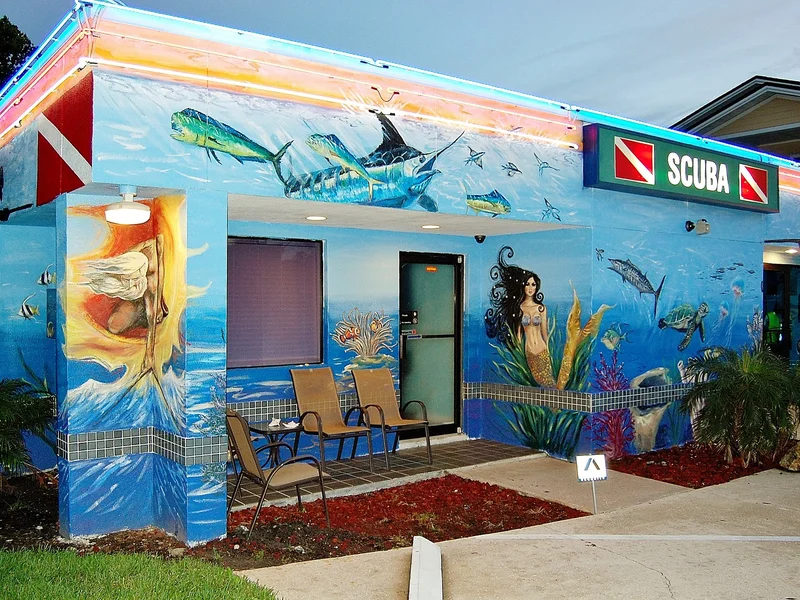
Today: 10:00 - 17:00
Nearest Airports
Nearest airports to help plan travel to this dive area.
Search Flights
Check available flights and routes on Expedia, using the nearby airports listed in this section.
Search Flights on Expedia
Plan Your Stay
Looking for a place to stay for your dive trip? Explore hotels, stays, and vacation rentals for dive groups near Fort White.
Dive Navigator may earn a commission from these links at no extra cost to you.
Frequently Asked Questions
What are the primary dive sites at Ginnie Springs?
Divers can explore Ginnie Spring itself, featuring the Ginnie Ballroom, and the Devil's Spring System, which includes Devil's Eye, Devil's Ear, and Little Devil Spring. The Santa Fe River also provides a unique drift diving experience.
Is Ginnie Springs suitable for open-water divers?
Yes, Ginnie Spring, particularly the Ginnie Ballroom, is accessible and well-suited for open-water certified divers. Its shallow, clear environment offers a comfortable introduction to freshwater spring diving.
What special certifications are needed for some areas?
To enter the overhead environments of the Devil's Spring System with dive lights, divers must hold a valid cavern or cave diving certification. This ensures proper training for navigating complex underwater passages.
What is the water temperature at Ginnie Springs?
Water temperature at Ginnie Springs remains a constant 22°C (72°F) year-round. This stable thermal environment ensures comfortable diving conditions regardless of the season.
Are there any restrictions on solo diving?
Yes, Ginnie Springs Outdoor enforces a strict no solo diving policy. All divers are required to have a buddy for every dive within the park.
Can I see marine life at Ginnie Springs?
While Ginnie Springs is not typically known for abundant marine life comparable to saltwater reefs, its primary attractions are the stunning geological formations and unparalleled water clarity. Some freshwater species may be observed, but the underwater landscape itself is the main draw.
What is the cost to dive at Ginnie Springs?
The cost to dive varies by certification. Certified cave divers typically pay $22.00, while all other certified divers pay $30.00.
Planning to dive Ginnie Springs?
Send one inquiry and receive offers directly from the best verified local dive operators.
Conditions are Excellent
07:00 - 14:00
Optimal conditions expected
Current conditions near Ginnie Springs show 28° air, --° sea temperature, N/A waves, and 17 km/h wind. Forecast data is refreshed regularly to ensure accuracy.