
Diving at Lake Longhorn (United States)
Lake Longhorn provides a purpose-built aquatic environment in League City, Texas, serving the Houston area's diverse training needs. This 43-46 acre freshwater lake, complemented by 20 acres of green space, functions as a multi-sport training destination. It features various submerged structures, including training platforms and boats, specifically designed to enhance scuba diving instruction and exploration for divers of all skill levels.
Recent updates for Lake Longhorn show an air temperature measuring 28.5°C. Overall water conditions reflect the typical seasonal state for United States. Please exercise standard safety precautions before entering the water.
Dive Site Location & Key Facts
Dive Site Overview
Lake Longhorn has evolved into a prominent freshwater diving locale, particularly for certification and advanced training in the Texas Gulf Coast region. Initially developed as a multi-sport training facility, it now offers distinct zones for scuba diving alongside areas for triathlons and other water sports.
The lake's management focuses on maintaining water quality through routine testing, ensuring a safe and clean environment for both divers and aquatic inhabitants. Submerged features, such as six underwater training platforms, multiple large boats, and swim-throughs, were intentionally placed to simulate diverse dive scenarios and facilitate skill development.
These structures, along with rocky outcrops and submerged trees, create an engaging and dynamic underwater landscape. Water temperatures generally range from about 10-15°C (50-59°F) in winter to 29-32°C (84-89°F) in summer, with average visibility reported around 7.6 m (25 ft). This dedicated approach makes it an accessible site for local and visiting divers.
Conditions are Excellent
07:00 - 14:00
Optimal conditions expected
Current conditions near Lake Longhorn show 28° air, --° sea temperature, N/A waves, and 20 km/h wind. Forecast data is refreshed regularly to ensure accuracy.
Best Time to Dive
Planning a dive at Lake Longhorn offers good conditions through much of the year, with optimal months from June to September. During this period, average air temperatures are pleasant, often sitting between 27-29°C (81-84°F), contributing to comfortable surface intervals. Rain activity is moderate, with averages ranging from 3.3 to 5.9 mm (0.13 to 0.23 inches), which helps maintain favorable water clarity. Divers seeking warmer water experiences will appreciate the summer months when lake temperatures are at their highest, reaching up to 32°C (89°F). Shoulder seasons in spring (March-May) and fall (October-November) also present good opportunities; air temperatures are milder, between 18-27°C (64-81°F), and rainfall remains manageable, typically from 2.5 to 8.4 mm (0.1 to 0.33 inches), providing comfortable diving without extreme heat.
PEAK SEASON SCORE
Scores combine air & water temps, waves, wind & rainfall for overall conditions.
BEST MONTHS TO DIVE
Monthly records compiled from satellite and marine observation nodes over the last 3 years. Data provided by Open-Meteo and MET Norway.
Dive Experience & Conditions
Entering Lake Longhorn, divers will find a controlled environment tailored for training and exploration across various skill levels. Shallow areas are specifically designated for beginners to practice fundamental skills, ensuring a safe learning zone. As divers venture deeper, the lake's maximum depth typically reaches around 10.7 m (35 ft), though some reports suggest depths up to 13.7 m (45 ft). Visibility varies but commonly averages about 7.6 m (25 ft), allowing for clear navigation around the numerous submerged structures. These features include man-made training platforms, several boats, and other elements like submerged trees and rock formations. The water temperature can span from 10°C (50°F) in cooler periods to 32°C (89°F) in the summer months. Divers often find distinct temperature shifts between the surface and deeper sections, characteristic of freshwater lakes.
Dive Difficulty & Safety Guidelines
Diving at Lake Longhorn requires adherence to specific safety protocols to ensure a secure experience for all. All divers must be properly certified or actively engaged in a class under the direct supervision of an insured instructor. Before any water entry, every diver must complete a waiver and register with Lake Longhorn management.
Instructors and divemasters conducting training are required to provide proof of current certification and insurance. The lake’s management team actively monitors water quality through routine testing, working to prevent pollution and encourage responsible recreation.
Divers are encouraged to practice proper waste disposal and minimize their environmental impact, helping to preserve the lake's aquatic ecosystem and its natural habitats.
Recommended Equipment
- Dive Computer
- Hard-soled Dive Boots
This gear list is based on verified equipment signals for Lake Longhorn, United States. Always confirm final gear choices with your dive operator, guide, or liveaboard.
Recommended Dive Suit
Based on regional estimates and current weather, the likely required exposure protection is a 3mm wetsuit. Note that local currents and upwellings can alter this. Longer dive profiles can make thermal protection more important than short exploratory dives.
Because recent water temperature readings are not available for Lake Longhorn, the guidance below is based mainly on current air conditions and seasonal expectations. Current surface air temperatures are roughly 28°C (83°F).
Forecast confidence is somewhat lower, with potential for varied conditions ahead. Cooler days are ahead; you might want a warmer option for later in the week. Bringing an additional thermal layer can be helpful if conditions change.
Emergency & Medical Support
Essential information to help you plan your dive trip to Lake Longhorn.

Hyperbaric chambers are a critical part of dive safety infrastructure. Availability varies significantly by region, and not all dive areas have immediate access.
Before diving, it's recommended to:
- confirm nearest medical facilities
- check emergency procedures with local dive operators
- ensure dive insurance covers evacuation if required
Divers Alert Network
Diving emergency assistance available through DAN World.
+1-919-684-9111- 24/7 emergency hotline
- Diving medical assistance
- Evacuation coordination
Emergency contacts are provided for reference. Always verify local emergency services before diving.
Marine Life at Lake Longhorn
Lake Longhorn's underwater ecosystem provides a unique freshwater marine experience, distinct from saltwater sites. Divers exploring the lake often encounter a variety of freshwater fish species, including largemouth bass, catfish, and sunfish.
These fish can be observed interacting with the submerged trees and man-made structures that provide habitat and shelter. Turtles are also commonly spotted navigating the lakebed and surrounding plant life.
While not as diverse as oceanic environments, the presence of various fish, along with algae and aquatic plants, contributes to the lake's engaging underwater charm. Spotting these creatures, alongside the unique submerged features, creates an interesting freshwater dive.

Dive Centers Near Lake Longhorn
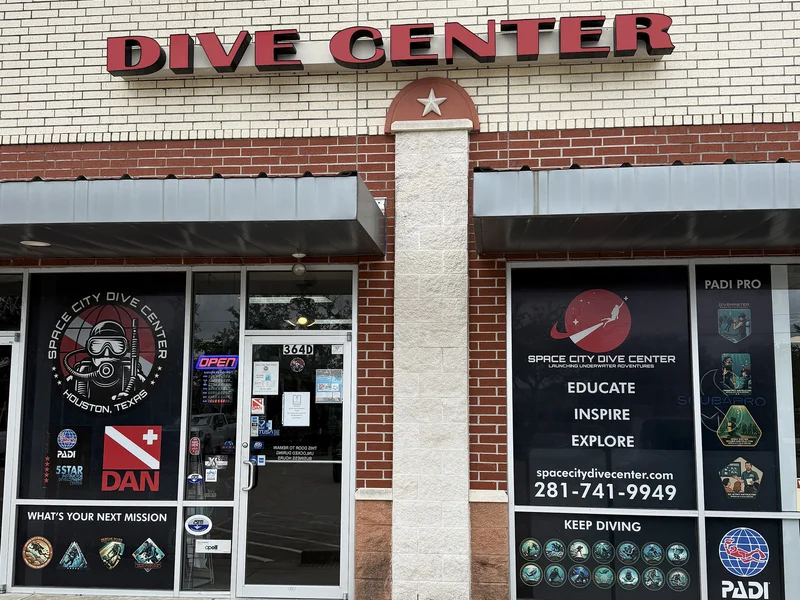
Today: 11:00 - 16:00
Nearest Airports
Nearest airports to help plan travel to this dive area.
Search Flights
Check available flights and routes on Expedia, using the nearby airports listed in this section.
Search Flights on Expedia
Plan Your Stay
Looking for a place to stay for your dive trip? Explore hotels, stays, and vacation rentals for dive groups near Dickinson.
Dive Navigator may earn a commission from these links at no extra cost to you.
Frequently Asked Questions
What is the typical maximum depth at Lake Longhorn?
The maximum depth of Lake Longhorn typically ranges around 10.7 m (35 ft). Some reports indicate that certain sections might reach slightly deeper, up to approximately 13.7 m (45 ft), providing options for more advanced divers.
What kind of visibility can I expect while diving here?
Average visibility at Lake Longhorn is usually around 7.6 m (25 ft). This can vary based on recent weather, divers' activity, and seasonal factors affecting water clarity.
Are there specific training areas for beginners?
Yes, Lake Longhorn features dedicated shallow, safe areas ideal for beginners to learn basic scuba skills and obtain certification. More experienced divers can explore deeper sections with additional submerged structures.
What are the general water temperatures throughout the year?
Water temperatures at Lake Longhorn vary significantly with the seasons. They typically range from about 10°C (50°F) in the winter months up to 32°C (89°F) during the height of summer, often with thermoclines present.
What kind of underwater features can divers explore?
The lake offers a dynamic underwater landscape, including six training platforms, multiple large boats, and swim-throughs. Divers can also find natural features like rocky outcrops and submerged trees, which add to the exploration experience.
Are there any specific requirements for divers at Lake Longhorn?
Yes, all divers must be properly certified or be part of a class under an insured instructor's supervision. Additionally, everyone must register at Lake Longhorn and complete a waiver before entering the water.
Planning to dive Lake Longhorn?
Send one inquiry and receive offers directly from the best verified local dive operators.
Conditions are Excellent
07:00 - 14:00
Optimal conditions expected
Current conditions near Lake Longhorn show 28° air, --° sea temperature, N/A waves, and 20 km/h wind. Forecast data is refreshed regularly to ensure accuracy.