
Diving at Site #8_1996 (United States)
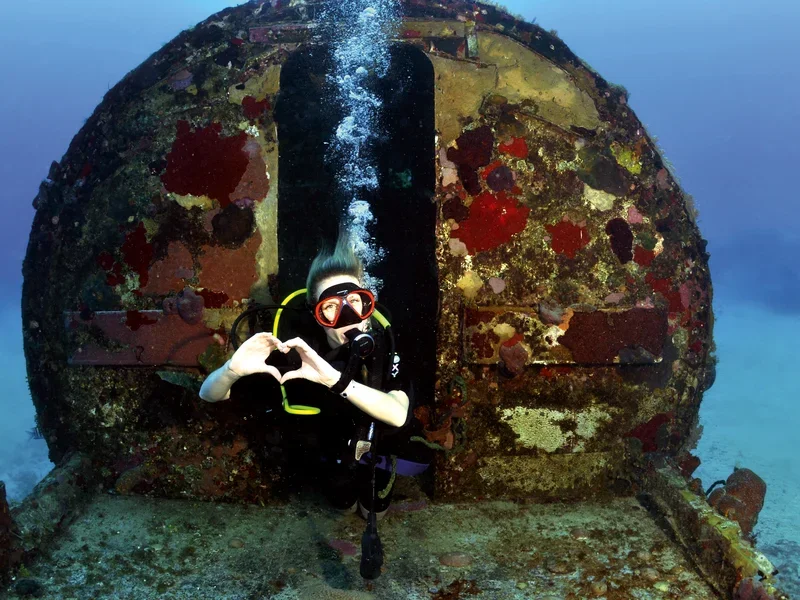
Site #8_1996 features a specialized underwater environment, historically utilized for advanced deep diving system training. This location supported crucial testing and drills for personnel operating equipment like the Mk 2 Deep Diving System's Personnel Transfer Capsule (PTC). The focus here is on the interaction with sophisticated submerged structures and procedures, rather than natural reef formations, providing a unique insight into underwater engineering and operational readiness.
During this afternoon at Site #8_1996, the recorded air temperature stands at 28°C. The water surface currently features wave heights of 1.5 m. These conditions reflect the midday climate for this dive site.
Dive Site Location & Key Facts
Dive Site Overview
Engaging with this specialized training site offers a direct glimpse into the rigorous protocols that shaped early deep-sea habitation projects. Divers meticulously prepared for demanding operations such as SEALAB III, relying on specialized equipment like the Mk IX semi-closed dive rigs.
Historical records from a training sequence off San Clemente Island capture the precise movements: divers entering a Personnel Transfer Capsule (PTC) at a depth of 11 m (35 ft). From there, a brief five-minute 'swim out' would commence, focused on executing critical procedural drills. These exercises included scenarios like an 'unconscious diver,' designed to test and refine emergency response.
Prioritizing diver proficiency and the swift identification of equipment malfunctions under controlled conditions was paramount. The implications of equipment reliability were profound for early saturation diving; even issues as seemingly minor as problematic breathing resistance in the Mk IX rigs could have severe consequences at deeper operational depths.
Though the training dives themselves were relatively shallow, staying within recreational limits, they formed an instrumental foundation, systematically preparing aquanauts for the significant challenges of far deeper, more intricate missions that awaited them.
Conditions are Good
Optimal conditions expected
Current conditions near Site #8_1996 show 28° air, 29° sea temperature, 1.0 m waves, and 25 km/h wind. Forecast data is refreshed regularly to ensure accuracy.
Best Time to Dive
Optimizing for visibility and calm conditions suggests planning a dive between May and August, when average wave heights typically decrease to around 0.6-0.8 m (2.0-2.6 ft), improving underwater clarity. The air temperatures during these months are comfortably warm, ranging from 25°C (77°F) to 28°C (82°F), making surface operations more agreeable. Rainfall is generally light during this period, with averages between 3.8 and 6.4 mm, which helps maintain water column stability. While conditions remain good through November, October presents moderate scores primarily due to increased average wave heights of up to 1.7 m (5.6 ft), potentially reducing visibility. For the clearest experience, target the late spring and summer months when the ocean's surface is calmer and rainfall is less frequent.
PEAK SEASON SCORE
Scores combine air & water temps, waves, wind & rainfall for overall conditions.
BEST MONTHS TO DIVE
Monthly records compiled from satellite and marine observation nodes over the last 3 years. Data provided by Open-Meteo and MET Norway.
Dive Experience & Conditions
A descent into this training environment typically begins with divers pressurizing within a Personnel Transfer Capsule (PTC). After reaching the designated depth, around 11 m (35 ft) for specific training exercises, divers would then exit the capsule for a short 'swim out' in a controlled setting. This simulates a transfer from a habitat to the open water, where focus shifts to executing specific drills, like managing an 'unconscious diver.' Conditions here are engineered for training, sometimes requiring specialized thermal protection. Water temperatures for related deep-sea habitat operations have been reported as low as 8.5°C (47°F) for SEALAB III, underscoring the necessity for appropriate hot water suits, though specific shallow water temperatures aren't consistently reported for this training site. Divers must be prepared for a technical environment, focusing on their equipment and procedural precision.
Dive Difficulty & Safety Guidelines
Diving at this location historically involved substantial technical challenges, necessitating strict safety protocols. Early training revealed issues like unreliable seals on personnel transfer capsules and difficulties with latching mechanisms, highlighting the need for thorough pre-dive checks and contingency planning. The potential for breathing apparatus malfunctions, specifically noted in Mk IX rebreathers due to issues with internal restriction, underscores the importance of redundant systems and meticulous equipment maintenance.
Furthermore, the risk of electrical hazards like Electric Shock Drowning (ESD) within complex habitats, where ground fault alarms are critical, demands constant vigilance. Divers need to approach this site with a full understanding of the technical risks and the requirement for precise execution of emergency procedures.
Recommended Equipment
- Dive Computer
This gear list is based on verified equipment signals for Site #8_1996, United States. Always confirm final gear choices with your dive operator, guide, or liveaboard.
Recommended Dive Suit
With water temperatures around 29°C (84°F), many divers find a 2-3mm shorty or light wetsuit provides comfortable protection.
Local conditions can vary slightly across different parts of the same dive site.
Environmental conditions may feel slightly cooler as the week progresses. Cooler days are ahead; you might want a warmer option for later in the week. A warmer option can provide additional comfort if conditions shift.
Due to technical issues with our weather providers, live updates are temporarily delayed. The data above reflects the conditions at the time of the last successful fetch.
Emergency & Medical Support
Essential information to help you plan your dive trip to Site #8_1996.

Hyperbaric chambers are a critical part of dive safety infrastructure. Availability varies significantly by region, and not all dive areas have immediate access.
Before diving, it's recommended to:
- confirm nearest medical facilities
- check emergency procedures with local dive operators
- ensure dive insurance covers evacuation if required
Divers Alert Network
Diving emergency assistance available through DAN World.
+1-919-684-9111- 24/7 emergency hotline
- Diving medical assistance
- Evacuation coordination
Emergency contacts are provided for reference. Always verify local emergency services before diving.
Marine Life at Site #8_1996
Observations during these historical training and experimental dives primarily focused on operational objectives and equipment performance. Specific reports detailing significant marine life encounters or ecological features at Site #8_1996 are not consistently reported. Divers are more likely to encounter the remains or operational elements of past scientific and military endeavors, rather than vibrant natural ecosystems, making the human history of the site its primary point of interest.
Dive Centers Near Site #8_1996
Today: 10:00 - 17:00
Nearest Airports
Nearest airports to help plan travel to this dive area.
Search Flights
Check available flights and routes on Expedia, using the nearby airports listed in this section.
Search Flights on Expedia
Plan Your Stay
Looking for a place to stay for your dive trip? Explore hotels, stays, and vacation rentals for dive groups near Oak Hill.
Dive Navigator may earn a commission from these links at no extra cost to you.
Frequently Asked Questions
What was the main purpose of dives at Site #8_1996?
The primary purpose was training for advanced deep diving systems and experimental habitats, such as the Mk 2 Deep Diving System and SEALAB III. These dives focused on refining procedures and testing specialized equipment, including Mk IX semi-closed dive rigs.
What depth were the training dives conducted at?
Recorded training dives, specifically a 'swim out' from a Personnel Transfer Capsule (PTC), occurred at a depth of 11 m (35 ft). These shallow dives were crucial for preparing divers for more demanding deep-sea operations.
What type of equipment was used during these historical dives?
Divers used systems like the Mk 2 Deep Diving System's PTC and Mk IX semi-closed dive rigs. These were part of the effort to support long-duration saturation diving experiments and deep ocean exploration.
Were there any significant safety challenges identified?
Yes, several challenges emerged, including issues with PTC seals, latching mechanisms, and breathing resistance in the Mk IX rigs. Helium leaks in the SEALAB III habitat and the risk of Electric Shock Drowning were also noted.
What was an 'unconscious diver' drill?
This was a critical training exercise performed during the PTC swim out. It simulated an emergency scenario where a diver became incapacitated, allowing the team to practice rescue and recovery protocols under realistic conditions.
Is marine life a significant feature of this dive site?
Based on available historical accounts, the focus of operations at this site was on human endeavors, equipment testing, and scientific experiments. There is limited documentation of marine life as a primary highlight for divers.
Planning to dive Site #8_1996?
Send one inquiry and receive offers directly from the best verified local dive operators.
Conditions are Good
Optimal conditions expected
Current conditions near Site #8_1996 show 28° air, 29° sea temperature, 1.0 m waves, and 25 km/h wind. Forecast data is refreshed regularly to ensure accuracy.