
Diving at Jesse Anne (Canada)
Jesse Anne shipwreck holds a compelling history, originally an 1880s steel tug before conversion to a barge. Scuttled intentionally, it now serves as a primary training site for area divers. Its accessible profile and relatively modest depth make it a valuable asset for skill development and local orientation dives. Divers find a tangible link to historical marine activity here.
Tonight's objective overview for Jesse Anne shows an air temperature of 16.5°C. The measured surface conditions include wave heights around 0.1 m. This environmental data is logged for the close of the day.
Dive Site Location & Key Facts
Dive Site Overview
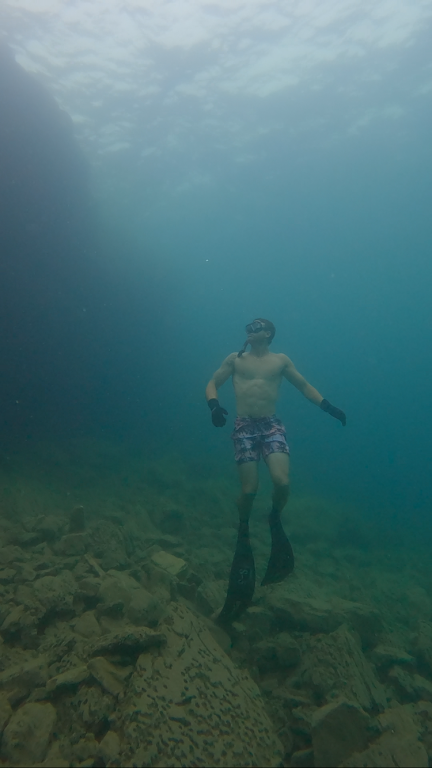
Exploring Jesse Anne reveals a steel barge, approximately 10 m (33 ft) wide and 60 m (197 ft) long. Maximum depth reaches 23 m (75 ft), though the main deck rests notably shallower, typically found around 18 m (59 ft).
A shallower profile like this contrasts with some deeper local wrecks, making it a training favorite. Characterizing the site is the flat deck of the former tug, conspicuously lacking a prop, which was removed prior to its sinking. Divers frequently observe hundreds of liquor bottles scattered both around and within the barge, a clear indication of its previous life as a gathering spot before its intentional submersion.
Entry to the site is exclusively by boat, typically requiring only a short 15-minute ride from the departure point. While Jesse Anne anchors exploration, several other smaller wrecks are positioned in the immediate vicinity, interconnected by lines from the primary site, allowing for further exploration for those with sufficient bottom time and gas. Precise coordinates for the site are 43.42157, -79.67229.
Conditions are Good
07:00 - 14:00
Optimal conditions expected
Current conditions near Jesse Anne show 16° air, --° sea temperature, 0.6 m waves, and 29 km/h wind. Forecast data is refreshed regularly to ensure accuracy.
Best Time to Dive
Optimal dive conditions at Jesse Anne typically run from May through November. These months are consistently rated for excellent diving. Air temperatures during this period are considerably more comfortable, ranging from 13.5°C (56°F) in May, peaking at 23°C (73°F) in July, then gradually cooling to 6°C (43°F) by November. Conversely, winter months, December to April, bring significantly lower average air temperatures, often -3.5°C (38°F) to 8°C (46°F), complicating surface intervals. Rainfall remains relatively low year-round, averaging between 1.2 mm (September) and 3.2 mm (April and July), so rain isn't usually a major deterrent. However, reports indicate recent heavy rains can noticeably reduce underwater visibility. For milder conditions and agreeable weather, late spring, summer, and early fall present the most comfortable experience.
PEAK SEASON SCORE
Scores combine air & water temps, waves, wind & rainfall for overall conditions.
BEST MONTHS TO DIVE
Monthly records compiled from satellite and marine observation nodes over the last 3 years. Data provided by Open-Meteo and MET Norway.
Dive Experience & Conditions
Conditions at Jesse Anne present a manageable depth profile for a range of divers; main structure tops out around 18 m (59 ft) and maximum depth doesn't exceed 23 m (75 ft). Such a shallower profile, compared to other regional wrecks, contributes to its designation as a safer dive and a frequent choice for scuba training. Underwater visibility is highly variable, heavily depending on recent weather; reports range from 3 m (10 ft) after heavy rains to an impressive 18 m (60 ft) during more stable periods. Water temperatures consistently trend cold, often 6-7°C (43-45°F) in cooler conditions, though August has seen temperatures rise to 16°C (61°F). Freshwater diving here poses a different buoyancy challenge for those accustomed to saltwater environments.
Dive Difficulty & Safety Guidelines
Approaching Jesse Anne, especially in freshwater, demands careful attention to safety protocols due to inherently cold conditions. Divers must prioritize adequate thermal protection; reports of free flows or divers quickly becoming cold are not uncommon, even while dry diving. With variable visibility, which can drop significantly, maintaining solid buddy procedures and strong navigational skills is crucial for a safe dive.
A steel wreck, its deck is described as safe, though any potential for wreck penetration requires appropriate training and equipment. Highly recommended for divers, particularly those unfamiliar with cold freshwater diving, is completing relevant PADI specialty training such as Dry Suit Diver, Wreck Diver, or Deep Diver, or considering a dedicated freshwater orientation dive with experienced local operators.
Engaging local dive shops, like Oakville Divers, offers valuable insight and ensures a well-organized, safe experience.
Recommended Equipment
Overhead / entanglement risk. Wreck penetration requires proper training.
- Dive Computer
- DSMB
- Primary & Backup Lights
- Wreck Reel
- Cutting Tool
This gear list is based on verified equipment signals for Jesse Anne, Canada. Always confirm final gear choices with your dive operator, guide, or liveaboard.
Recommended Dive Suit
Conditions may fluctuate slightly depending on wind and weather patterns.
Factors such as dive duration, depth, and activity level can influence how warm a diver feels underwater. Surface intervals may feel noticeably cooler once you exit the water.
Based on regional estimates and current weather, the likely required exposure protection is a 5mm or thicker wetsuit. Note that local currents and upwellings can alter this. A thermal robe or jacket is recommended between dives. Because recent water temperature readings are not available for Jesse Anne, the guidance below is based mainly on current air conditions and seasonal expectations. Current surface air temperatures are roughly 16°C (61°F).
Emergency & Medical Support
Essential information to help you plan your dive trip to Jesse Anne.

Hyperbaric chambers are a critical part of dive safety infrastructure. Availability varies significantly by region, and not all dive areas have immediate access.
Before diving, it's recommended to:
- confirm nearest medical facilities
- check emergency procedures with local dive operators
- ensure dive insurance covers evacuation if required
Divers Alert Network
Diving emergency assistance available through DAN World.
+1-919-684-9111- 24/7 emergency hotline
- Diving medical assistance
- Evacuation coordination
Emergency contacts are provided for reference. Always verify local emergency services before diving.
Marine Life at Jesse Anne
Navigating Jesse Anne's steel structure often brings divers into contact with freshwater species, especially around its surfaces. Reports frequently mention sightings of Salmon, Sturgeon, Trout, and Rainbow Trout in surrounding waters.
Gobies are notably observed congregating on the wreck's deck, providing activity to the otherwise inanimate structure. These small fish can be quite curious, often approaching divers' lights, making a torch a useful tool for observation. Interaction with resident fish adds a dynamic element to wreck exploration.
Dive Centers Near Jesse Anne
Nearest Airports
Nearest airports to help plan travel to this dive area.
Search Flights
Check available flights and routes on Expedia, using the nearby airports listed in this section.
Search Flights on ExpediaFrequently Asked Questions
What kind of wreck is the Jesse Anne?
Jesse Anne started as an 1880s steel tugboat, later converted into a barge. Intentionally sunk, it now serves as a dive site, primarily for diver training.
What is the maximum depth of the Jesse Anne wreck?
Maximum depth for the wreck is 23 m (75 ft). Its deck lies shallower, typically around 18 m (59 ft), accessible for various certification levels.
What are the typical water temperatures at Jesse Anne?
Water temperatures are generally cold, ranging 6-7°C (43-45°F) in cooler periods. In warmer months, such as August, temperatures might reach 16°C (61°F), making thermal protection essential.
Is the Jesse Anne suitable for beginner divers?
Yes, Jesse Anne is considered a safer, shallower wreck, frequently utilized for scuba training dives like Open Water and Advanced Open Water certifications. Cold water and variable visibility, however, demand proper preparation.
What marine life can be seen at the site?
Divers commonly spot Salmon, Sturgeon, Trout, and Rainbow Trout. Gobies are also frequently observed on the wreck's deck, interacting with dive lights, which adds a lively element.
How is the visibility at Jesse Anne?
Visibility at Jesse Anne varies considerably. Reports span from 3 m (10 ft) after heavy rainfall to an impressive 18 m (60 ft) under stable conditions. Divers should prepare for changes.
How is access to the dive site?
Access to Jesse Anne is exclusively by boat. Dive operators typically offer trips, usually a short 15-minute boat ride from the departure point.
Planning to dive Jesse Anne?
Send one inquiry and receive offers directly from the best verified local dive operators.
Conditions are Good
07:00 - 14:00
Optimal conditions expected
Current conditions near Jesse Anne show 16° air, --° sea temperature, 0.6 m waves, and 29 km/h wind. Forecast data is refreshed regularly to ensure accuracy.