
Diving at Bjarnagjá (Iceland)
For divers seeking an extraordinary experience at the nexus of continental plates, Bjarnagjá offers a distinctive cold-water challenge. Its unique mix of fresh groundwater and saline influence, combined with an overhead environment, requires advanced dry suit certification and a seasoned approach. Understanding the site's dynamic volcanic surroundings is key to successful planning.
Evening condition tracking at Bjarnagjá features an air temperature of 9.5°C. We have recorded wave heights measuring 1.8 m during this period. These figures outline the environmental parameters currently present.
Dive Site Location & Key Facts
Dive Site Overview
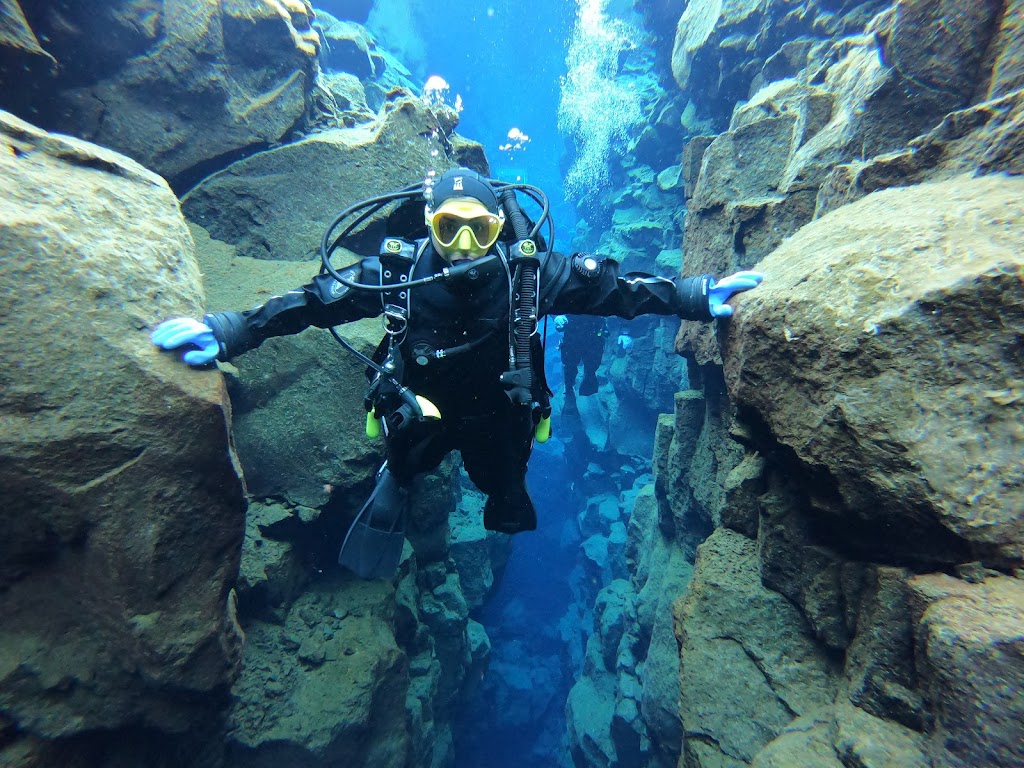
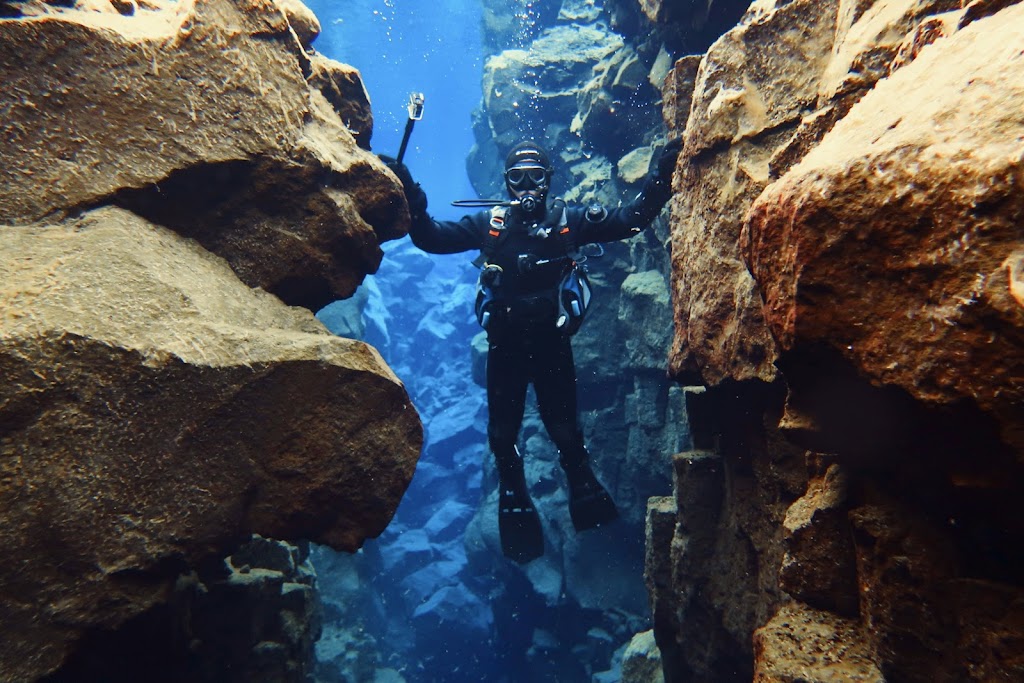
At the tip of Iceland's Reykjanes Peninsula, where the Eurasian and North American continental plates meet, Bjarnagjá presents a remarkable geological diving opportunity. This site is an 18 m (59 ft) deep lava ravine, allowing divers to explore a fissure shaped by immense subterranean forces.
While primarily filled with fresh groundwater, the rift's proximity to the coast, only a few hundred meters, ensures a notable influence from sea salinity, creating a truly unique aquatic environment. Exploring this channel means navigating impressive rock formations born from ancient volcanic activity. Given its location near an active volcano, the area can be subject to closures, requiring divers to remain flexible with their plans.
It's a short drive from Reykjavik, making it accessible for a day trip focused on tectonic exploration.
Conditions are Moderate
High Swell Advisory. Not recommended.
Current conditions near Bjarnagjá show 10° air, 11° sea temperature, 2.5 m waves, and 29 km/h wind. Forecast data is refreshed regularly to ensure accuracy.
Best Time to Dive
Considering Iceland's challenging climate, selecting the optimal time to visit Bjarnagjá typically involves a contrast of seasonal factors. The summer months, particularly June through August, generally offer the most favorable conditions for diving, reflected in 'Moderate' dive scores. During these months, average air temperatures range from 8.5°C (47°F) to 11°C (52°F), while wind speeds and wave heights are at their lowest for the year. Conversely, from October to May, conditions deteriorate significantly, with 'Poor' dive scores predominating due to colder air temperatures, higher winds, and increased wave activity. Rain remains a consistent factor year-round, typically averaging between 3.3 to 5.2 mm (0.13 to 0.20 inches) monthly, so preparation for wet surface conditions is always advisable, regardless of the season.
PEAK SEASON SCORE
Scores combine air & water temps, waves, wind & rainfall for overall conditions.
BEST MONTHS TO DIVE
Monthly records compiled from satellite and marine observation nodes over the last 3 years. Data provided by Open-Meteo and MET Norway.
Dive Experience & Conditions
Diving into Bjarnagjá offers a sensory journey through a unique aquatic channel, defined by its crisp, cool waters and stark volcanic architecture. Although specific water temperatures aren't consistently reported, the necessity for dry suit diving indicates cold conditions, often close to freezing. Visibility within the fissure varies but can be excellent, providing clear views of the dramatic lava rock formations that characterize this subaquatic landscape. Descending into the lava ravine to its maximum depth of 18 m (59 ft) requires comfort in an overhead environment; appropriate training and experience are essential for safe exploration. As a mixed fresh and saltwater site, divers may experience slight variations in buoyancy, demanding vigilant trim and weighting throughout the dive. The absence of strong currents generally allows for a focused exploration of the geological features.
Dive Difficulty & Safety Guidelines
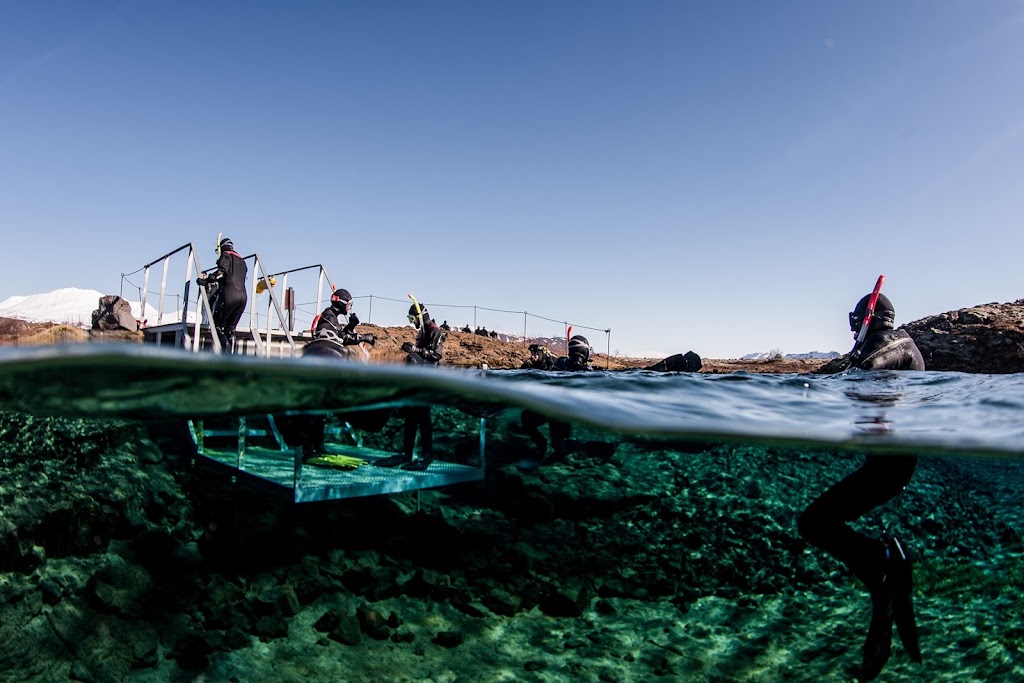
Approaching Bjarnagjá demands careful adherence to safety protocols, especially given its proximity to active volcanic areas and the inherent challenges of cold-water, overhead environment diving. The Reykjanes Peninsula has experienced recent volcanic eruptions, leading to potential site closures; divers should always confirm current access status with local operators. Participation in guided tours is strongly recommended, as local experts provide crucial briefings, manage equipment, and conduct essential weight checks before entry.
Being dry suit certified and having experience in similar conditions is a prerequisite for this dive. A typical dive lasts 30-45 minutes in the water, allowing for thorough exploration while managing exposure to the cold. Exiting the water, hot drinks and snacks are usually provided to aid in warming up.
Recommended Equipment
- Dive Computer
- DSMB
- Hard-soled Dive Boots
This gear list is based on verified equipment signals for Bjarnagjá, Iceland. Always confirm final gear choices with your dive operator, guide, or liveaboard.
Recommended Dive Suit
With water temperatures around 11°C (52°F), many divers find a drysuit (strongly recommended) provides comfortable protection.
Divers performing multiple dives may appreciate slightly warmer protection later in the day.
Environmental conditions appear stable for the near future.
Emergency & Medical Support
Essential information to help you plan your dive trip to Bjarnagjá.

Hyperbaric chambers are a critical part of dive safety infrastructure. Availability varies significantly by region, and not all dive areas have immediate access.
Before diving, it's recommended to:
- confirm nearest medical facilities
- check emergency procedures with local dive operators
- ensure dive insurance covers evacuation if required
Divers Alert Network
Diving emergency assistance available through DAN Europe.
+39 0642115685- 24/7 emergency hotline
- Diving medical assistance
- Evacuation coordination
Emergency contacts are provided for reference. Always verify local emergency services before diving.
Marine Life at Bjarnagjá
While Bjarnagjá's primary allure lies in its dramatic geological formations rather than abundant marine ecosystems, the underwater landscape itself is the main draw. This tectonic fissure, carved by immense forces, showcases an otherworldly environment of rock walls and fissures.
There are no consistently reported marine life sightings specific to Bjarnagjá, though small organisms adapted to cold, mixed-water environments might occasionally be observed. Divers here mostly immerse themselves in the unique sensation of floating between continental plates, admiring the stark beauty of the volcanic rock structures.
Dive Centers Near Bjarnagjá
Today: Closed
Nearest Airports
Nearest airports to help plan travel to this dive area.
Search Flights
Check available flights and routes on Expedia, using the nearby airports listed in this section.
Search Flights on ExpediaFrequently Asked Questions
What is unique about diving in Bjarnagjá?
Bjarnagjá is a unique lava fissure where divers can experience a mix of fresh groundwater and saline ocean water. It's located on the Reykjanes Peninsula, directly over the continental divide between the Eurasian and North American tectonic plates.
What is the maximum depth at Bjarnagjá?
The maximum depth within the Bjarnagjá lava ravine is reported to be 18 m (59 ft). At this depth, divers can explore the fissure's geological features extensively.
Are there any specific certifications required to dive here?
Yes, dry suit certification is typically required for diving at Bjarnagjá due to the cold water temperatures. Experience in overhead environments is also recommended given the nature of the fissure.
How long is a typical dive at this site?
A standard dive in the water at Bjarnagjá usually lasts between 30 to 45 minutes. This duration allows ample time for exploration while considering the cold conditions and maintaining diver safety.
Can volcanic activity affect diving at Bjarnagjá?
Yes, Bjarnagjá is near an active volcanic area on the Reykjanes Peninsula. The site can sometimes be closed due to volcanic activity, and tours may be redirected to an alternative dive spot if necessary.
Is marine life a prominent feature of Bjarnagjá?
Bjarnagjá is primarily celebrated for its unique geological formations and the experience of diving a continental rift. While some small, cold-water organisms might be present, extensive marine life is not a main highlight of this particular dive site.
Planning to dive Bjarnagjá?
Send one inquiry and receive offers directly from the best verified local dive operators.
Conditions are Moderate
High Swell Advisory. Not recommended.
Current conditions near Bjarnagjá show 10° air, 11° sea temperature, 2.5 m waves, and 29 km/h wind. Forecast data is refreshed regularly to ensure accuracy.