
Diving at Barge #1 Site (United States)
Navigating the waters around these barge sites off Oahu requires a keen awareness of conditions. Currents here are often erratic, sometimes picking up unexpectedly. Divers frequently encounter wave heights averaging around 0.5 to 1.1 meters (1.6 to 3.6 feet), with July generally seeing the calmest surface conditions. Overall, air temperatures range from 17°C (63°F) in winter to nearly 29°C (84°F) in summer, influencing surface comfort.
Evening condition tracking at Barge #1 Site features an air temperature of 28°C. We have recorded wave heights measuring 0.3 m during this period. These figures outline the environmental parameters currently present.
Dive Site Location & Key Facts
Dive Site Overview
These artificial wreck sites, including the Mini Barge and Baby Barge off Oahu, present a distinctive diving experience. Situated within five minutes of each other, roughly 8 kilometers (5 miles) west of Hawaii Kai boat marina, they rest in approximately 26 m (85 ft) of Pacific water.
The barges themselves lie upright, with a deck around 15 m (50 ft) and the bottom typically reaching 23-24 m (75-80 ft). What sets these sites apart is their dual nature; they offer the feel of an advanced deep dive combined with the characteristics of an intermediate reef dive. Extensive coral growth covers the top of the barges, providing habitat for various small marine creatures.
While experienced divers can explore the structures, including opportunities for penetration, newer divers may approach these sites under optimal conditions, focusing on the exterior. A sturdy mooring line, connected to the bow, helps divers manage the frequently strong and unpredictable currents that sweep through Manalua Bay.
Conditions are Good
Optimal conditions expected
Current conditions near Barge #1 Site show 28° air, 31° sea temperature, 0.3 m waves, and 27 km/h wind. Forecast data is refreshed regularly to ensure accuracy.
Best Time to Dive
Planning a dive to these barge sites is often best between May and November, when dive scores consistently rate as 'Good' or 'Excellent.' July stands out as the prime month, offering excellent conditions with average air temperatures around 29°C (84°F) and typically minimal rain at about 2.75 mm (0.11 inches). Wave heights during this period are also at their lowest, enhancing boat entry and surface intervals. While water temperatures are not consistently reported for these specific sites, general coastal conditions during these months are favorable. The transition months of February, March, April, November, and December also offer reliably good diving, though average wind speeds can be higher, reaching up to 30 km/h (18.6 mph) in January and October.
PEAK SEASON SCORE
Scores combine air & water temps, waves, wind & rainfall for overall conditions.
BEST MONTHS TO DIVE
Monthly records compiled from satellite and marine observation nodes over the last 3 years. Data provided by Open-Meteo and MET Norway.
Dive Experience & Conditions
Dropping down onto these barge wrecks, divers immediately notice the pervasive coral growth encrusting their surfaces. Visibility around the Oahu barges typically extends from 24 to 30 m (80 to 100 ft), offering clear views of the structures and marine life. Currents, however, are a significant factor, frequently described as erratic and capable of picking up unexpectedly. Divers report being pushed by the flow, particularly when near openings or navigating the wreck's interior. The deck at 15 m (50 ft) invites exploration, while the deeper sections near 24 m (80 ft) provide a more advanced profile. Even with strong water movement, the growth on the barges creates pockets for observation, allowing for close-up photography of small crabs and colorful hawkfish within the corals.
Dive Difficulty & Safety Guidelines
Diving these Oahu barge sites demands strict adherence to safety protocols, primarily due to the strong and sometimes unpredictable currents. Always use the mooring line for descent and ascent; attempting a free drop or breaking off midway can quickly lead to air consumption issues and separation from the site. Maintain conservative air management, initiating your return to the barge when tanks reach approximately 69 bar (1000 PSI) rather than pushing to lower limits.
For those considering penetration, extreme caution is necessary; divers have reported being forcefully impacted by currents within the wreck's openings. Understanding your personal limits is crucial here, and never yield to pressure from others to exceed your comfort or skill level.
Recommended Equipment
- Dive Computer
This gear list is based on verified equipment signals for Barge #1 Site, United States. Always confirm final gear choices with your dive operator, guide, or liveaboard.
Recommended Dive Suit
For divers planning standard recreational dives, dive skin or rash guard is usually a suitable option. A hood or vest is suggested for sensitive divers due to surface winds. Divers vary widely in how quickly they feel cold underwater.
At the moment, divers exploring Barge #1 Site will likely experience water temperatures near 31°C (88°F). Surface air temperatures are resting at 28°C (82°F).
The forecast outlook suggests that temperatures will stay close to current levels.
Emergency & Medical Support
Essential information to help you plan your dive trip to Barge #1 Site.

Hyperbaric chambers are a critical part of dive safety infrastructure. Availability varies significantly by region, and not all dive areas have immediate access.
Before diving, it's recommended to:
- confirm nearest medical facilities
- check emergency procedures with local dive operators
- ensure dive insurance covers evacuation if required
Divers Alert Network
Diving emergency assistance available through DAN World.
+1-919-684-9111- 24/7 emergency hotline
- Diving medical assistance
- Evacuation coordination
Emergency contacts are provided for reference. Always verify local emergency services before diving.
Marine Life at Barge #1 Site
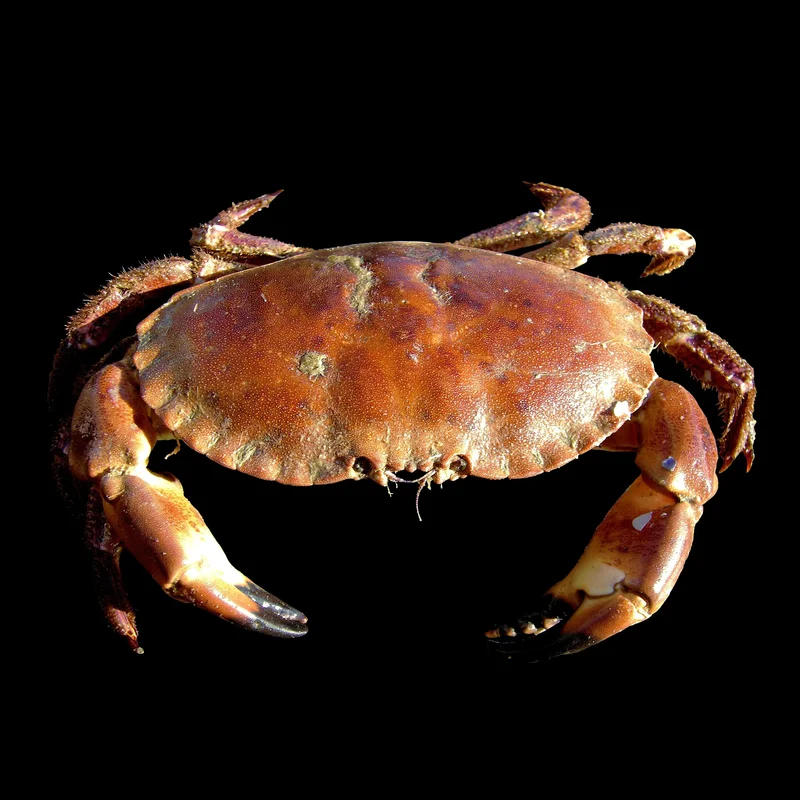
The extensive coral growth blanketing the barge structures forms a vibrant habitat, attracting various marine species. These sites are particularly good for spotting smaller, more elusive creatures.
Divers frequently observe small crabs meticulously hidden among the corals. Colorful hawkfish are also a common sight, often perched on the encrusted surfaces, adding bursts of color to the wreck's dark steel.
While larger pelagics are not consistently reported, the artificial reef structure reliably supports a diverse community of reef fish.
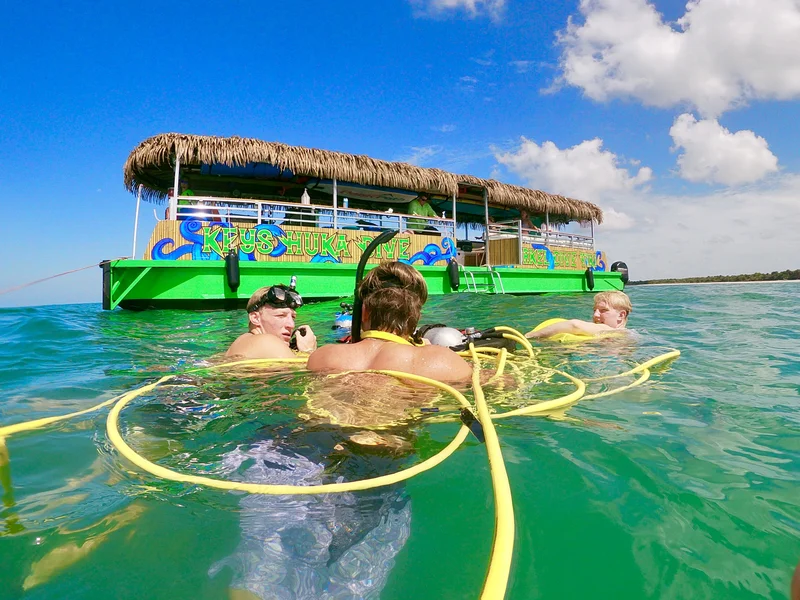
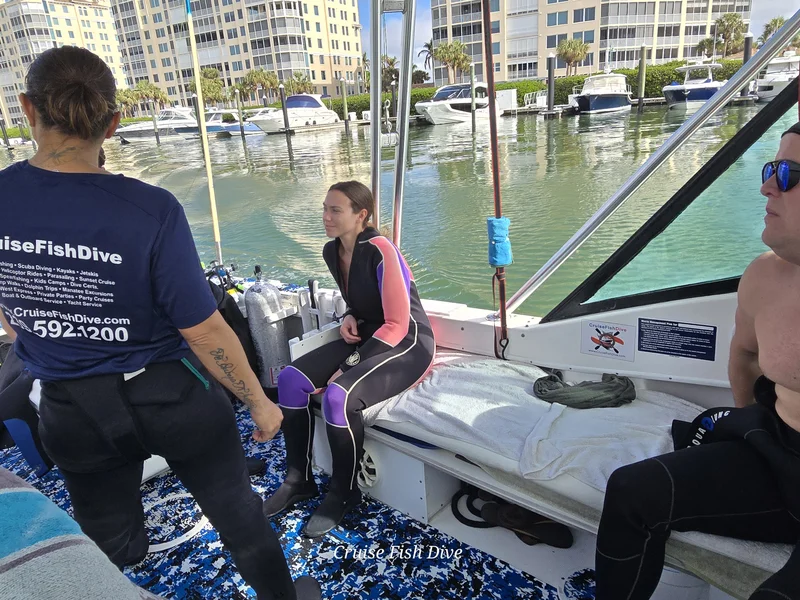
Dive Centers Near Barge #1 Site
Today: 09:00 - 18:00
Nearest Airports
Nearest airports to help plan travel to this dive area.
Search Flights
Check available flights and routes on Expedia, using the nearby airports listed in this section.
Search Flights on ExpediaFrequently Asked Questions
What is the typical depth range for these barge dives?
For these barge dives, the deck sits around 15 m (50 ft), with the bottom typically found at 23-24 m (75-80 ft). Overall maximum depth is approximately 26 m (85 ft).
Are currents a concern at these sites?
Yes, currents are a significant factor. They are frequently erratic and can pick up unexpectedly, requiring divers to use the mooring line for safety and manage air carefully.
Is wreck penetration possible?
Penetration into the barges is described as fairly easy, but divers must exercise extreme caution. Strong currents can impact divers forcefully, especially near internal openings.
What kind of marine life can be seen?
Coral-encrusted barges host small crabs and colorful hawkfish, commonly observed by divers. These wrecks serve as an artificial reef, supporting a variety of smaller reef fish species.
Is this dive suitable for inexperienced divers?
Inexperienced divers can potentially undertake this dive, but only under the right conditions and with proper guidance. It's often perceived as having elements of both advanced deep diving and intermediate reef diving.
What is the visibility like?
Average visibility at these Oahu barge sites ranges from 24 to 30 m (80 to 100 ft). This clarity generally provides good viewing of the wreck structures and marine life.
Planning to dive Barge #1 Site?
Send one inquiry and receive offers directly from the best verified local dive operators.
Conditions are Good
Optimal conditions expected
Current conditions near Barge #1 Site show 28° air, 31° sea temperature, 0.3 m waves, and 27 km/h wind. Forecast data is refreshed regularly to ensure accuracy.