
Diving at Urchin Reef, Drop #11 (United States)
Urchin Reef, Drop #11 represents a critical area within California's ongoing kelp forest restoration initiatives. A testament to ecological challenges, it highlights the direct involvement of the diving community in conservation. Divers here engage in active purple urchin removal, contributing to a broader scientific endeavor to re-establish kelp forests and biodiversity. It's an opportunity for certified divers to participate meaningfully in environmental recovery.
Tonight's objective overview for Urchin Reef, Drop #11 shows an air temperature of 29°C. The measured surface conditions include wave heights around 0.7 m. This environmental data is logged for the close of the day.
Dive Site Location & Key Facts
Dive Site Overview
Diving at Urchin Reef, Drop #11, places divers directly into the heart of a significant ecological restoration project. Primary objectives for many visiting this site involve participating in purple urchin culling efforts, a method designed to alleviate pressure on struggling kelp forests.
Underwater, the landscape often appears dominated by dense aggregations of purple urchins, covering rocks, substrate, and what remains of the kelp. While the specific depth for Drop #11 isn't consistently reported, culling activities typically occur within recreational limits, allowing volunteers and scientists to effectively target urchin populations. This location functions as part of a concentrated regional strategy, where impact of human removal is being rigorously studied to understand its effectiveness in restoring balance to the ocean.
These dives are less about traditional sightseeing and more about purposeful action, offering a tangible connection to marine conservation.
Conditions are Excellent
07:00 - 14:00
Optimal conditions expected
Current conditions near Urchin Reef, Drop #11 show 29° air, 30° sea temperature, 0.4 m waves, and 19 km/h wind. Forecast data is refreshed regularly to ensure accuracy.
Best Time to Dive
Planning a dive to Urchin Reef, Drop #11, involves considering the prevailing coastal conditions, with summer and early autumn months generally providing more favorable weather. Air temperatures during July and August consistently average around 28-29°C (82-84°F), making surface intervals comfortable, though cooler conditions prevail from November to April, averaging 12-20°C (54-68°F). Lower rainfall is typical during summer, around 3-4 mm, increasing slightly in late autumn and winter. Water temperature data is not consistently reported for this specific site; divers should plan for variable and potentially cool conditions common to California's central coast. Moderate wave heights, often below 1 meter (3 feet), especially from July through September, can enhance boat access and underwater stability for working divers.
PEAK SEASON SCORE
Scores combine air & water temps, waves, wind & rainfall for overall conditions.
BEST MONTHS TO DIVE
Monthly records compiled from satellite and marine observation nodes over the last 3 years. Data provided by Open-Meteo and MET Norway.
Dive Experience & Conditions
The underwater environment at Urchin Reef, Drop #11, currently reflects an ecosystem under stress, largely characterized by extensive purple urchin barrens. Divers will often encounter vast areas where purple urchins are ubiquitous, covering the seafloor and any remaining hard structures. While specific current conditions vary depending on the day, coastal sites in California can experience mild to moderate surge, which influences the effort required for culling. Visibility fluctuates; however, the focus remains on the detailed work of urchin removal rather than distant vistas. Diving here is a physically active experience, often involving the use of hand tools for culling. Recreational divers primarily concentrate on accessible depths to maximize their restoration impact, though deeper sections of the reef likely extend beyond typical culling ranges.
Dive Difficulty & Safety Guidelines
Participating in dive activities at Urchin Reef, Drop #11, especially for culling, requires strict adherence to California's specific recreational ocean fishing regulations. Divers must possess a valid California sport fishing license to engage in purple sea urchin removal, including underwater culling. Crucially, urchin culling is legally permitted only at specific, designated locations in California, such as Caspar Cove in Mendocino County and Tanker Reef in Monterey Bay, with Urchin Reef, Drop #11 falling under this broader regional effort.
Individuals must also observe all marine protected area (MPA) regulations that may apply to the specific dive zone. The primary safety consideration involves proper planning and execution of culling techniques to avoid injury to oneself or marine life not targeted for removal. Always dive with a buddy and maintain awareness of your surroundings and any prevailing currents.
Recommended Equipment
- Dive Computer
This gear list is based on verified equipment signals for Urchin Reef, Drop #11, United States. Always confirm final gear choices with your dive operator, guide, or liveaboard.
Recommended Dive Suit
Dive skin or rash guard usually provides adequate warmth in water around this temperature. Consider warmer surface protection (like a boat coat) due to brisk winds. Water conditions at Urchin Reef, Drop #11 are currently measured at approximately 30°C (87°F). Surface air temperatures are resting at 29°C (84°F).
Environmental conditions are expected to remain consistent in the short-term outlook.
Conditions can vary slightly across different parts of the same dive site.
Due to technical issues with our weather providers, data hasn't been fetched for over 48 hours. The data above reflects the conditions at the time of the last successful fetch.
Emergency & Medical Support
Essential information to help you plan your dive trip to Urchin Reef, Drop #11.

Hyperbaric chambers are a critical part of dive safety infrastructure. Availability varies significantly by region, and not all dive areas have immediate access.
Before diving, it's recommended to:
- confirm nearest medical facilities
- check emergency procedures with local dive operators
- ensure dive insurance covers evacuation if required
Divers Alert Network
Diving emergency assistance available through DAN World.
+1-919-684-9111- 24/7 emergency hotline
- Diving medical assistance
- Evacuation coordination
Emergency contacts are provided for reference. Always verify local emergency services before diving.
Marine Life at Urchin Reef, Drop #11
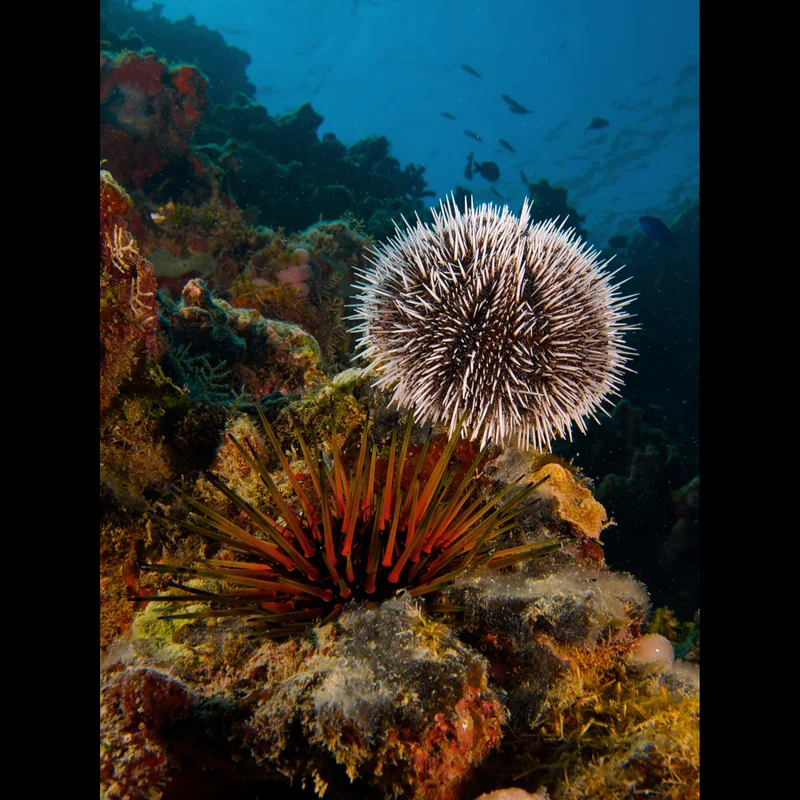
Primary 'highlight' at Urchin Reef, Drop #11, is paradoxically the overwhelming presence of purple sea urchins, which have reshaped the local ecosystem into what's known as an urchin barren. These dense aggregations, found across rocks, kelp remnants, and the seafloor, represent the current ecological imbalance.
Goal of diving here is to directly influence this dynamic, aiming to reduce urchin populations. By doing so, the hope is to foster the recovery of critical kelp habitats, which, in turn, can attract a diverse array of fish, invertebrates, and other marine life that depend on healthy kelp forests for shelter and food.
Dive Sites Near Urchin Reef, Drop #11
View all dive sites in United StatesDiscover more underwater gems in this area.
Dive Centers Near Urchin Reef, Drop #11
Today: 09:00 - 16:00
Nearest Airports
Nearest airports to help plan travel to this dive area.
Search Flights
Check available flights and routes on Expedia, using the nearby airports listed in this section.
Search Flights on Expedia
Plan Your Stay
Looking for a place to stay for your dive trip? Explore hotels, stays, and vacation rentals for dive groups near Destin.
Dive Navigator may earn a commission from these links at no extra cost to you.
Frequently Asked Questions
What is the main purpose of diving at Urchin Reef, Drop #11?
The main purpose of diving at this site is to participate in purple sea urchin culling as part of a larger kelp forest restoration initiative. Divers actively remove urchins to help re-establish a balanced marine ecosystem.
Are there any special permits or licenses required for culling?
Yes, divers must possess a valid California sport fishing license to engage in purple sea urchin culling activities. It's crucial to ensure your license is current and covers the regulations for sea urchin take.
Is urchin culling legal everywhere in California?
No, urchin culling is only legally permitted at specific, designated locations in California, such as Caspar Cove in Mendocino County and Tanker Reef in Monterey Bay. Divers must verify the legality for their specific dive site.
What are the typical water conditions at this site?
Water temperature data is not consistently reported for Urchin Reef, Drop #11, so divers should expect variable and potentially cool conditions typical of California's central coast. Visibility can also fluctuate, but surface weather is generally milder during summer.
What kind of marine life can I expect to see?
Currently, the site is characterized by extensive purple sea urchin barrens, meaning urchins are the dominant visible marine life. The long-term goal of culling is to allow kelp forests to recover, which would then attract a more diverse array of fish and invertebrates.
What equipment is recommended for culling dives?
Beyond standard cold-water dive gear for thermal protection, divers involved in culling will need specialized hand tools like hammers or crushing devices. A valid California sport fishing license is also mandatory.
Planning to dive Urchin Reef, Drop #11?
Send one inquiry and receive offers directly from the best verified local dive operators.
Conditions are Excellent
07:00 - 14:00
Optimal conditions expected
Current conditions near Urchin Reef, Drop #11 show 29° air, 30° sea temperature, 0.4 m waves, and 19 km/h wind. Forecast data is refreshed regularly to ensure accuracy.