
Diving in Dominica
Dive locations in Dominica are spread across different environments, each presenting distinct conditions and challenges. We currently track 10 dive locations in our database for Dominica. This helps divers compare locations and plan dives based on available conditions.
Situated in the Lesser Antilles midway between Guadeloupe and Martinique, the English- and Kwéyòl-speaking Commonwealth of Dominica—distinct from the Spanish-speaking Dominican Republic—is the youngest and most rugged volcanic island in the Eastern Caribbean. Peer-reviewed studies of Dominica’s shallow hydrothermal vents document nine potentially active volcanic centers across its 751 km² (290 sq mi) landmass, creating submarine topography that mirrors the towering cliffs and gorges above the waterline.
Along Dominica's sheltered western Caribbean coast, the insular shelf narrows to just 50–500 m (165–1,640 ft) before plunging down vertical lava walls and submerged crater rims past 300–450 m (985–1,475 ft) into a 1,500+ m (4,920+ ft) offshore trough. An island-wide benthic habitat survey of Dominica records 36 stony coral species, dense Madracis finger-coral fields, giant barrel sponges, crinoids, and vibrant yellow and azure tube sponges flourishing in calm, low-runoff leeward bays where large hotel development and mass cruise dive crowds remain absent.
Dive Map of Dominica
Scuba diving in Dominica runs almost exclusively along the calm western Caribbean leeward coast, shielded from Atlantic trade-wind rollers by a 1,400 m (4,600 ft) central mountain spine. At the island's southwestern tip south of Roseau, the Soufrière Scotts Head Marine Reserve (SSMR) occupies a breached submarine volcanic caldera framed between Pointe Guignard in the north and the narrow Cachacrou tombolo at Scotts Head, where Caribbean and Atlantic currents meet.
Stretching north from the capital Roseau past Loubiere, Mahaut, Salisbury, and Mero, the Central West Coast strings together black-sand macro piers and offshore volcanic ridges within 5–15 minutes of shore. Around the northwestern port of Portsmouth, the twin volcanic cones of Cabrits National Park and Toucari Bay anchor cavernous lava arches and shallow coral gardens, while deep offshore canyons parallel the entire western coast inside Dominica's statutory Sperm Whale Reserve.
Dive Sites to Explore
View all 10 sites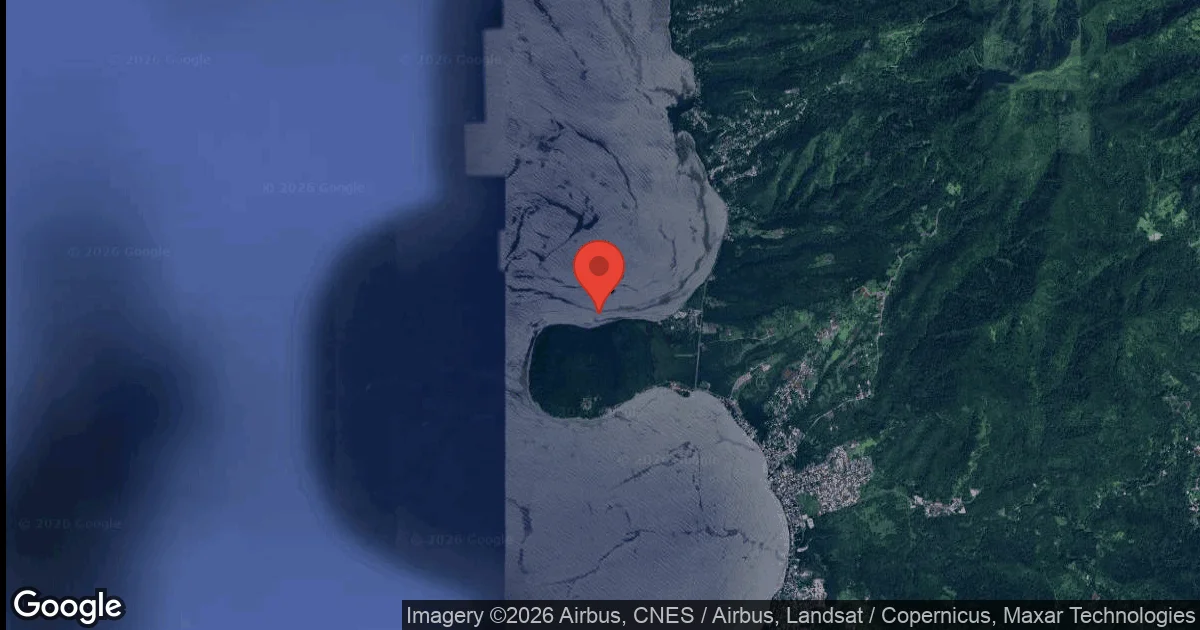
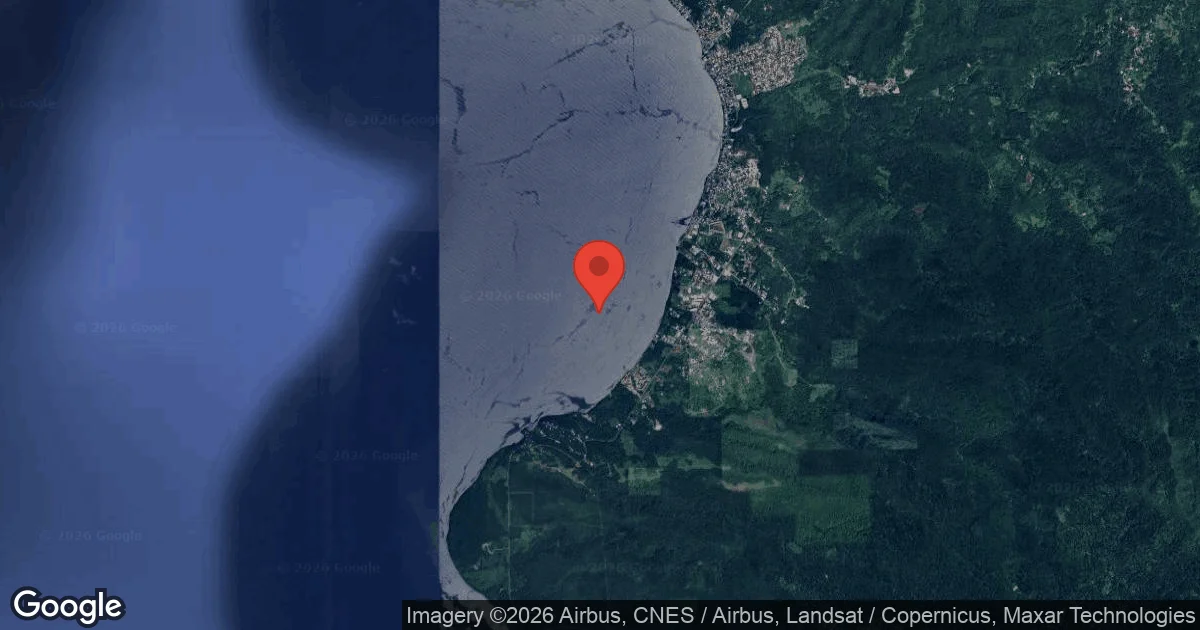
Inside Soufrière Bay, Champagne Reef (2–22 m / 7–72 ft) vents continuous curtains of warm geothermal gas bubbles (44–75°C / 111–167°F fluid at the sand interface) across rust-orange iron-oxide patches frequented by sea turtles, frogfish, and seahorses. Minutes further out on the caldera rim, Dangleben's Pinnacles (8–40 m / 26–131 ft) rises in five sponge-wrapped spires into clouds of chromis, creole wrasse, and hunting jacks, while Scotts Head Drop-Off, Crater's Edge, and L'Abym plunge sheer into cobalt water. Under Soufrière Scotts Head co-management regulations, all scuba diving in the reserve operates strictly from moored dive boats with a mandatory marine user fee, and dropping anchors is prohibited.
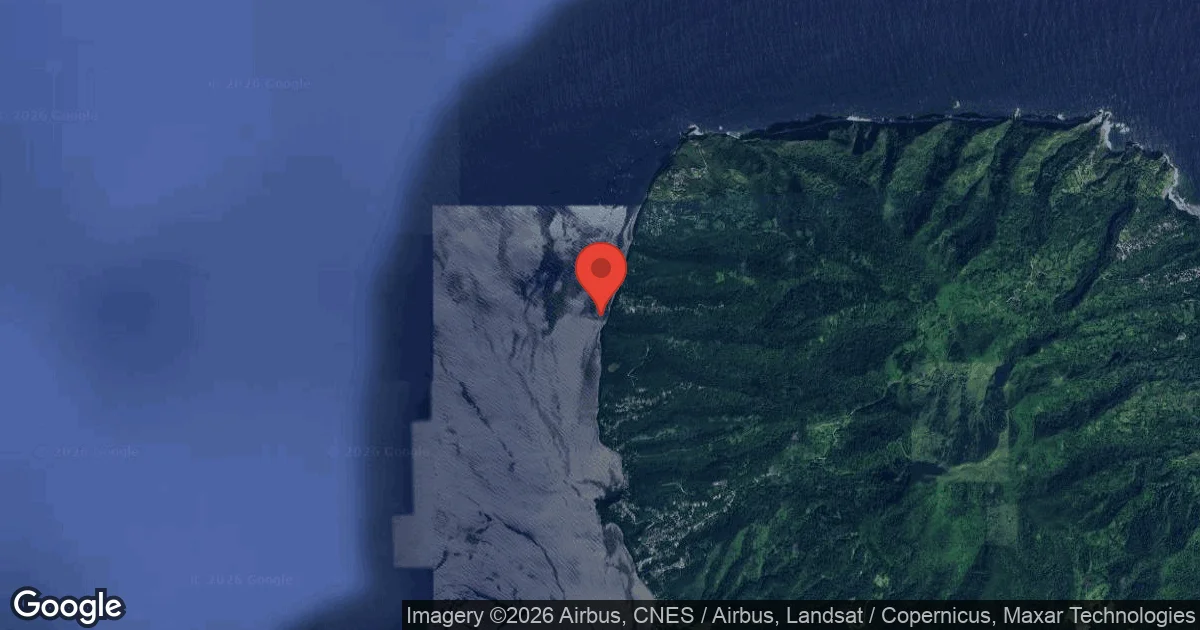
Along the Central West Coast off Salisbury and Mero, Nose Reef, Whale Shark Reef, and Rena's Reef (8–40 m) step down sponge-and-gorgonian terraces while Pole to Pole (3–15 m) delivers acclaimed Caribbean macro photography among batfish and flying gurnards. In the northwest around Portsmouth, protected since 1986 under Dominica's National Parks and Protected Areas Act and managed by the Forestry, Wildlife and Parks Division at Cabrits, local moorings at Toucari North, Tube Reef, and Secret Arch weave through sunlit lava-tube tunnels and sponge gardens alongside historic Prince Rupert Bay reefs at Cannon Site and geothermal vents at Hot Sulfur.
Best Time to Dive in Dominica
Dominica's leeward Caribbean reefs are diveable year-round, led by the dry trade-wind season from November through May when lower mountain rainfall minimizes river silt, bringing crisp 25–35+ m (82–115+ ft) visibility across southwest caldera walls and regular offshore sightings of resident sperm whales and visiting winter humpback whales.
An early-summer calm window in June and July drops winds to near-glassy conditions along the entire west coast as sea temperatures climb past 28°C (82°F), interrupted only by brief tropical showers. From August through October, water reaches its annual peak of 29–29.4°C (84–85°F) alongside annual mass coral spawning and the quietest reef boat traffic, though travellers should monitor Atlantic tropical cyclone advisories closely.
Monthly Sea Temperatures
Satellite records from the NOAA Coral Reef Watch Windward Caribbean gauge show stable tropical sea surface temperatures ranging from 26.5°C (79.7°F) in February to 29.4°C (84.9°F) in September.
| Jan | Feb | Mar | Apr | May | Jun | Jul | Aug | Sep | Oct | Nov | Dec | |
|---|---|---|---|---|---|---|---|---|---|---|---|---|
| Max | 28° | 27° | 28° | 28° | 30° | 30° | 30° | 30° | 31° | 30° | 29° | 29° |
| Avg | 27° | 27° | 27° | 28° | 28° | 29° | 29° | 29° | 29° | 29° | 28° | 28° |
| Min | 27° | 26° | 26° | 27° | 26° | 27° | 28° | 28° | 28° | 28° | 28° | 27° |
Dive Conditions
Visibility averages 20–35+ m (65–115+ ft) on offshore pinnacles and crater walls in the Soufrière Scotts Head Marine Reserve and Cabrits, dipping briefly near river mouths after heavy mountain rain squalls. Currents remain mild inside leeward bays, while moderate-to-strong Atlantic-to-Caribbean flows can sweep Scotts Head Point and Dangleben's Pinnacles, where drift protocols and surface marker buoys (DSMBs) are standard.
For thermal protection, a 3 mm shorty or rashguard suffices from June through November (28.3–29.4°C), whereas a 3 mm full wetsuit keeps multi-dive days comfortable from December through April (26.5–27.5°C).
Marine Life Highlights
Most Mentioned Species
Marine life in Dominica varies across dive locations, with different species appearing depending on environment and conditions. The species highlighted here are the most frequently associated with dive sites in our data, offering a realistic overview of what divers are most likely to encounter.
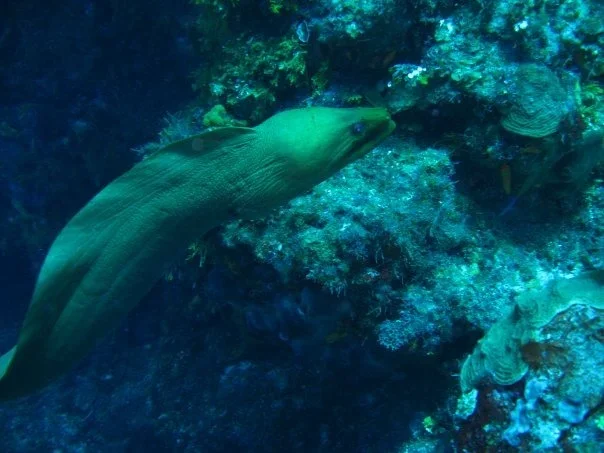
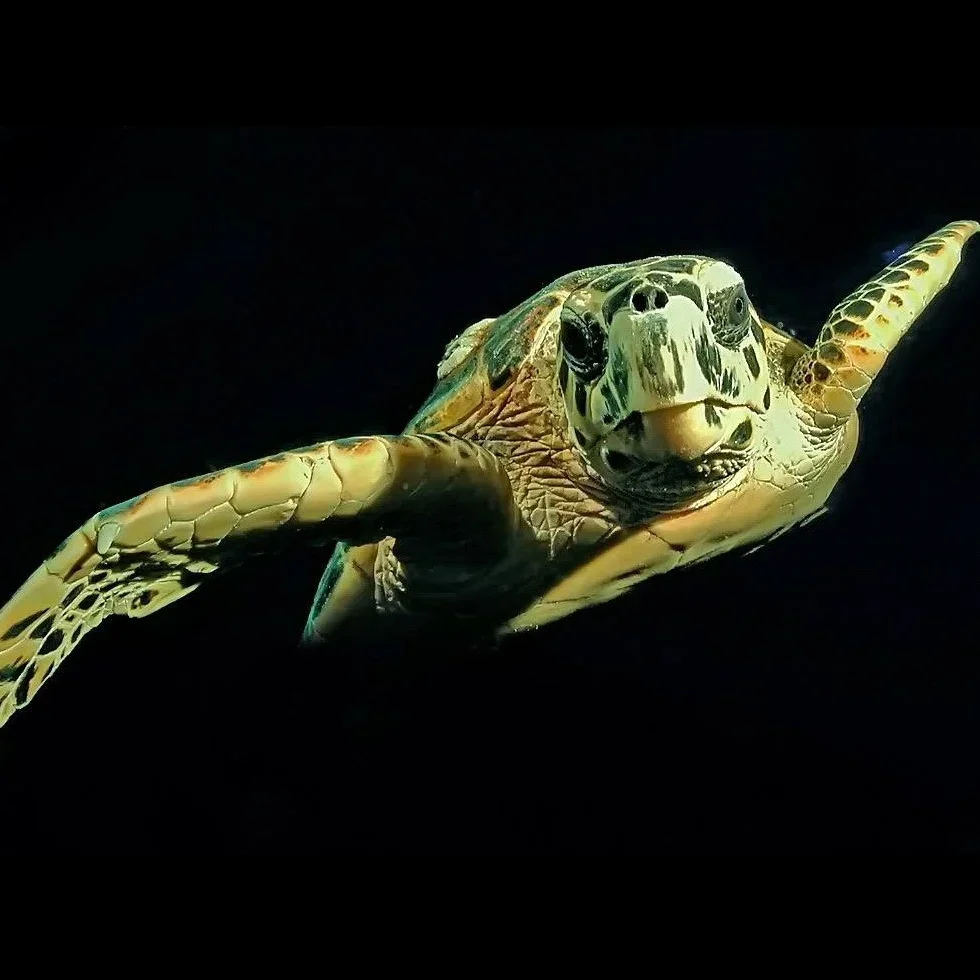
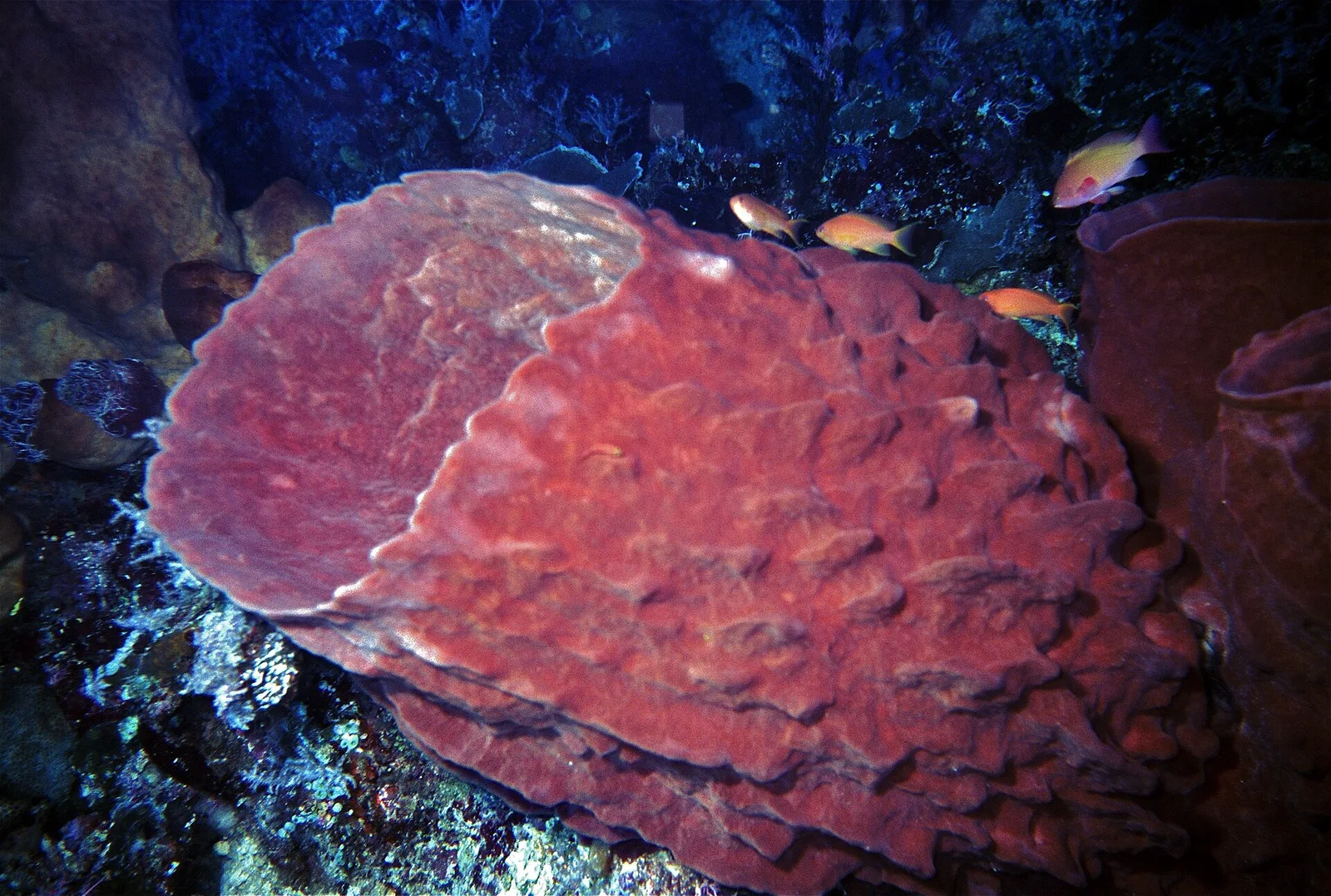
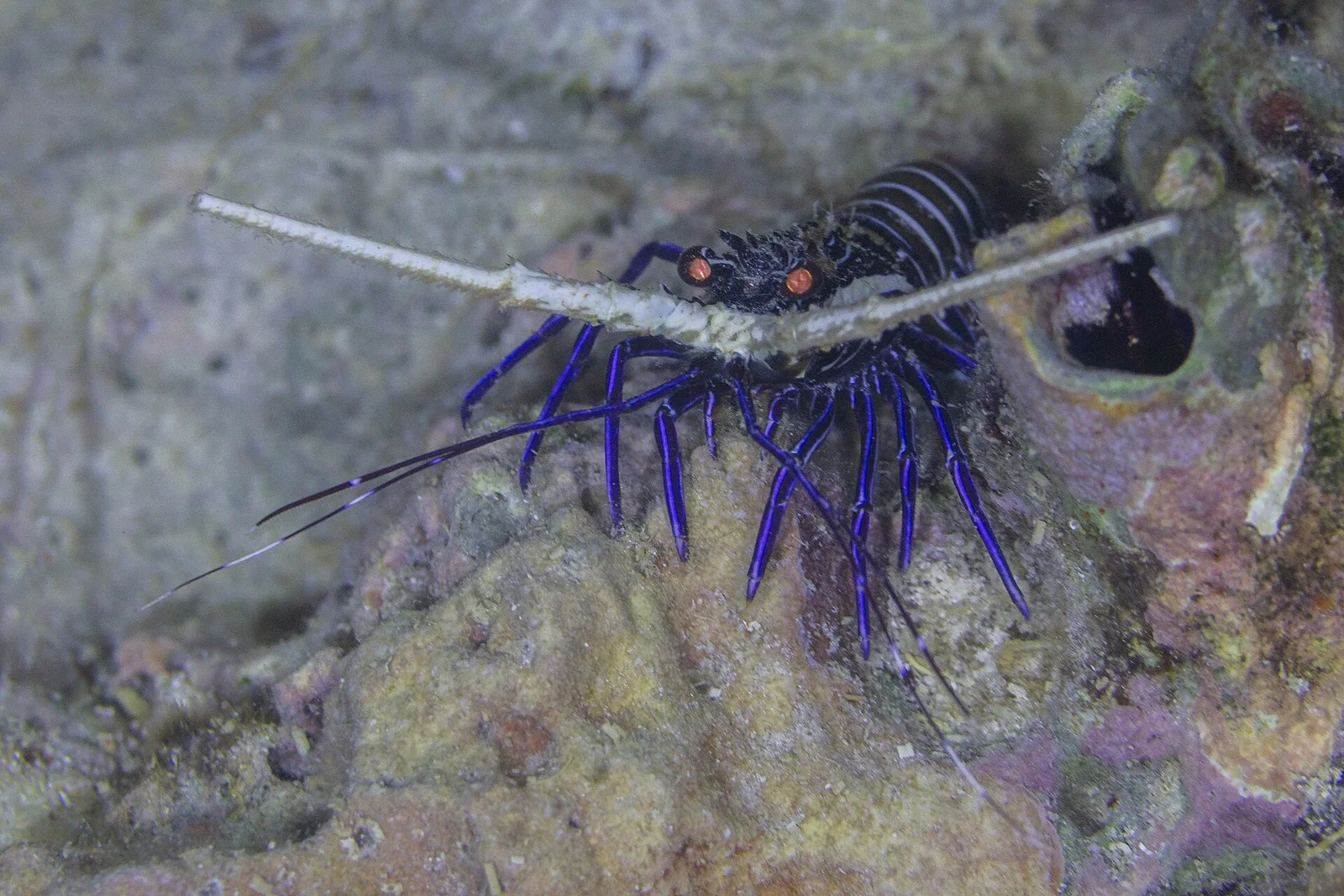
Dominica's volcanic ledges are famed for high-density macro and sponge life rather than sprawling sand flats: divers routinely spot golden and black frogfish, longsnout seahorses, red-lipped and shortnose batfish, flying gurnards, golden-tail and spotted morays, hawksbill and green sea turtles, spotted drums, feather stars, and schools of blackbar soldierfish, creole wrasse, and horse-eye jacks.
Just 1 to 5 km offshore in 1,000–2,000 m water lives the Eastern Caribbean's year-round population of resident matrilineal sperm whales (Physeter macrocephalus), studied over two decades in Dominica Sperm Whale Project behavioral research. In October 2025, Parliament enacted legislation establishing the world’s first Sperm Whale Reserve across roughly 1,231 km² (475 sq mi) off Dominica's west coast, backed by strict 2026 Sperm Whale Reserve vessel corridor regulations: scuba diving, rebreathers, and underwater scooters with sperm whales are strictly prohibited by law, and in-water observation is restricted exclusively to small, capped, government-permitted snorkel passes without scuba bubbles.
Regions for Diving
Southwest — Soufrière Scotts Head Marine Reserve
Flagship volcanic caldera diving 15–20 minutes south of Roseau, home to Champagne Reef, Scotts Head, Crater's Edge, Dangleben's Pinnacles, and L'Abym.
Central West Coast (Roseau, Salisbury & Mero)
Relaxed boat and pier-muck diving centrally positioned for accessing both northern and southern reefs alongside whale-watching departures.
Northwest — Portsmouth & Cabrits National Park
Quiet northern bay framed by historic Fort Shirley, offering volcanic lava-tube swim-throughs and sponge reefs around Toucari Bay, Five Finger Rock, and Shark's Mouth.
Travel & Passport Guide
Travel Basics
Trip Planning
Under Government of Dominica visa-free entry rules, citizens of the US, UK, EU, Canada, CARICOM, and Commonwealth states enter visa-free for 3 to 6 months, and most other tourists holding return tickets receive up to 21 days visa-free.
Visa requirements depend on your nationality. Check official government sources before traveling.Safety & Diving Considerations
Dial 999 nationwide for emergency ambulance, police, and Coast Guard dispatch. International travellers arrive via Douglas-Charles Airport (DOM) or Roseau regional ferries, using the Eastern Caribbean Dollar pegged by the Eastern Caribbean Central Bank at EC$2.70 = US$1.00. While an on-island chamber has historically been installed at Dominica-China Friendship Hospital in Roseau, staffing availability fluctuates and UK FCDO Dominica health guidance advises that serious decompression emergencies require air-ambulance evacuation to the 24/7 hospital multiplace chambers (Caisson Hyperbare) at CHU de la Guadeloupe (Pointe-à-Pitre) or CHU de la Martinique (Fort-de-France)—making active dive evacuation insurance mandatory.
Observe strict post-dive altitude intervals before heading inland: Dominica's mountainous interior—including UNESCO-inscribed Morne Trois Pitons National Park, the Boiling Lake (~800 m / 2,625 ft), Freshwater Lake (760 m), summit trails (1,342–1,447 m), and even the 600+ m Pont Casse cross-island road to DOM airport—sits well above the 300 m (1,000 ft) altitude decompression threshold. Schedule high-elevation rainforest hikes before diving or allow an 18–24 hour surface interval after repetitive dives.
Dive Centers in Dominica
0 dive centersRequest Dive Offers from Local Centers
Tell us your dates and diving needs. We'll review your request and seek offers from relevant local dive centers in Dominica.
Frequently Asked Questions
Can you scuba dive with Dominica's resident sperm whales?
No—scuba diving with sperm whales is strictly illegal in Dominica to protect nursing calves and matrilineal pods from bubble and acoustic stress; only licensed boats holding a limited government permit may conduct quiet surface/snorkel encounters without scuba tanks.
Why do warm bubbles rise from the seabed at Champagne Reef?
Champagne Reef (2–22 m) lies on the submerged flank of the Plat Pays volcanic complex, where geothermal fluids and volcanic gases vent continuously through fractures and black-and-orange mineral sand.
Is Dominica the same island as the Dominican Republic?
No—the Commonwealth of Dominica (DOM, capital Roseau) is an English-speaking volcanic Nature Island in the Lesser Antilles between Guadeloupe and Martinique, over 900 km southeast of the Dominican Republic.
Can I hike to the Boiling Lake on the same afternoon after a morning two-tank dive?
No—Boiling Lake (~800 m / 2,625 ft) and surrounding Morne Trois Pitons trails climb high above sea-level decompression limits; hike before your dive days or wait 18–24 hours after diving.
Are shore dives and anchoring allowed in Soufrière Scotts Head Marine Reserve?
Anchoring is banned across the reserve to protect fragile corals and sponges; all scuba dives inside the SSMR use permanent mooring buoys from licensed dive boats and require the reserve user fee.
Do I need dive evacuation insurance for Dominica?
Yes—serious decompression sickness cases routinely require fixed-wing or helicopter evacuation to 24/7 hospital hyperbaric centers in neighboring Guadeloupe or Martinique.