Loading...

Diving at Red Rocks Kamenjak (Croatia)
Published
A versatile Upper Kamenjak coastal reef and cavern dive combining Bora-sheltered shore entry, a lively 19-meter reef cave, and a steep outer drop-off to 38 meters.
Starting the day at Red Rocks Kamenjak, the ambient air temperature is recorded at 13°C. Ongoing monitoring shows wave heights measuring 1.5 m. This data represents the current surface conditions for early activities.
Dive Site Location & Key Facts
Site Characteristics
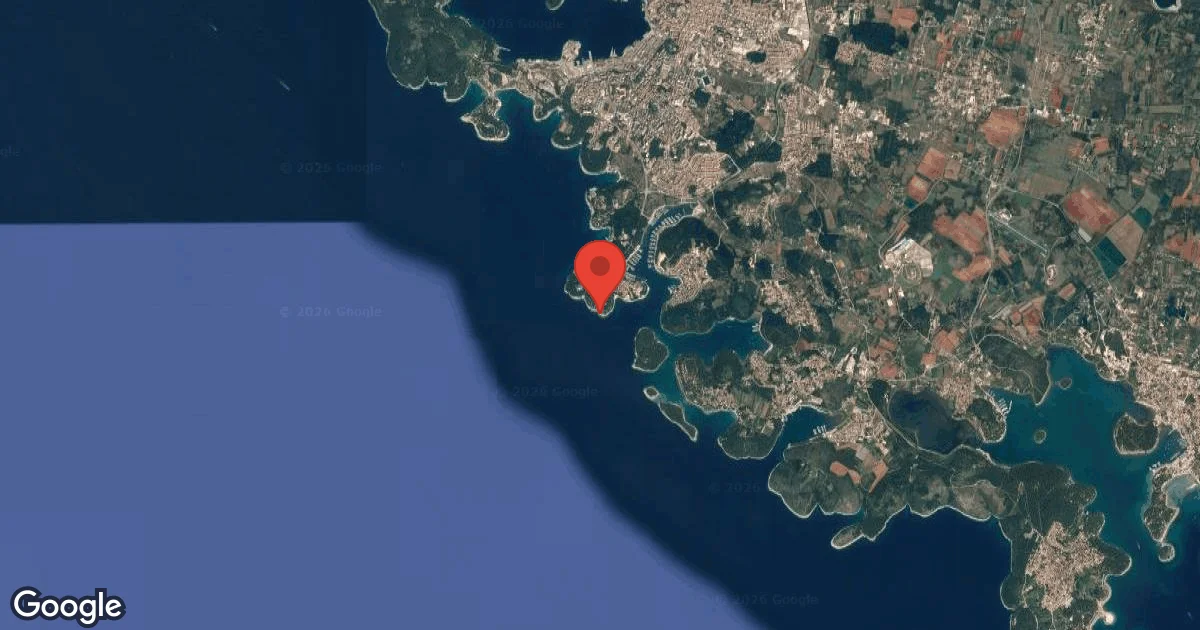
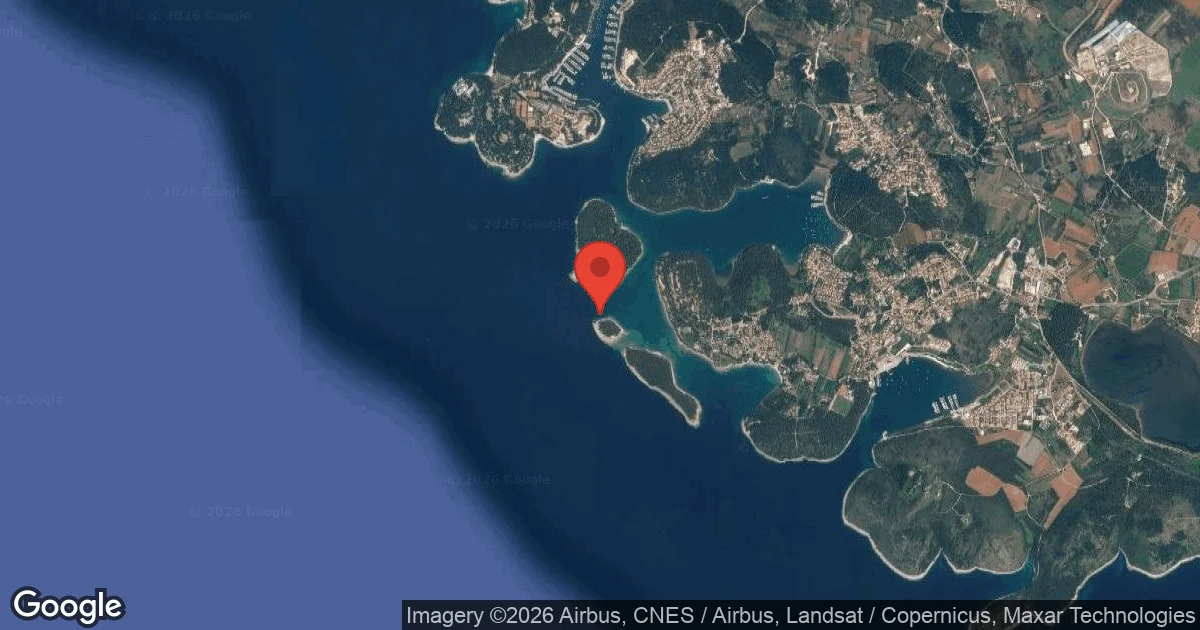
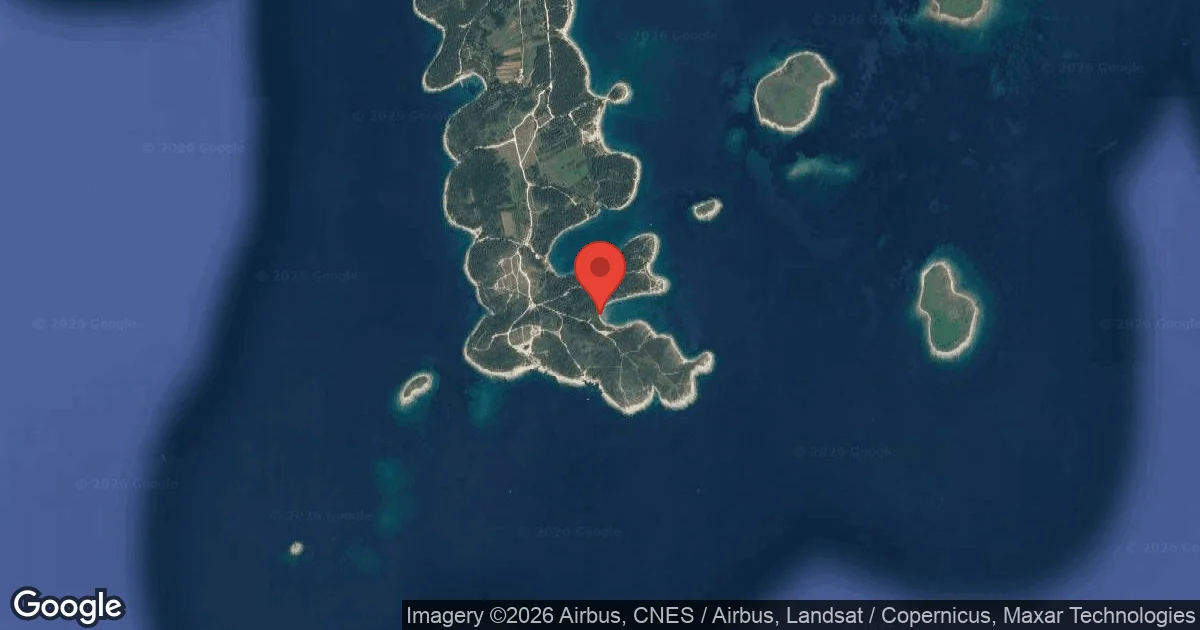
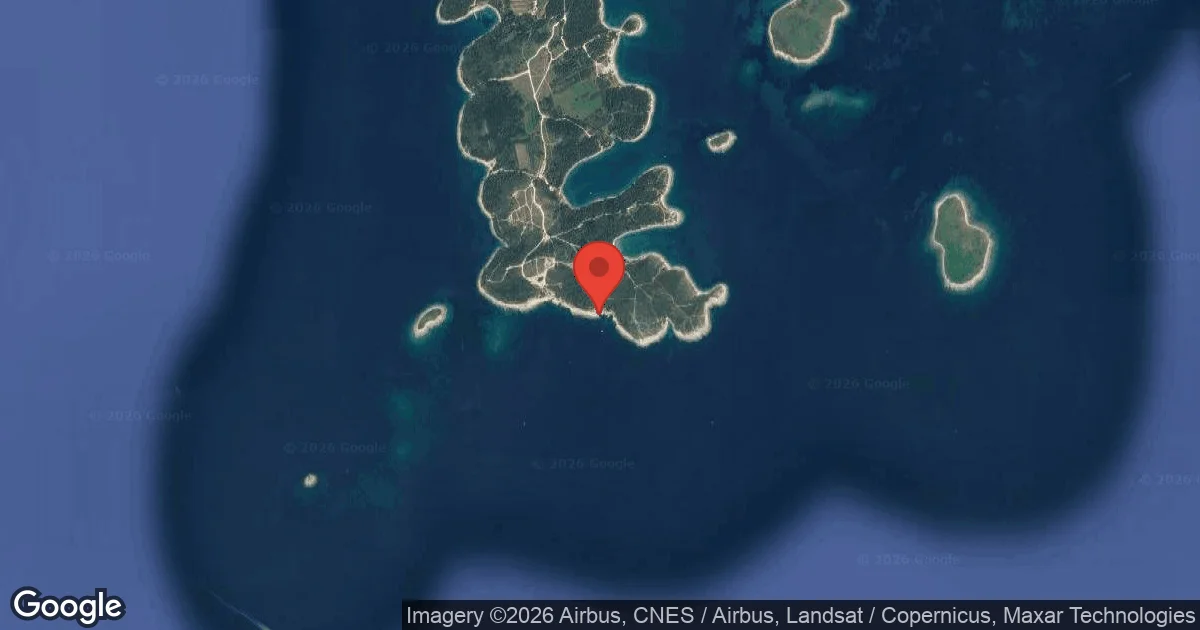
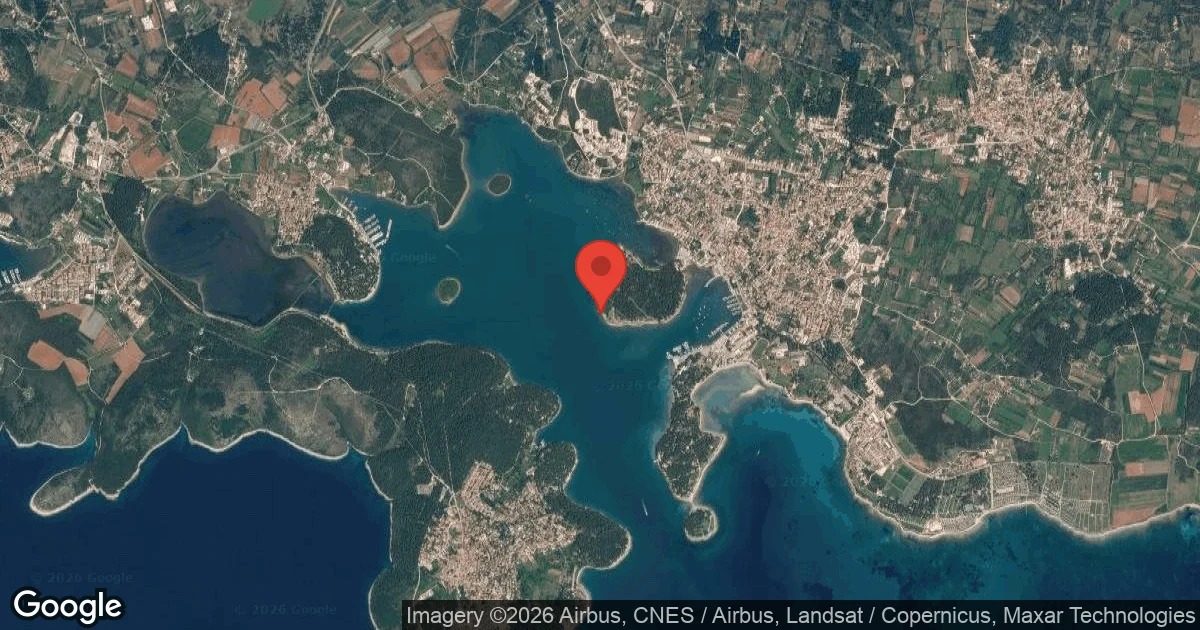
Interactive map & 360° view for Red Rocks Kamenjak. Alongside the satellite map above, switch to the “360° Shore & Entry” tab (37 m from the map pin) when planning your dive at Red Rocks Kamenjak in Croatia to preview the surrounding coastline or surface approach, check the water entry layout, and spot surface landmarks. Panorama imagery captured Jun 2021; site access and local conditions may have changed since, so always verify on arrival.
Max Depth38m / 125ft
Entry TypeBoat & Shore
Water Typesalt
Dive Types
CavernDeepReef
Dive Site Overview
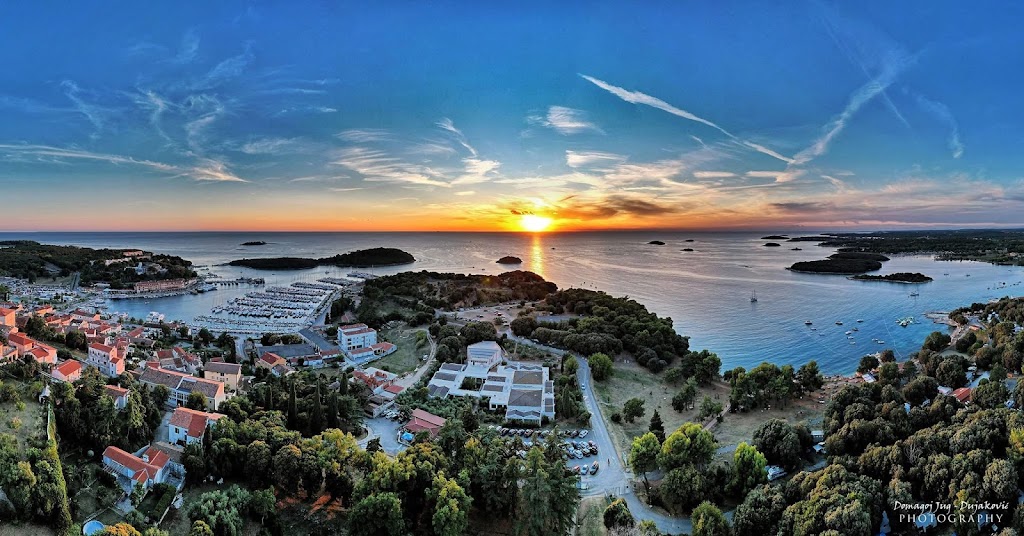
Red Rocks Kamenjak sits on the western flank of the protected Upper Kamenjak landscape between Banjole and Premantura, distinct from the central Dalmatian cliff sites sharing a similar name. Thanks to direct vehicle tracks leading down to a compact rocky inlet, it stands out as one of southern Istria's most rewarding shore-accessible multi-level dives while also welcoming short boat runs from nearby marinas in Banjole and Pomer.
The underwater topography splits cleanly into two distinct routes from the sheltered entry cove. Following a seaward compass bearing perpendicular to the coastline brings divers down a terraced limestone slope to a compact cavern entrance at 19 meters, packed with schooling bream and shade-loving invertebrates. This mid-depth turnaround makes an ideal profile for entry-level divers building confidence on structured Mediterranean reefs.
Beyond the 19-meter chamber, the seabed steepens noticeably, transitioning into a rugged, sponge-draped drop-off that reaches 38 meters at the sandy-detrital base. Meanwhile, turning 50 meters to the right along the shallow coastal cliff reveals a second, wider nearshore cavern sculpted by wave action, offering superb wide-angle ambient light and dense concentrations of nocturnal-style reef dwellers during daylight hours.
Red Rocks Kamenjak
Conditions are Moderate
5/10
Confidence: 8/10
Indicates meteorological model agreement and data availability.
DIVE WARNING
High Wind Advisory (49km/h). Unsafe surface.
06:12
18:45
H: 10:45
L: 16:20
Air / Sea Temp
13° / 17°
Wave Height
1.5 m
Wind Speed
49 km/h NE
Rain Chance
50%
Current conditions near Red Rocks Kamenjak show 13° air, 17° sea temperature, 1.5 m waves, and 49 km/h wind. Forecast data is refreshed regularly to ensure accuracy.
Radius: ~12km
Updated: Nov 22, 2026, 22:07 local timeMARINE: OPEN-METEOWEATHER: YR.NO
Best Time to Dive
The prime diving window runs from May through October, when surface conditions along western Kamenjak are calmest and water temperatures climb from 17°C in late spring to 24°C in August. Early autumn in September and October delivers the sharpest horizontal visibility—routinely exceeding 20 meters—alongside warm, stable shallows and quieter coastal tracks ashore.
Because the cove faces west-southwest and sits tucked beneath the rising limestone ridge of Upper Kamenjak, it remains remarkably well protected when the prevailing northeast Bora wind blows across the Istrian peninsula. Conversely, strong southwest Garbin or southeast Jugo swells push directly into the inlet, making calm mornings or light offshore wind days far superior for shore entries and cave exploration.
PEAK SEASON SCORE
91/100
ExcellentScores combine air & water temps, waves, wind & rainfall for overall conditions.
BEST MONTHS TO DIVE
JUN
JUL
AUG
DIVE SCORE GUIDE (0–100)
Excellent (90–100)
Very Good (80–89)
Good (70–79)
Moderate (50–69)
Poor (30–49)
Not Recommended (0–29)
Monthly records compiled from satellite and marine observation nodes over the last 3 years. Data provided by Open-Meteo and MET Norway.
Dive Experience & Conditions
Shore divers gear up near the rocky cove and step into clear, waist-deep water over smooth limestone slabs and boulders—sturdy neoprene booties make the entry effortless. Surface currents inside the cove are negligible, and even out on the 38-meter slope water movement rarely exceeds a mild coastal drift, allowing unhurried navigation and relaxed macro photography.
A noticeable summer thermocline typically forms between 14 and 18 meters, right above the seaward cave entrance, dropping water temperatures to roughly 15–16°C on the deeper terrace. Bringing a primary dive torch transforms both cave recesses, revealing vivid red encrusting sponges, bryozoans, and yellow cluster anemones hidden in the shaded limestone vaults before ascending along the sunlit coastal wall for an extended shallow finish.
Dive Difficulty & Safety Guidelines
Although both chambers at Red Rocks Kamenjak are compact coastal caverns with clear exit geometry, divers should carry an independent dive light, maintain neutral trim well above the floor sediment, and never enter overhead recesses beyond the natural daylight zone without appropriate training. Fine calcareous silt inside the shallow right-hand cave can be stirred up by heavy finning, so frog kicks and controlled buoyancy are essential.
Shore-entering teams are legally required in Croatian waters to tow a visible surface marker buoy with a dive flag throughout the dive, particularly when ascending away from the immediate cliff face where seasonal leisure boats cruise along Kamenjak. On the 38-meter outer profile, monitor no-decompression limits and gas reserves closely due to the cooler sub-thermocline water.
Recommended Equipment
Deep dive hazard. Increased narcosis and gas consumption risk.
Overhead environment. Do not enter beyond training and gas planning limits.
- Dive Computer
- DSMB
- Primary & Backup Lights
- Reel / Spool
- Cutting Tool
- Hard-soled Dive Boots
This gear list is based on verified equipment signals for Red Rocks Kamenjak, Croatia. Always confirm final gear choices with your dive operator, guide, or liveaboard.
Recommended Dive Suit
According to recent observations, water temperatures near Red Rocks Kamenjak are approximately 17°C (62°F). Surface air temperatures are resting at 13°C (56°F).
The upcoming forecast points to generally steady conditions in the area.
Divers who prefer moderate insulation typically choose 5-7mm wetsuit in similar environments. Strong winds are present; please take strong precautions against rapid cooling during surface intervals. A thermal robe or jacket is recommended between dives. Many experienced divers adjust their exposure protection depending on the type of dive planned. Stronger winds may also make surface intervals feel cooler than usual. Surface intervals may feel noticeably cooler once you exit the water.
Red Rocks Kamenjak conditions last reviewed: 22:07 local time (UTC+1), Nov 22, 2026
Emergency & Medical Support
Essential information to help you plan your dive trip to Red Rocks Kamenjak.

Hyperbaric chambers are a critical part of dive safety infrastructure. Availability varies significantly by region, and not all dive areas have immediate access.
Before diving, it's recommended to:
- confirm nearest medical facilities
- check emergency procedures with local dive operators
- ensure dive insurance covers evacuation if required
24/7 Available
Divers Alert Network
Diving emergency assistance available through DAN Europe.
+39 0642115685- 24/7 emergency hotline
- Diving medical assistance
- Evacuation coordination
Emergency contacts are provided for reference. Always verify local emergency services before diving.
Closest Listed Hyperbaric Chambers (≤ 200 km)
Approximate straight-line distances from this dive site — emergency travel times may vary.
7 km7 kmPoliklinika za baromedicinu OXY – Podružnica Pula
Pula, Croatia+385 52 215 663Details7 kmPoliklinika za baromedicinu OXY – Podružnica Pula
Pula, Croatia · Multiplace
Hours: Mon–Fri 07:30–15:30Facility: Opća bolnica PulaICU On-Site: Not reportedSource: KBC Rijeka / Poliklinika OXYOfficial website
7 km
Poliklinika za baromedicinu OXY – Podružnica Pula
Pula, Croatia+385 52 215 663Details
7 km
Poliklinika za baromedicinu OXY – Podružnica Pula
Pula, Croatia · Multiplace
Hours: Mon–Fri 07:30–15:30
Facility: Opća bolnica Pula
ICU On-Site: Not reported
Source: KBC Rijeka / Poliklinika OXY
Official website74 km74 kmZavod za podvodnu i hiperbaričnu medicinu – KBC Rijeka
Rijeka, Croatia24/7ICU+385 51 407 435Details74 kmZavod za podvodnu i hiperbaričnu medicinu – KBC Rijeka
24/7 ListedICU CapableRijeka, Croatia · Multiplace (8 seated / 2 stretcher ICU)
Hours: 24/7 EmergencyFacility: Klinički bolnički centar Rijeka (Lokalitet Sušak)ICU On-Site: YesSource: KBC Rijeka / Poliklinika OXYOfficial website
74 km
Zavod za podvodnu i hiperbaričnu medicinu – KBC Rijeka
Rijeka, Croatia24/7ICU+385 51 407 435Details
74 km
Zavod za podvodnu i hiperbaričnu medicinu – KBC Rijeka
24/7 ListedICU CapableRijeka, Croatia · Multiplace (8 seated / 2 stretcher ICU)
Hours: 24/7 Emergency
Facility: Klinički bolnički centar Rijeka (Lokalitet Sušak)
ICU On-Site: Yes
Source: KBC Rijeka / Poliklinika OXY
Official website76 km76 kmPoliklinika za baromedicinu OXY – Poslovna jedinica Crikvenica
Crikvenica, Croatia+385 51 785 229Details76 kmPoliklinika za baromedicinu OXY – Poslovna jedinica Crikvenica
Crikvenica, Croatia · Multiplace
Hours: Mon–Fri 07:30–15:30Facility: Thalassotherapia CrikvenicaICU On-Site: Not reportedSource: KBC Rijeka / Poliklinika OXYOfficial website
76 km
Poliklinika za baromedicinu OXY – Poslovna jedinica Crikvenica
Crikvenica, Croatia+385 51 785 229Details
76 km
Poliklinika za baromedicinu OXY – Poslovna jedinica Crikvenica
Crikvenica, Croatia · Multiplace
Hours: Mon–Fri 07:30–15:30
Facility: Thalassotherapia Crikvenica
ICU On-Site: Not reported
Source: KBC Rijeka / Poliklinika OXY
Official websiteChamber data is sourced from official Croatian hospital and baromedicine facility records and has not been independently verified by Dive Navigator. Always contact local emergency services, DAN, your dive operator, or the facility directly before travelling.
Reference onlyMarine Life at Red Rocks Kamenjak
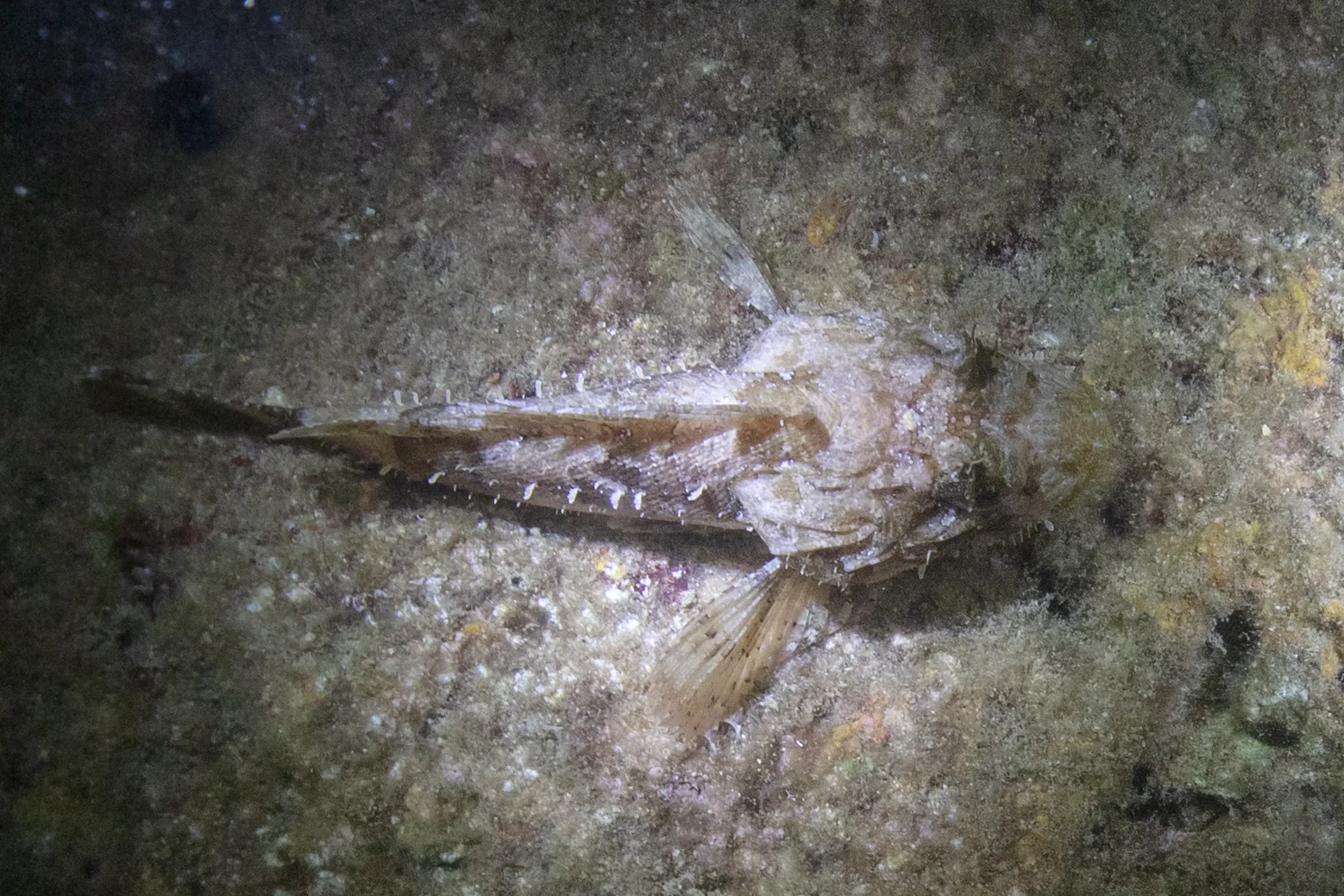
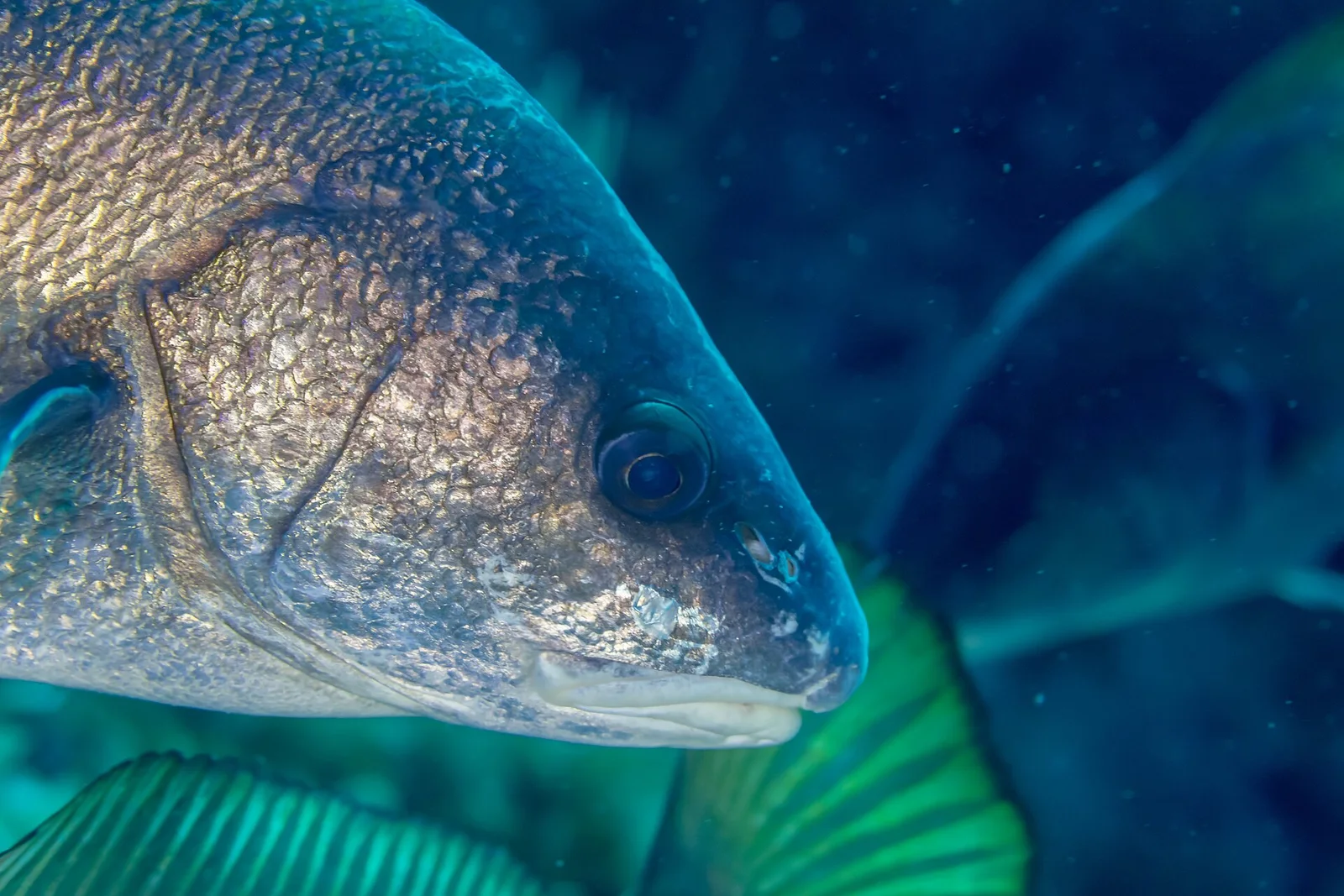
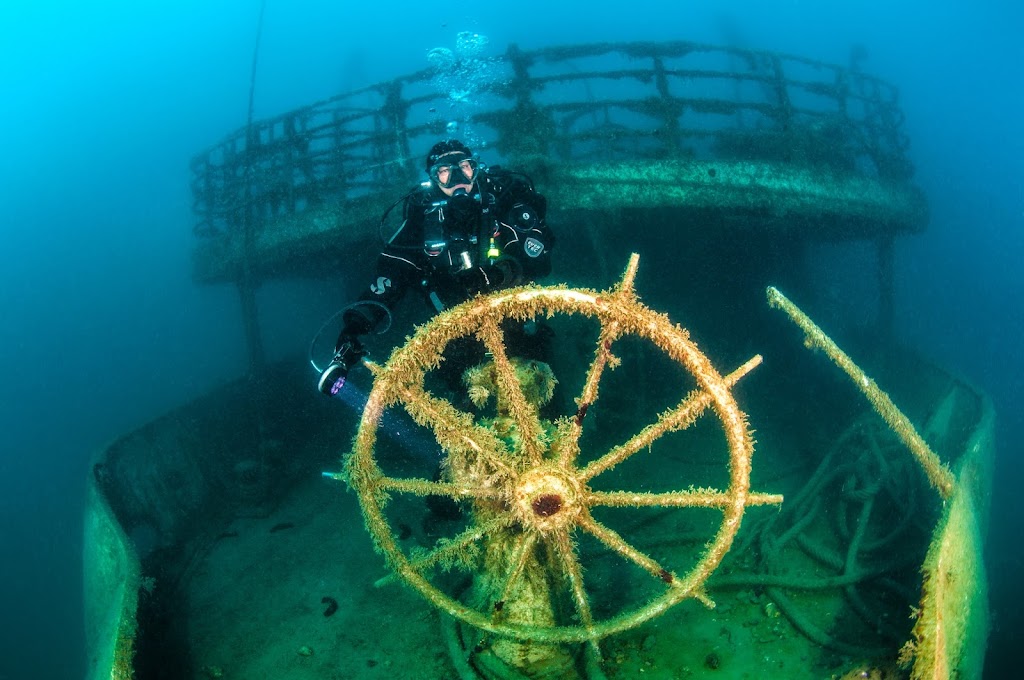
The twin caverns act as daytime sanctuaries for species that normally retreat into deep crevices. Inside the shallow coastal cave 50 meters right of the entry cove, metallic-bronze schools of brown meagre (Sciaena umbra) hover almost motionless in the dim recesses while camouflaged red scorpionfish (Scorpaena scrofa) rest across sponge-encrusted ledges.
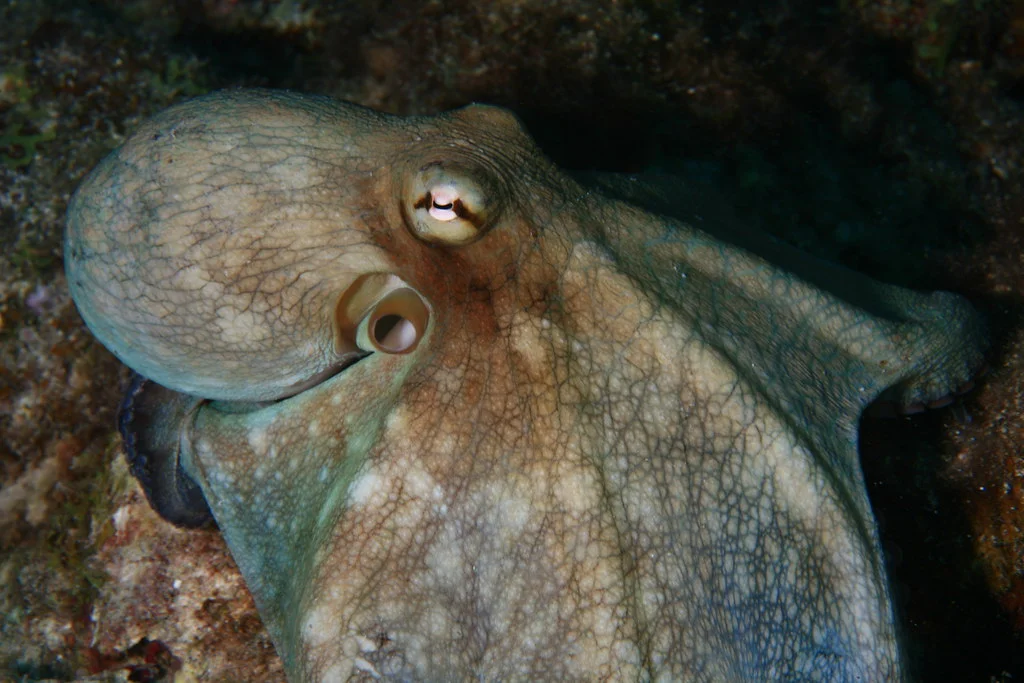
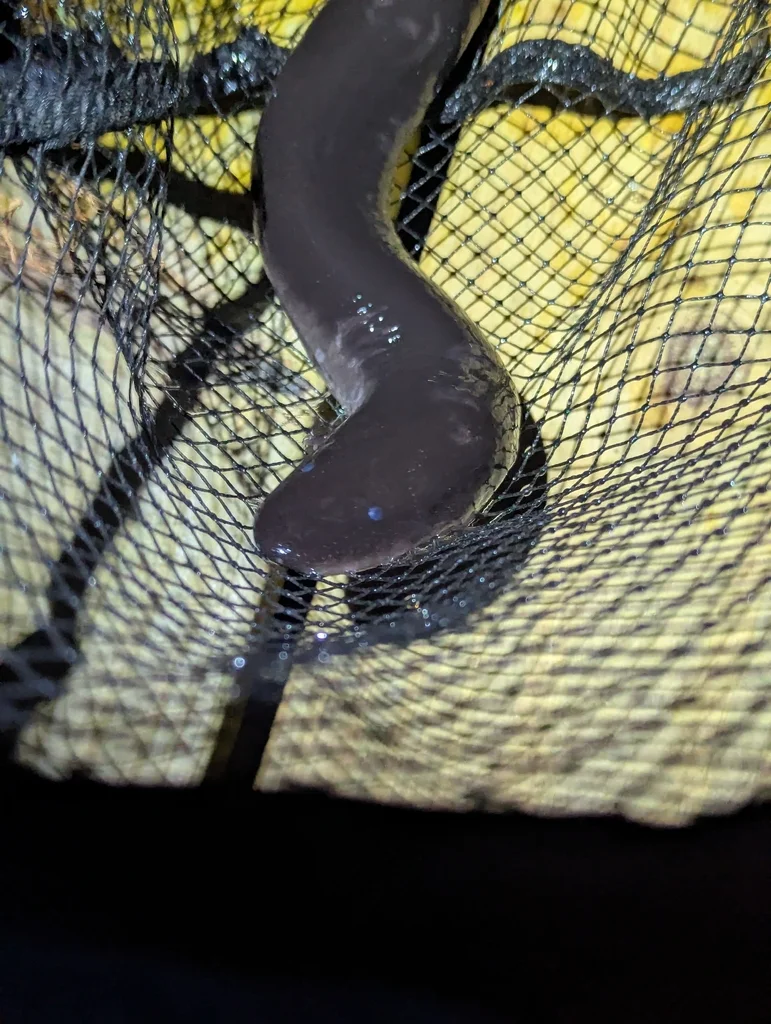
Along the 19-meter cave and deeper boulders down to 38 meters, thick-bodied European conger eels (Conger conger) and common octopuses (Octopus vulgaris) peer from horizontal fissures, often accompanied by cleaner shrimp and spinous squat lobsters. Sunlit upper boulders teem with two-banded and white seabreams, ornate wrasses, painted combers, and golden cushions of yellow tube sponge (Aplysina aerophoba).
1 / 2
Image contributors:Diego Delso, laszlo-photo + 1 more
Want to contribute photos or local dive knowledge? Learn how to contributeDive Sites Near Red Rocks Kamenjak
View all dive sites in CroatiaDiscover more underwater gems in this area.
Max 38 m
3 km
360°intermediatePolje Cove
BoatOcean
Max 40 m
5.9 km
intermediateWreck Draga
BoatDown Line
Max 40 m
9.8 km
360°intermediateCape Marlera
BoatOcean
Max 35 m
4.7 km
360°beginnerVerudela Lighthouse
BoatCanyon
Max 35 m
3.6 km
beginnerFraškerić Island
Anchor DiveBoat
Max 42 m
7.9 km
advancedSubmarine Medusa
BoatDown Line
Max 42 m
9.3 km
advancedSubmarine U-81
ArchaeologicalBoat
Max 16 m
4.8 km
360°beginnerDebeljak Cove
BeachBoat
Max 38 m
3 km
360°intermediatePolje Cove
BoatOcean
Max 40 m
5.9 km
intermediateWreck Draga
BoatDown Line
Max 40 m
9.8 km
360°intermediateCape Marlera
BoatOcean
Max 35 m
4.7 km
360°beginnerVerudela Lighthouse
BoatCanyon
Max 35 m
3.6 km
beginnerFraškerić Island
Anchor DiveBoat
Max 42 m
7.9 km
advancedSubmarine Medusa
BoatDown Line
Max 42 m
9.3 km
advancedSubmarine U-81
ArchaeologicalBoat
Max 16 m
4.8 km
360°beginnerDebeljak Cove
BeachBoat
Max 18 m
5.1 km
360°beginnerVelika Kolumbarica
BoatCanyon
Max 8 m
3.7 km
360°beginnerVižula Archaeological Park
ArchaeologicalBeach
1 / 2
Dive Centers Near Red Rocks Kamenjak
Working Hours
Sun09:30 - 19:00
Mon09:30 - 19:00
Tue09:30 - 19:00
Wed09:30 - 19:00
Thu09:30 - 19:00
Fri09:30 - 19:00
Sat09:30 - 19:00
Today: 09:30 - 19:00
Sun09:30 - 19:00
Mon09:30 - 19:00
Tue09:30 - 19:00
Wed09:30 - 19:00
Thu09:30 - 19:00
Fri09:30 - 19:00
Sat09:30 - 19:00
4.7| 211 reviews
3.5 km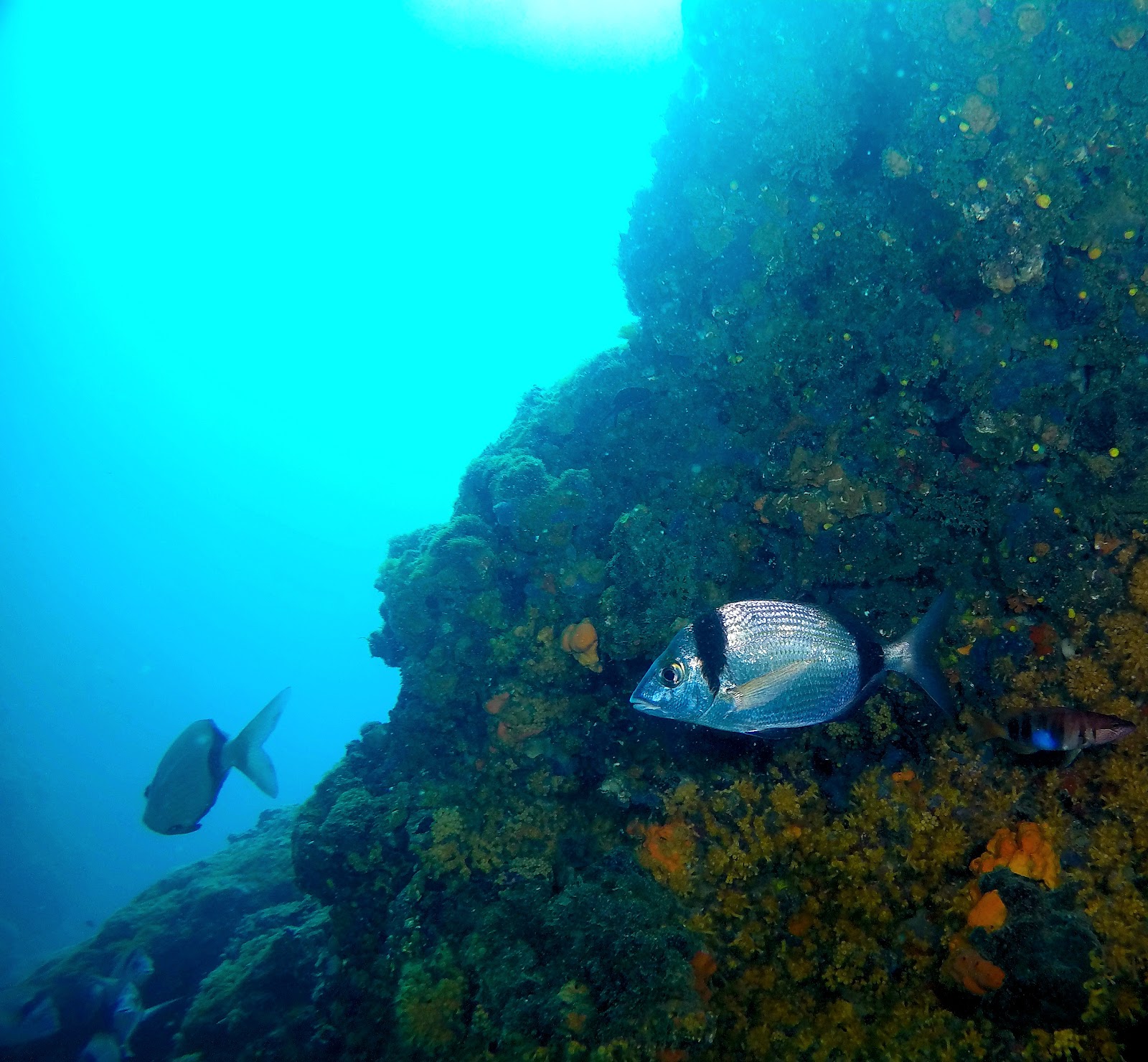
4.7| 129 reviews
4.6 km
4.6| 244 reviews
3.9 km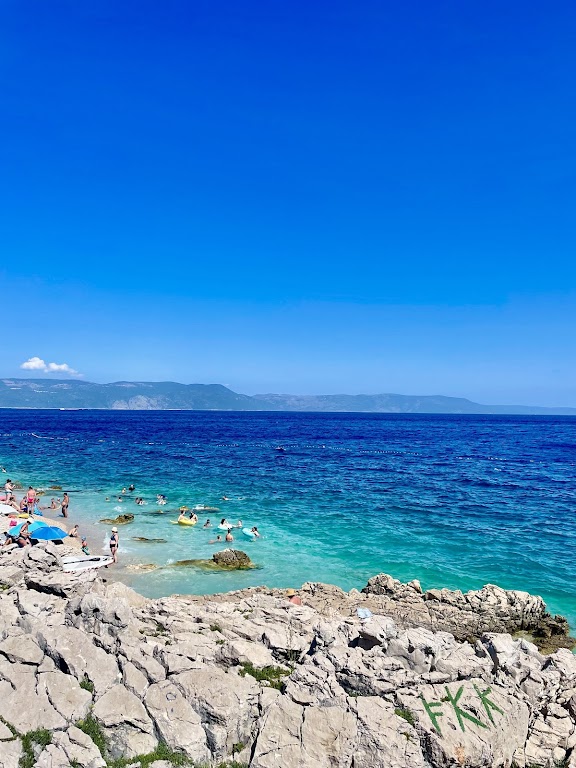
Girandella Diving Centre
4.8(231)• 38.3 km
Triton Diving
4.8(132)• 44.4 km
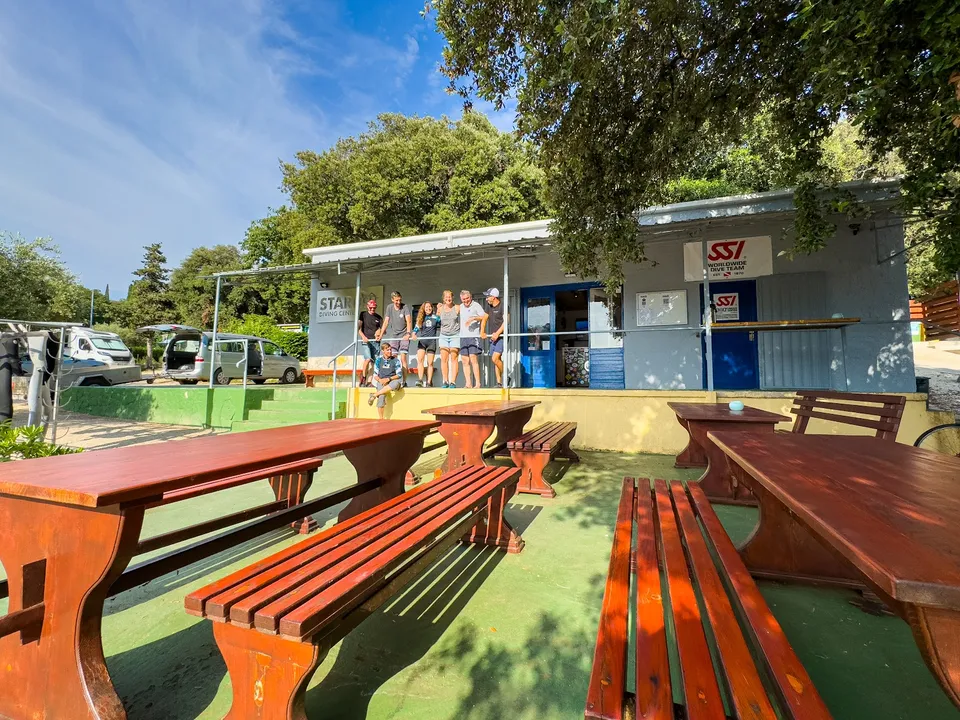
Starfish Diving Center
4.7(240)• 43.4 km
Nearest Airports
Nearest airports to help plan travel to this dive area.
Pula Airport PUY
10 km
Rijeka Airport RJK
71 km
Trieste Airport TRS
118 km
💵 Currency: EUR
Search Flights
Check available flights and routes on Expedia, using the nearby airports listed in this section.
Search Flights on ExpediaAffiliate link · Dive Navigator may earn a commission at no extra cost to you.
Frequently Asked Questions
Can beginners dive Red Rocks Kamenjak safely?
Yes. Open-water divers can explore the sheltered cove, the shallow coastal cavern 50 meters to the right, and the seaward slope down to the 19-meter cave while staying well within recreational depth limits.
How do shore divers access the entry point?
Unpaved gravel tracks through the protected Upper Kamenjak landscape lead directly to the small rocky cove, allowing divers to park close to the water's edge and walk down over low limestone ledges.
Which wind direction is Red Rocks Kamenjak sheltered from?
The inlet sits in the lee of the Upper Kamenjak ridge and provides dependable shelter from the northeast Bora wind, whereas southwest swells can create surge at the shore entry.
Are the caves at Red Rocks Kamenjak deep tunnel systems?
No. Both the 19-meter seaward chamber and the shallow coastal cavern to the right are compact, wide-mouthed limestone recesses rather than labyrinthine overhead cave systems.
Is a diving permit required for Upper Kamenjak?
No special archaeological or national park diving permit is required beyond standard Croatian recreational diving compliance, though Upper Kamenjak landscape conservation rules prohibit littering or disturbing marine life.
What marine species are signature sightings here?
Resident brown meagre, large red scorpionfish, European conger eels, common octopuses, and dense shoals of seabream are encountered reliably inside and around the two caves.
Trip Inquiry
Planning to dive Red Rocks Kamenjak?
Tell us your dates and diving needs. We'll review your request and seek offers from relevant local dive centers.
Request Dive Offers Free request for offers • No booking obligation
Red Rocks Kamenjak
Conditions are Moderate
5/10
Confidence: 8/10
Indicates meteorological model agreement and data availability.
DIVE WARNING
High Wind Advisory (49km/h). Unsafe surface.
06:12
18:45
H: 10:45
L: 16:20
Air / Sea Temp
13° / 17°
Wave Height
1.5 m
Wind Speed
49 km/h NE
Rain Chance
50%
Current conditions near Red Rocks Kamenjak show 13° air, 17° sea temperature, 1.5 m waves, and 49 km/h wind. Forecast data is refreshed regularly to ensure accuracy.
Radius: ~12km
Updated: Nov 22, 2026, 22:07 local timeMARINE: OPEN-METEOWEATHER: YR.NO


