
Diving at Relitto Viking (Italy)
Descending to Relitto Viking offers divers a unique journey into a preserved piece of history within freshwater. A wooden cargo gondola rests upright on a muddy seabed, remarkably intact despite being submerged for over a century. Providing a quiet, introspective exploration, the dive contrasts with typical marine wreck sites. An opportunity to witness a vessel frozen in time, deep within Garda Lake's distinct environment, challenges divers with its specific conditions and technical requirements.
At Relitto Viking, the ambient air temperature is currently recorded at 17.5°C. This dive site in Italy is operating under normal seasonal weather patterns. Familiarize yourself with the local topography prior to navigating.
Dive Site Location & Key Facts
Dive Site Overview
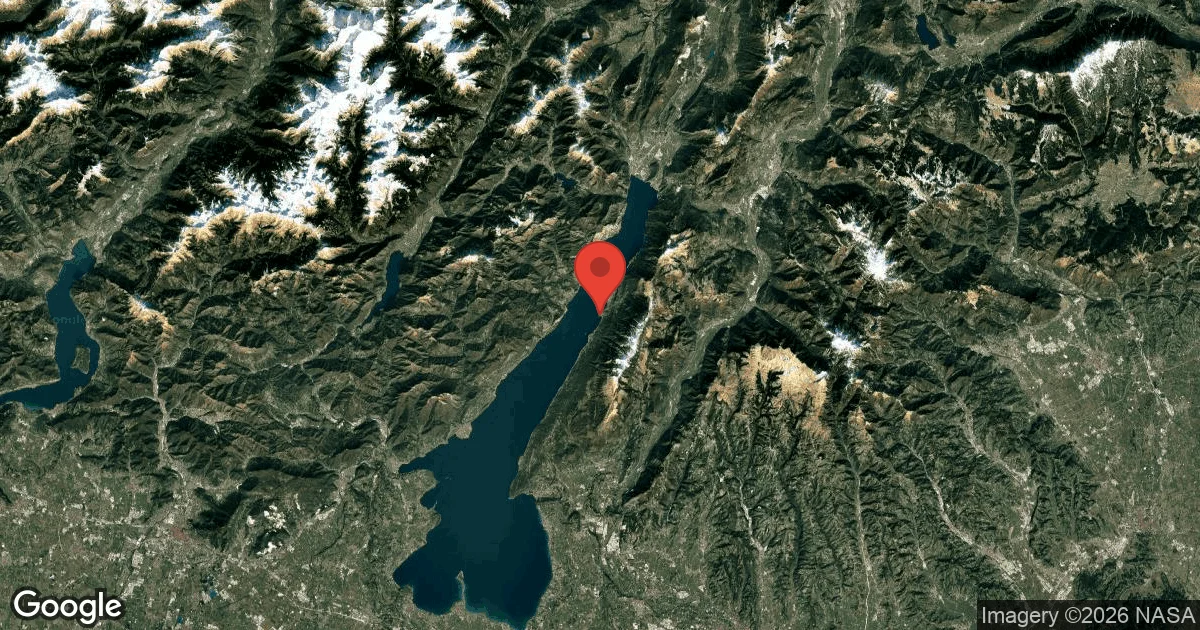
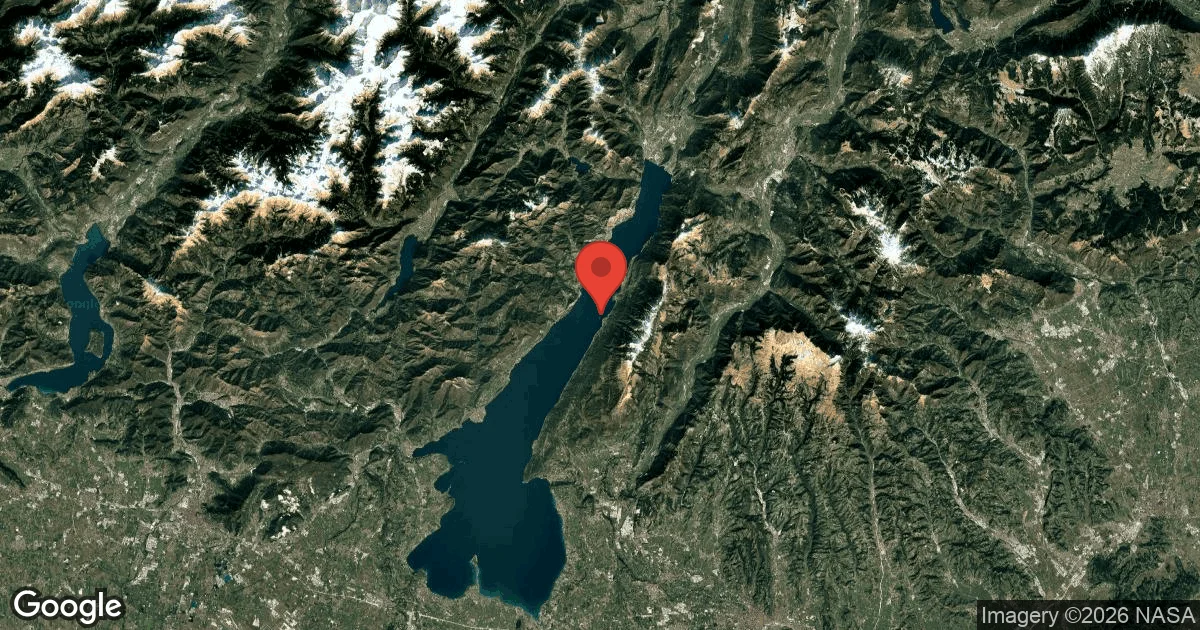
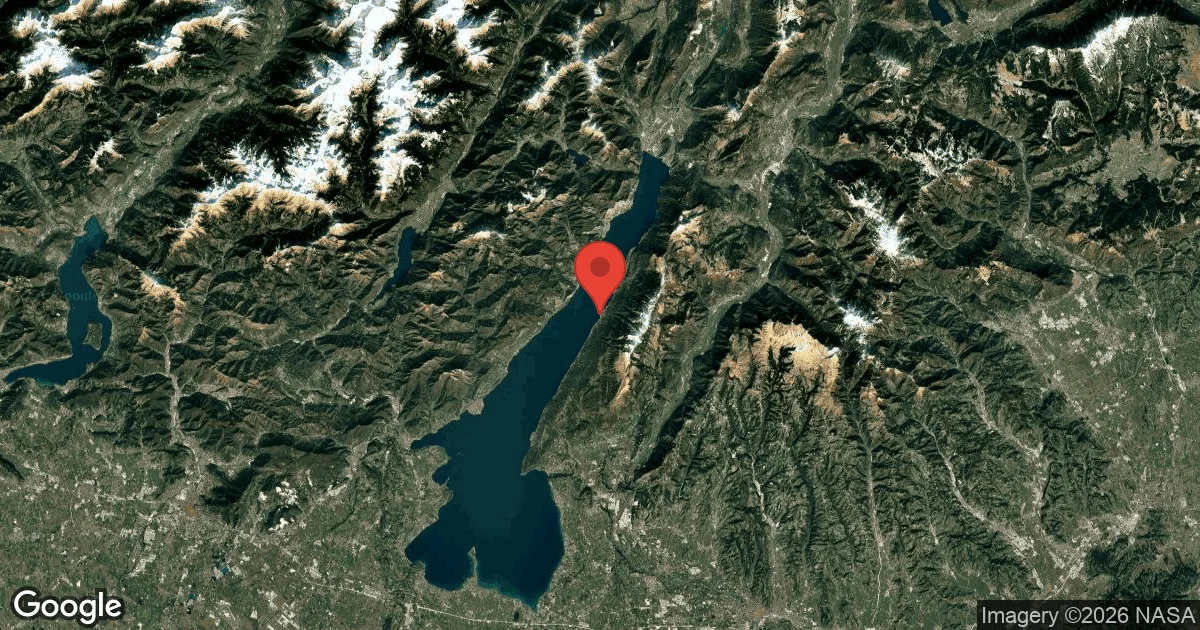
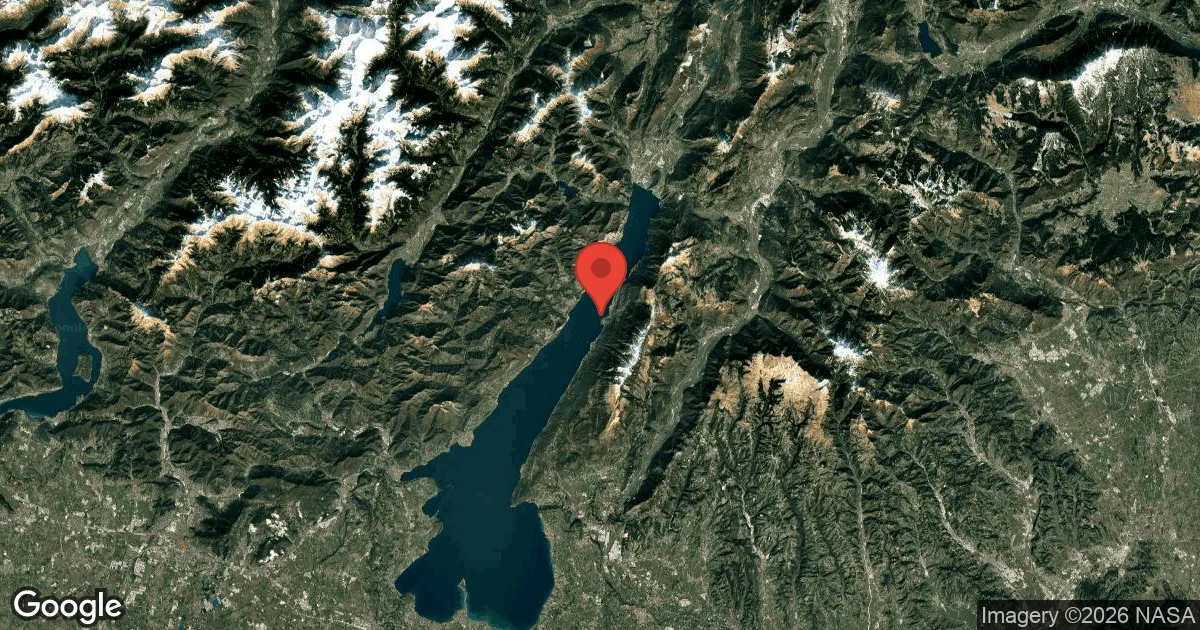
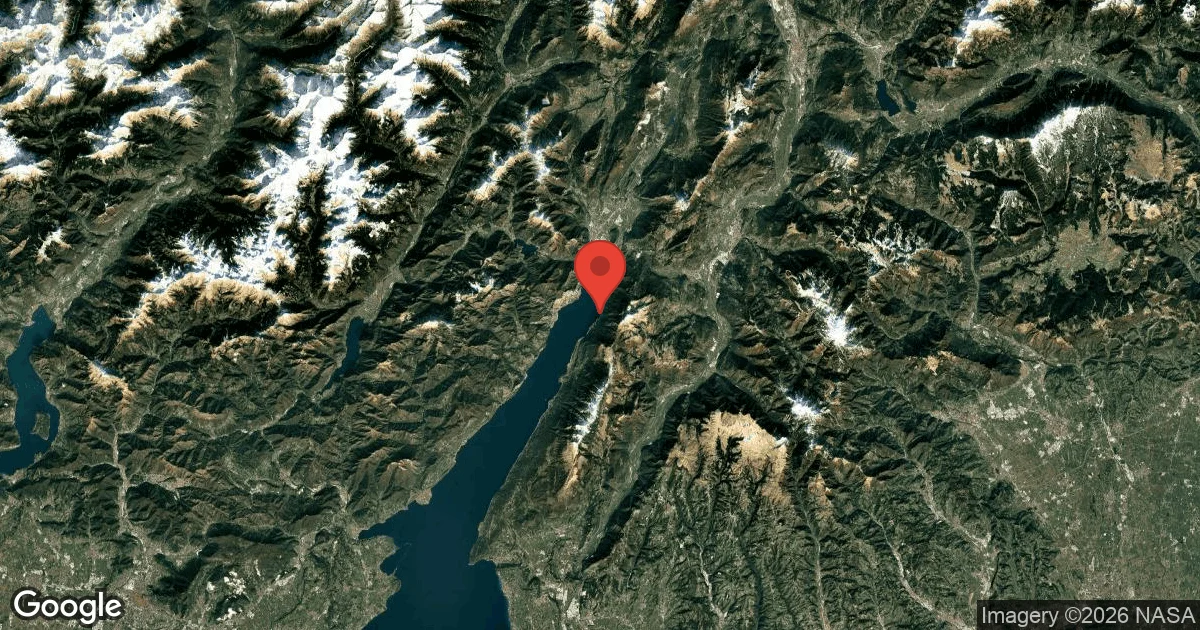
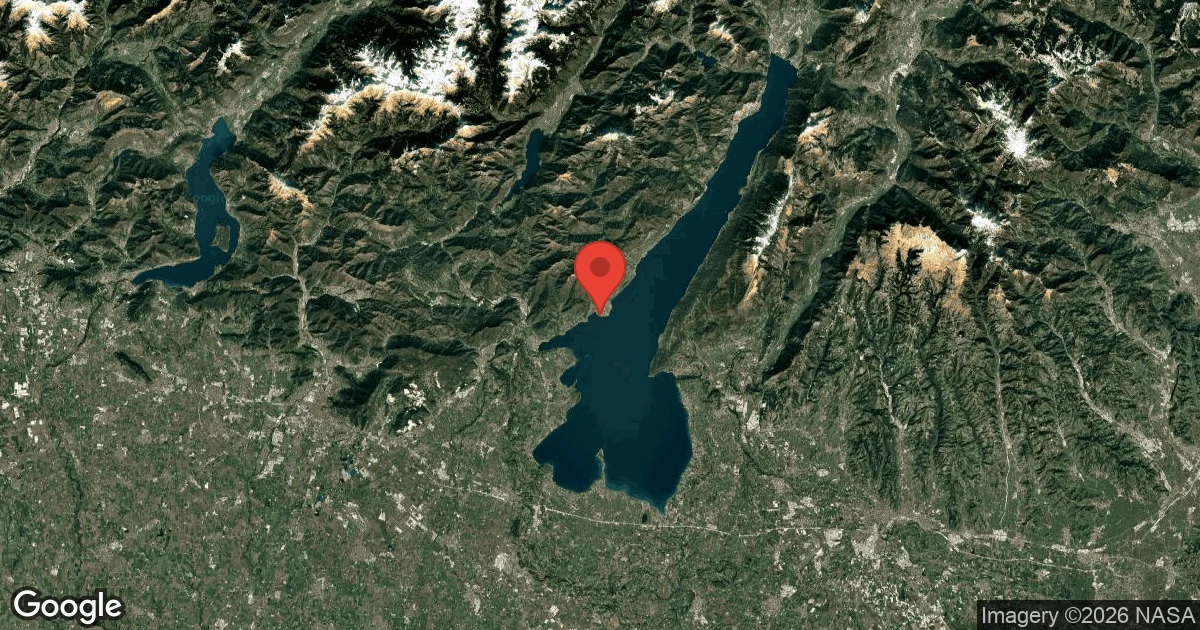
Relitto Viking lies perfectly preserved on a muddy seabed in navigation trim, deep within Garda Lake. This wooden Venetian-style cargo gondola is found at a maximum depth of 48 meters (157 feet).
Its intact state is notable, considering submersion for over a century, having sunk after a violent storm. The wreck provides the primary topographical feature, a substantial structure offering various points of interest for exploration. Setting within a freshwater lake presents different environmental considerations compared to typical saltwater dives.
Entry to the site is exclusively by boat, typically requiring specific logistical arrangements due to its depth and remote access. While the immediate surrounding topography is a relatively flat, muddy bottom, the wreck's presence creates a complex, explorable habitat.
Depth and the freshwater environment mean conditions can differ significantly from coastal sites. Wreck integrity, even after a hundred years underwater, allows for close inspection of its construction and cargo hold areas.
Navigating around the wreck requires precise buoyancy control to avoid disturbing the fine silt of the lakebed, which can quickly reduce visibility. This dive is specifically tagged as a wreck, emphasizing its primary attraction and the skills needed for safe engagement.
Conditions are Excellent
07:00 - 14:00
Optimal conditions expected
Current conditions near Relitto Viking show 17° air, --° sea temperature, N/A waves, and 7 km/h wind. Forecast data is refreshed regularly to ensure accuracy.
Best Time to Dive
Optimizing visibility is key when planning a dive at Relitto Viking. While specific visibility data isn't consistently reported, assessing broader climate patterns helps. Months scoring 'Excellent' for diving, such as January through April, June, August, September, and November through December, generally present more stable conditions. Air temperatures during these prime months can range significantly, from around 6.5°C (44°F) in January to a warmer 25°C (77°F) in August. Rainfall is relatively low year-round, averaging between 1.8 mm to 6.9 mm across all months, suggesting less sediment runoff into the lake that might impact clarity. Wind speeds remain fairly consistent, typically around 8 km/h (5 mph), which usually won't significantly affect lake surface conditions for boat entry. 'Good' scoring months, like May, July, and October, are still viable but might experience slightly increased air temperatures or minor shifts in other factors. Divers should consider cooler air temperatures for winter months when planning surface time and drysuit considerations, even if underwater conditions are favorable.
PEAK SEASON SCORE
Scores combine air & water temps, waves, wind & rainfall for overall conditions.
BEST MONTHS TO DIVE
Monthly records compiled from satellite and marine observation nodes over the last 3 years. Data provided by Open-Meteo and MET Norway.
Dive Experience & Conditions
As divers descend towards Relitto Viking, they pass through layers of freshwater, heading for its substantial depth of 48 meters (157 feet). Absence of typical marine currents and waves means a generally calmer descent, but the depth itself requires careful gas management and decompression planning. The wreck rests upright, in navigation trim, on a fine, muddy seabed. A fragile bottom necessitates excellent buoyancy control; any disturbance can quickly reduce visibility with stirred silt. Water temperatures are not consistently reported but are characteristic of a deep freshwater lake, likely requiring a drysuit for thermal comfort, as recommended. Dive profile is essentially vertical, with the main attraction lying deep. Given maximum depth, this site explicitly benefits from advanced training like Tec 40/45/50, ensuring divers are prepared for the technical demands of a deep freshwater wreck exploration. Environment demands precision and a thoughtful approach to minimize impact on the site's delicate preservation.
Dive Difficulty & Safety Guidelines
Primary considerations for a safe dive at Relitto Viking involve managing its substantial depth and unique freshwater environment. At 48 meters (157 feet), this is a technical dive that demands appropriate certification (Tec 40/45/50 training is noted as useful), adequate gas planning, and meticulous decompression procedures.
The muddy seabed around the perfectly preserved wreck is easily disturbed; poor buoyancy control can lead to rapid visibility loss, posing navigation challenges. As a deep freshwater wreck, thermal protection is crucial, with a drysuit explicitly suggested to combat potentially cold waters.
Always dive with a reliable buddy and carry a Surface Marker Buoy (SMB) for ascent and surface signaling, particularly when boating traffic is a factor on Garda Lake. Adhering to responsible wreck diving practices, such as no penetration without specialized training and avoiding contact with the fragile wooden structure, is essential for preserving this historical site.
Recommended Equipment
Technical depth range. Advanced planning, gas management, and appropriate certification required.
Overhead / entanglement risk. Wreck penetration requires proper training.
- Dive Computer
- DSMB
- Primary & Backup Lights
- Wreck Reel
- Cutting Tool
This gear list is based on verified equipment signals for Relitto Viking, Italy. Always confirm final gear choices with your dive operator, guide, or liveaboard.
Recommended Dive Suit
Because recent water temperature readings are not available for Relitto Viking, the guidance below is based mainly on current air conditions and seasonal expectations. Current surface air temperatures are roughly 17°C (63°F).
Based on regional estimates and current weather, the likely required exposure protection is a 5mm or thicker wetsuit. Note that local currents and upwellings can alter this.
Weather patterns are currently shifting, so expect some variability in conditions. A warming trend is expected over the next few days.
Emergency & Medical Support
Essential information to help you plan your dive trip to Relitto Viking.

Hyperbaric chambers are a critical part of dive safety infrastructure. Availability varies significantly by region, and not all dive areas have immediate access.
Before diving, it's recommended to:
- confirm nearest medical facilities
- check emergency procedures with local dive operators
- ensure dive insurance covers evacuation if required
Divers Alert Network
Diving emergency assistance available through DAN Europe.
+39 0642115685- 24/7 emergency hotline
- Diving medical assistance
- Evacuation coordination
Emergency contacts are provided for reference. Always verify local emergency services before diving.
Closest Listed Hyperbaric Chambers
Showing listed hyperbaric chamber facilities within 200 km of this dive site.
Distances are approximate straight-line distances and may not reflect emergency travel time.
Servizio di Ossigeno Terapia Iperbarica "Renato Moroni"
24/7 ListedICU CapableBrescia, Italy•Approx. 49 km straight-line
Servizio di Ossigeno Terapia Iperbarica "Renato Moroni"
24/7 ListedICU CapableInformation is provided for reference and planning purposes only. Dive Navigator does not verify operational status, staffing, availability, or quality of care at listed facilities. In an emergency, contact local emergency services, DAN, your dive operator, or the chamber directly. Do not travel to a facility without calling ahead.
OTI Medicale Vicenza
24/7 ListedICU CapableTORRI DI QUARTESOLO (VI), Italy•Approx. 68 km straight-line
OTI Medicale Vicenza
24/7 ListedICU CapableInformation is provided for reference and planning purposes only. Dive Navigator does not verify operational status, staffing, availability, or quality of care at listed facilities. In an emergency, contact local emergency services, DAN, your dive operator, or the chamber directly. Do not travel to a facility without calling ahead.
Casa di Cura Habilita s.p.a.
24/7 ListedICU CapableZingonia di Ciserano (BG), Italy•Approx. 95 km straight-line
Casa di Cura Habilita s.p.a.
24/7 ListedICU CapableInformation is provided for reference and planning purposes only. Dive Navigator does not verify operational status, staffing, availability, or quality of care at listed facilities. In an emergency, contact local emergency services, DAN, your dive operator, or the chamber directly. Do not travel to a facility without calling ahead.
Marine Life at Relitto Viking
Underwater landscape at Relitto Viking is dominated by the wreck itself, serving as the main point of interest. Specific marine life observations for this freshwater site are not consistently reported.
The preserved wooden structure, resting on a muddy seabed, creates a unique environment. While typical Mediterranean marine species found in saltwater wrecks are not applicable here, the serene, deep lake setting often attracts a different array of endemic freshwater organisms that might colonize the wreck over time.
Divers primarily come to observe the historical artifact rather than a vibrant marine ecosystem. Focus remains on the structural integrity and historical significance of the gondola.
Dive Sites Near Relitto Viking
View all dive sites in ItalyDiscover more underwater gems in this area.
Dive Centers Near Relitto Viking
Nearest Airports
Nearest airports to help plan travel to this dive area.
Search Flights
Check available flights and routes on Expedia, using the nearby airports listed in this section.
Search Flights on ExpediaFrequently Asked Questions
What type of wreck is the Relitto Viking?
It's a perfectly preserved wooden Venetian-style cargo gondola. This historical vessel rests upright on a muddy seabed, having sunk over a century ago after a storm.
What is the maximum depth of the Relitto Viking dive?
The wreck rests at a maximum depth of 48 meters. This depth classifies it as a technical dive, requiring appropriate training and experience.
Is the Relitto Viking a freshwater or saltwater dive?
This is a freshwater wreck dive in Garda Lake, Italy. This unique environment offers different conditions compared to typical marine dives.
What dive training is recommended for this site?
Given its depth and technical demands, training levels such as Tec 40, Tec 45, or Tec 50 are noted as beneficial. These certifications help prepare divers for managing the specific challenges of deep wreck exploration.
What kind of marine life can be expected at Relitto Viking?
The primary focus of this dive is the historical wreck itself. Specific data on freshwater marine life around the Relitto Viking is not consistently reported, though endemic lake organisms might be present.
What essential equipment should divers consider for this site?
A drysuit is highly recommended for thermal comfort due to the deep freshwater temperatures. Carrying a camera is popular for documenting the well-preserved wreck, and a Surface Marker Buoy (SMB) is crucial for safety.
How do divers access the Relitto Viking?
Access to the dive site is exclusively by boat. This ensures precise arrangement for getting to the deep-lying wreck in Garda Lake.
When is the best time of year to dive the Relitto Viking?
Most months offer favorable conditions, with 'Excellent' dive scores noted for January through April, June, August, September, and November through December. Air temperatures vary, from 6.5°C (44°F) in winter to 25°C (77°F) in summer, with consistent low rainfall throughout the year.
Planning to dive Relitto Viking?
Send one inquiry and receive offers directly from the best verified local dive operators.
Conditions are Excellent
07:00 - 14:00
Optimal conditions expected
Current conditions near Relitto Viking show 17° air, --° sea temperature, N/A waves, and 7 km/h wind. Forecast data is refreshed regularly to ensure accuracy.