
Diving at Stoney Cove (United Kingdom)
Stoney Cove, a large flooded granite basin, functions as the UK's National Dive Centre in Leicestershire, England. Originally a 19th-century granite extraction point, this site transformed into a premier inland diving destination after operations ceased in 1958. Its unique topography features terraced dive areas, from 7 m (23 ft) for beginners to 36 m (118 ft) for experienced divers, filled with diverse underwater structures and wrecks.
Recent updates for Stoney Cove show an air temperature measuring 16°C. Overall water conditions reflect the typical seasonal state for United Kingdom. Please exercise standard safety precautions before entering the water.
Dive Site Location & Key Facts
Dive Site Overview
An incredible underwater adventure park awaits divers at Stoney Cove, inviting exploration into its extensive submerged landscape. This former granite works, utilized by diving pioneers since the 1960s, now hosts an array of purpose-sunk features.
Divers can explore the Stanegarth, a 1910 steam-powered tug, which lies perfectly upright and offers access to its chart room, wheelhouse, and engine room. Other highlights include a Viscount aircraft cockpit at shallower depths, a Partenavia aircraft with its tail at 18 meters, and the remains of a historic Galleon on a 5-meter ledge. Beyond these specific wrecks, divers will encounter the Tugboat Defiant, the Trawler MV Belinda, the Gresham Ship from c1570, and the Shiers Bell, a testament to Thames Barrier construction.
The site provides various entry points like the Bus Stop and Eddy's Quay, leading to depths graded for all skill levels, ensuring there's plenty to discover at every turn.
Conditions are Moderate
Optimal conditions expected
Current conditions near Stoney Cove show 16° air, --° sea temperature, N/A waves, and 33 km/h wind. Forecast data is refreshed regularly to ensure accuracy.
Best Time to Dive
Planning a dive at Stoney Cove requires considering the climate's dramatic effect on conditions throughout the year, especially regarding visibility. May generally offers some of the most favorable conditions, with average air temperatures around 13°C (55°F) and moderate rainfall at 2.0 mm, which can contribute to better underwater clarity. As the warmer months progress into June, July, and August, average air temperatures rise to 16-17°C (61-63°F), with rainfall ranging from 1.3 to 2.8 mm. These periods often coincide with improved ambient light penetration, enhancing visibility in the shallower thermocline layers. While all months show a 'Good' dive score, colder months from November through March see average air temperatures drop to 3.5-7.5°C (38-46°F) with slightly higher rainfall, potentially impacting surface comfort and necessitating more thermal protection. Visibility often varies depending on recent weather and diver activity.
PEAK SEASON SCORE
Scores combine air & water temps, waves, wind & rainfall for overall conditions.
BEST MONTHS TO DIVE
Monthly records compiled from satellite and marine observation nodes over the last 3 years. Data provided by Open-Meteo and MET Norway.
Dive Experience & Conditions
Navigating this inland dive site, specific water current dynamics are typically negligible, allowing divers to move at their own pace without concerns about strong flows. The site features terraced dive areas, which include an entry-level shelf reaching a maximum depth of 7 m (23 ft) adjacent to the car park, offering excellent shallow-water diving in the warmest thermocline with bright light. Intermediate divers can explore sections down to 22 meters, while expert zones extend to 36 meters. Water temperature data is not consistently reported, but inland UK dive sites generally feature thermoclines, meaning colder temperatures can be expected at greater depths. Visibility varies depending on seasonal factors and diver activity, requiring divers to remain attentive to their surroundings.
Dive Difficulty & Safety Guidelines
Approaching Stoney Cove dives with a focus on safety and careful planning is crucial, especially when navigating its challenging environment. Divers must respect the graded depth areas, ensuring they don't venture too deep too soon, as conditions can change rapidly with depth and light. Familiarization with the underwater map is highly recommended before entry.
While no specific hazards are listed, proper buoyancy control is always essential, particularly around the numerous wrecks and structures that offer potential overhead environments. Utilizing the on-shore facilities, which include a dive shop and cylinder filling station, helps ensure all equipment is in optimal working order.
Always dive within your certified limits and consider the impact of cold water on dive duration and gas consumption, even in the 'warmest thermocline' areas.
Recommended Equipment
Deep dive hazard. Increased narcosis and gas consumption risk.
Overhead / entanglement risk. Wreck penetration requires proper training.
- Dive Computer
- DSMB
- Primary & Backup Lights
- Wreck Reel
- Cutting Tool
- Hard-soled Dive Boots
This gear list is based on verified equipment signals for Stoney Cove, United Kingdom. Always confirm final gear choices with your dive operator, guide, or liveaboard.
Recommended Dive Suit
Based on regional estimates and current weather, the likely required exposure protection is a 5mm or thicker wetsuit. Note that local currents and upwellings can alter this. A hood or vest is suggested for sensitive divers due to surface winds. A thermal robe or jacket is recommended between dives.
Because recent water temperature readings are not available for Stoney Cove, the guidance below is based mainly on current air conditions and seasonal expectations. Current surface air temperatures are roughly 16°C (61°F).
Due to unpredictable weather patterns, conditions may change rapidly.
Emergency & Medical Support
Essential information to help you plan your dive trip to Stoney Cove.

Hyperbaric chambers are a critical part of dive safety infrastructure. Availability varies significantly by region, and not all dive areas have immediate access.
Before diving, it's recommended to:
- confirm nearest medical facilities
- check emergency procedures with local dive operators
- ensure dive insurance covers evacuation if required
Divers Alert Network
Diving emergency assistance available through DAN Europe.
+39 0642115685- 24/7 emergency hotline
- Diving medical assistance
- Evacuation coordination
Emergency contacts are provided for reference. Always verify local emergency services before diving.
Closest Listed Hyperbaric Chambers
Showing listed hyperbaric chamber facilities within 200 km of this dive site.
Distances are approximate straight-line distances and may not reflect emergency travel time.
Midlands Diving Chamber
Rugby, United Kingdom•Approx. 20 km straight-line
Midlands Diving Chamber
Information is provided for reference and planning purposes only. Dive Navigator does not verify operational status, staffing, availability, or quality of care at listed facilities. In an emergency, contact local emergency services, DAN, your dive operator, or the chamber directly. Do not travel to a facility without calling ahead.
London Hyperbaric Medicine
Leytonstone, London, United Kingdom•Approx. 139 km straight-line
London Hyperbaric Medicine
Information is provided for reference and planning purposes only. Dive Navigator does not verify operational status, staffing, availability, or quality of care at listed facilities. In an emergency, contact local emergency services, DAN, your dive operator, or the chamber directly. Do not travel to a facility without calling ahead.
North of England Medical Hyperbaric Unit
Anlaby, Hull, United Kingdom•Approx. 144 km straight-line
North of England Medical Hyperbaric Unit
Information is provided for reference and planning purposes only. Dive Navigator does not verify operational status, staffing, availability, or quality of care at listed facilities. In an emergency, contact local emergency services, DAN, your dive operator, or the chamber directly. Do not travel to a facility without calling ahead.
Marine Life at Stoney Cove
Despite being a man-made lake, Stoney Cove hosts a surprising array of aquatic wildlife. Divers frequently encounter Northern pike, identifiable by their olive-green bodies with light, bar-like spots, and these impressive fish are known to grow quite large here.
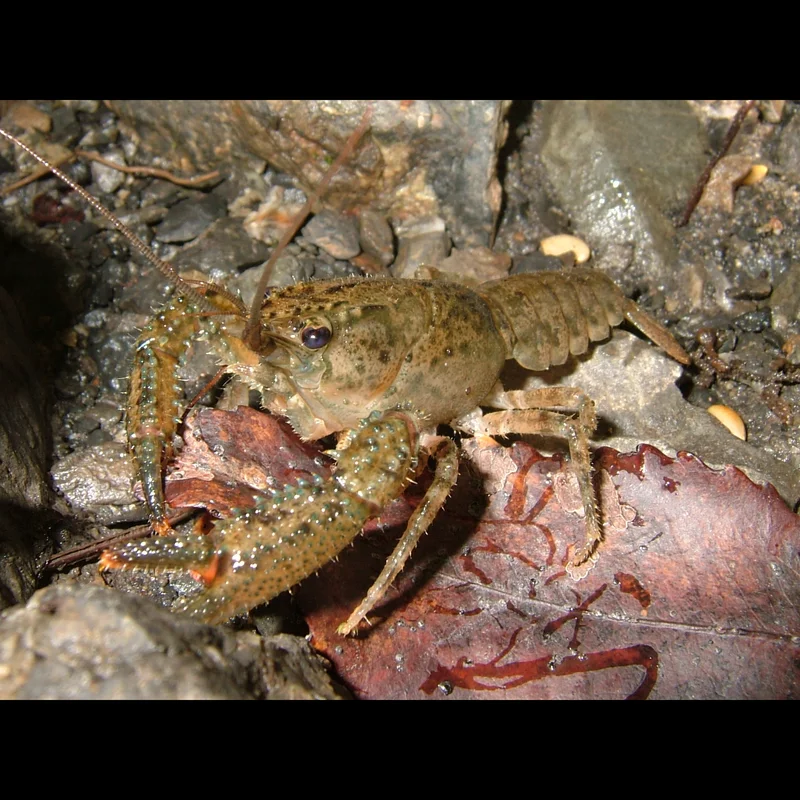
European perch are also common, varying in size throughout the cove. A precious population of native crayfish thrives in the waters, a significant highlight given the increasing threat from non-native species in the UK.
The site even has a mythical resident, 'Nessie,' a green-skinned, yellow-spotted monster, whose exact whereabouts are not consistently reported but adds a whimsical touch to explorations.

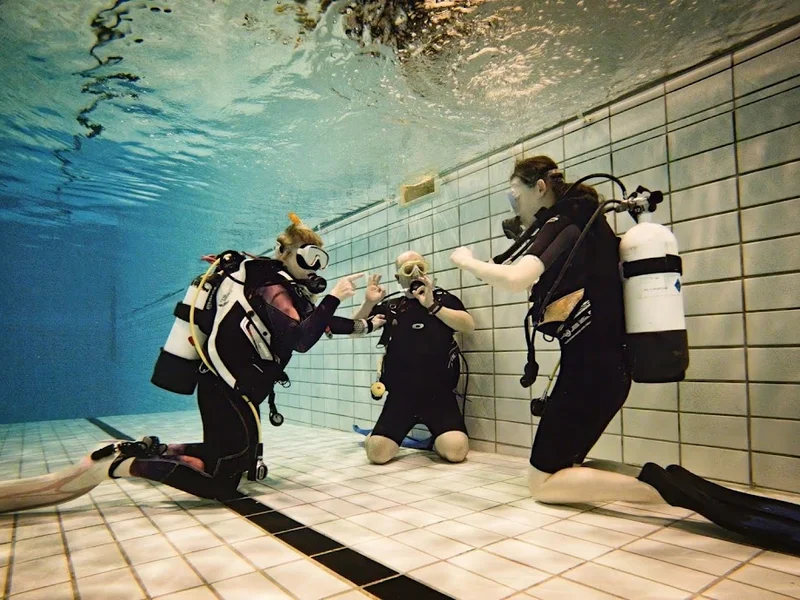
Dive Centers Near Stoney Cove
Nearest Airports
Nearest airports to help plan travel to this dive area.
Search Flights
Check available flights and routes on Expedia, using the nearby airports listed in this section.
Search Flights on ExpediaFrequently Asked Questions
What type of dive site is Stoney Cove?
Stoney Cove is a large flooded granite basin that has been developed into a popular inland scuba diving site and the UK's National Dive Centre. It's used for both recreational pleasure dives and comprehensive diver training.
What are the main underwater features at Stoney Cove?
Divers can explore a variety of fascinating features, including the tugboat Stanegarth, a Viscount aircraft cockpit, a Partenavia aircraft, the remains of a Galleon, and other wrecks like the Tugboat Defiant and Trawler MV Belinda. The site also features structures like the Shiers Bell.
What are the typical depth ranges available?
Stoney Cove offers terraced dive areas graded for different skill levels. There's an entry-level area with a maximum depth of 7 m (23 ft), intermediate sections reaching 22 meters, and expert areas descending to 36 meters.
Is Stoney Cove suitable for new divers?
Yes, Stoney Cove is very suitable for new divers. Its 7-meter shelf near the car park is specifically designated for entry-level training and provides excellent shallow-water diving conditions with good light.
What kind of marine life can be observed?
Divers can typically spot Northern pike and European perch, which are plentiful in the cove. There's also a valuable population of native crayfish thriving in the waters, offering a glimpse into the local ecosystem.
Are there facilities available on site?
Absolutely. Stoney Cove provides comprehensive on-shore facilities, including a dive shop for gear, a diving school, a cylinder filling station, changing rooms, and a public bar and restaurant called Nemos.
Planning to dive Stoney Cove?
Send one inquiry and receive offers directly from the best verified local dive operators.
Conditions are Moderate
Optimal conditions expected
Current conditions near Stoney Cove show 16° air, --° sea temperature, N/A waves, and 33 km/h wind. Forecast data is refreshed regularly to ensure accuracy.