
Diving atUnnamed (United States)
Navigating the diverse underwater landscapes of the United States requires an expert understanding of regional variations. From the warmer, current-driven drifts of Florida to the cold, wreck-strewn depths of the Great Lakes and the vibrant kelp forests of the Pacific, preparation is key. Divers should always research specific site conditions and tailor their gear and experience level accordingly. Flexibility and local knowledge make for successful explorations here.
Evening condition tracking at Unnamed features an air temperature of 22°C. We have recorded wave heights measuring 0.62m during this period. These figures outline the environmental parameters currently present.
Dive Site Coordinates
29.8949, -85.5213
Dive Site Overview
Across the vast coastlines and inland waters of the United States, diving adventures unfold with remarkable variety. Explorations might lead to historic shipwrecks, such as the German U-352 in North Carolina's 'Graveyard of the Atlantic,' offering a direct connection to maritime history.
In contrast, Florida's artificial reef programs, like those near Destin-Fort Walton Beach, create vibrant underwater cities from retired vessels, supporting diverse marine life and generating new dive sites. The future SS United States, for example, will settle to a maximum depth of 55 m (180 ft), allowing recreational access to its upper sections around 17 m (55 ft).
Further west, California's Catalina Island presents lush kelp forests and rocky outcrops, while Lake Michigan’s cold waters preserve shipwrecks alongside ancient tree stumps and sand dunes. Each region presents a distinct underwater tableau, from drift diving experiences in the Gulf Stream off Palm Beach, to meticulously maintained dive parks featuring artificial reefs and natural formations.
Best Time to Dive
Optimizing visibility for dives across the United States depends heavily on regional climate patterns. Air temperatures typically range from a cooler 10.8°C (51.4°F) in January to a warmer 28.1°C (82.6°F) in August, influencing surface conditions and comfort. While specific water temperature data isn't consistently reported for all locations, conditions vary widely; expect warmer waters in southern regions like Florida and colder thermoclines in northern lakes or off the Pacific coast. Rainfall tends to be lower in October and November, averaging around 1.3 to 1.8 mm, which can contribute to clearer coastal waters following less runoff. Conversely, months like July, September, and December experience higher rainfall, potentially impacting nearshore visibility. Wind speeds are generally moderate, ranging from 14.3 km/h (8.9 mph) in July to 20.1 km/h (12.5 mph) in April, with corresponding wave heights often reflecting these patterns.
Climate Historical Averages
Monthly records compiled from satellite and marine observation nodes over the last 3 years. Data provided by Open-Meteo and MET Norway.
Dive Experience & Conditions
Descending into United States waters offers a spectrum of experiences, from the immediate embrace of warm, current-assisted drifts to the gradual chill of deep, thermocline-laden lakes. In areas influenced by the Gulf Stream, such as off Palm Beach, Florida, divers can experience effortless glides over vibrant ecosystems, propelled by gentle currents. Visibility in places like Catalina Island, California, is often excellent, revealing expansive kelp forests, rocky outcrops, and sandy bottoms in stunning detail. Conversely, colder freshwater environments, like Lake Michigan, require specialized exposure protection. Here, the underwater landscape can reveal dramatic sand dunes and eerie ancient tree stumps, with visibility varying depending on seasonal turnover and sediment. While exact water temperatures vary significantly by location and depth, the diversity means one dive might be a sun-drenched exploration of a lively reef, while the next is a solemn journey through a historic shipwreck in deeper, cooler currents.
Dive Difficulty & Safety Guidelines
Approaching diving opportunities across the United States requires an emphasis on situational awareness and appropriate training. Given the varied environments, from deep wreck diving on sites like the U-352 to drift dives in strong currents, divers must ensure their certification levels match the planned activity. Cold water diving, particularly in northern lakes, necessitates specialized gear and experience to mitigate thermal risks. Always be aware of local conditions, including potential currents, varying visibility, and boat traffic. Consulting with local dive operators for up-to-date site information and current-specific guidance is a crucial step. Proper buoyancy control is also vital, especially when exploring delicate ecosystems or navigating historic wrecks to minimize impact and ensure safe passage.
Recommended Equipment
No verified equipment items yet.
Verified equipment recommendations for this dive site are being reviewed and may be added as additional source checks are completed.
Recommended Dive Suit
Water temperatures at Unnamed are currently estimated to be around 23°C (73°F), shaping the overall diving conditions for today. Surface air temperatures are resting at 22°C (72°F).
Many divers choose 3-5mm wetsuit when diving in similar conditions. A hood or vest is suggested for sensitive divers due to surface winds. Surface intervals may feel cooler.
Short-term weather patterns suggest stable conditions for divers visiting the area.
Conditions last reviewed: 18:00 using the latest environmental data.
Dive Logistics & Preparation
Hyperbaric Chamber
Check local United States medical facilities.
Entry Requirements
View United States Visa Hub
Currency
USD
Nearest Airports
Nearest airports to help plan travel to this dive area.
Marine Life at Unnamed
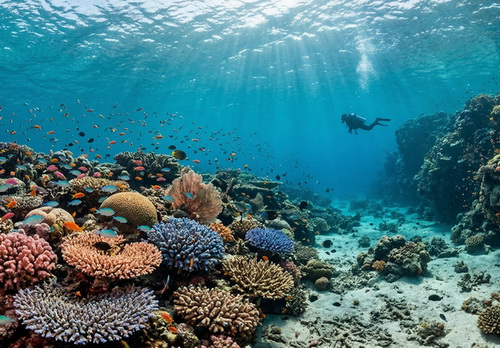
The immediate impression of marine life in US waters is its remarkable regional diversity. Off Florida’s coast, vibrant reef fish in an array of blues, yellows, and reds often surround divers, alongside the graceful presence of giant sea turtles navigating the currents. In colder lake environments, unique species like the prehistoric-looking sturgeon can be spotted, sharing the depths with schools of perch and bass. Along the rocky outcrops of locations such as Catalina Island, divers frequently encounter bright orange Garibaldis, colorful nudibranchs, starfish, and well-camouflaged octopuses hiding within crevices. Artificial reefs, formed from sunken ships or custom modules, consistently attract an impressive density of biodiversity, transforming barren seafloors into dynamic ecosystems.
Dive Centers Near Unnamed
No Dive Centers Local To Unnamed
Are you a dive center visiting this location? Get listed to reach divers.
Frequently Asked Questions
What types of diving are available in the United States?
Diving in the U.S. spans a broad range, including extensive shipwreck explorations, vibrant artificial and natural reef systems, kelp forest dives, and drift diving opportunities. Freshwater diving in locations like the Great Lakes offers unique historical wreck sites and geological features.
What are the typical water conditions for diving?
Water conditions vary dramatically by region. Southern coastal areas, particularly Florida, generally feature warm waters and currents. Northern coastal areas and inland lakes tend to be significantly colder, often requiring thicker exposure protection. Consistent water temperature data isn't always available, so local reports are key.
Are there many notable wreck diving opportunities?
Yes, the U.S. offers numerous prominent wreck diving sites. Examples include the 'Graveyard of the Atlantic' off North Carolina with historic U-boats, and major artificial reef projects in Florida utilizing large ships like the SS United States and USS Oriskany.
What marine life can be seen while diving?
Marine life sightings are diverse. Divers frequently encounter colorful reef fish, giant sea turtles, and various invertebrates such as nudibranchs, starfish, and octopuses. In certain regions, one might observe sturgeon, perch, bass, and the distinctive orange Garibaldis.
Is drift diving a common experience?
Drift diving is a notable experience in specific regions, particularly off Palm Beach, Florida, where the Gulf Stream current flows tantalizingly close to shore. This allows for an effortless glide over extended reef systems, making for a unique dive profile.
What certifications are generally recommended for diving in the U.S.?
Due to the diversity of sites, advanced certifications are often beneficial. Wreck diver specialties are recommended for historical sites, and deep diver training is useful for exploring deeper artificial reefs. Dry suit certification is advisable for colder water environments.
What is the general visibility like in U.S. dive sites?
Visibility varies widely, influenced by location, seasonal factors, and weather. Sites like Catalina Island often boast excellent visibility. Other areas, particularly after heavy rainfall or in certain lake environments, can experience reduced clarity, making proper dive planning essential.
What are some unique underwater environments one might encounter?
Beyond coral and rocky reefs, divers can explore kelp forests, expansive sand dunes shaped by currents, and even ancient tree stumps preserved in freshwater lakes. Artificial reefs also create entirely new, vibrant underwater habitats from repurposed structures.
Liveaboards Sailing to Unnamed
Explore highly rated liveaboards visiting this dive site and discover the best routes in United States.
Resorts & Accommodation
Find partner hotels and dive resorts directly accessing the reef.
Around This Area
Explore top-rated restaurants, activities, and attractions near Unnamed reviewed by travelers.
Planning to dive Unnamed?
Send one inquiry and receive offers directly from the best verified local dive operators.