
Diving atNumber One (South Africa)
South Africa presents a striking contrast for divers, encompassing everything from temperate kelp forests in the south to tropical coral reefs along its eastern coastline. Its diverse dive sites range from ancient fossilized sandbanks to vibrant marine protected areas. This nation offers a spectrum of underwater topography and conditions, appealing to various experience levels.
Tonight's objective overview for Number One shows an air temperature of 20°C. The measured surface conditions include wave heights around 1.6m. This environmental data is logged for the close of the day.
Dive Site Coordinates
-29.8645, 31.0961
Dive Site Characteristics
Key Dive Site Facts
Dive Site Overview
Diverse underwater landscapes characterize South Africa's dive sites, featuring a mix of ancient sandstone reefs, fossilized sandbanks, and significant shipwrecks. Protea Banks, for instance, is a fossilized sandbank sculpted with caves, overhangs, and pinnacles, creating complex structures that attract pelagic species.
Its Southern Pinnacles reach depths from 27 to 40 m (88 to 131 ft), while the Northern Pinnacles are known for their distinct caves and overhangs. Farther north, Sodwana Bay offers the world’s most southern coral reef, a protected reserve with an estimated 80,000-year-old sandstone rock base.
This ancient formation results in a flat reef profile, low pinnacles, shallow drop-offs, swim-throughs, and gullies, ranging from 8 m to an advanced 100 m (26 to 328 ft) depth. Aliwal Shoal, an ancient sandstone reef near Umkomaas, presents various sites, including the split sections of the Produce Wreck, a Norwegian bulk carrier, which provides an intriguing artificial habitat for marine life.
In Cape Town, the SS Maori wreck lies in relatively shallower waters, adorned with marine growth. These varied environments support an impressive array of biodiversity.
Best Time to Dive
Visibility often dictates the overall dive experience along South Africa's extensive coastline, generally ranging beyond 20 m (66 feet) in many areas, particularly at Sodwana Bay due to the absence of silt-bearing rivers. For sites like Aliwal Shoal and Protea Banks, visibility is usually around 20 m (66 ft), but during the South African summer (November to April), conditions can vary, sometimes dropping to 10 to 20 meters. Water temperatures during this summer period range from 22-27°C (72-81°F). The austral summer, from December to February, offers slightly warmer sea temperatures in areas such as Cape Town, where water temperatures typically range from 12-18°C (54-64°F). Across the country, average air temperatures remain warm year-round, from 18°C (64°F) in July to 25°C (77°F) in February, with very low monthly rainfall, usually below 4 mm (0.16 inches). May to October brings cooler water temperatures of 19-23°C (66-73°F) for the Aliwal Shoal and Protea Banks region; this period is often preferred for specific marine life aggregations despite the cooler conditions.
Climate Historical Averages
Monthly records compiled from satellite and marine observation nodes over the last 3 years. Data provided by Open-Meteo and MET Norway.
Dive Experience & Conditions
Currents can be a significant factor across many South African dive sites, often strong and requiring an advanced level of diving experience, particularly at Protea Banks where conditions are suitable for experienced divers only. Divers navigating these areas should anticipate dynamic water movement. In contrast, Aliwal Shoal offers more protected sites that are suitable for all diver levels. Water temperatures show considerable regional variation; while Sodwana Bay can see temperatures up to 27°C (80°F), False Bay often presents cooler waters around 14°C (57°F), and Cape Town itself ranges from 12-18°C (54-64°F). Overall average wave heights across the country typically range from 1.9 to 2.4 m (6.2 to 7.9 ft), with wind speeds averaging between 21 and 28 km/h (13 and 17 mph), which can influence surface conditions and visibility.
Dive Difficulty & Safety Guidelines
Strong currents represent a notable consideration for diving in South Africa, necessitating an advanced level of diving skill and experience, especially when navigating colder water environments. For safety reasons, carrying a surface marker buoy (SMB) and knowing how to deploy it is strongly recommended. Additionally, considering a Nautilus Lifeline, a GPS device, can enhance safety if separated by currents. While no specific hazards are reported in the DB, divers should be prepared for varying and sometimes challenging conditions. Bringing your own well-maintained dive gear is advised for both safety and comfort. Practicing responsible diving habits, including reef-safe practices, contributes to the preservation of these diverse underwater ecosystems.
Recommended Equipment
No verified equipment items yet.
Verified equipment recommendations for this dive site are being reviewed and may be added as additional source checks are completed.
Recommended Dive Suit
For divers planning standard recreational dives, 3mm wetsuit is usually a suitable option. Consider warmer surface protection (like a boat coat) due to brisk winds. Surface intervals may feel cooler. Divers vary widely in how quickly they feel cold underwater.
The waters surrounding Number One are currently maintaining temperatures close to 25°C (77°F). Surface air temperatures are resting at 20°C (68°F).
Temperatures look set to gradually increase over the next several days. A warming trend is expected over the next few days.
Conditions last reviewed: 18:00 using the latest environmental data.
Dive Logistics & Preparation
Hyperbaric Chamber
Check local South Africa medical facilities.
Entry Requirements
View South Africa Visa Hub
Currency
ZAR
Nearest Airports
Nearest airports to help plan travel to this dive area.
Marine Life at Number One
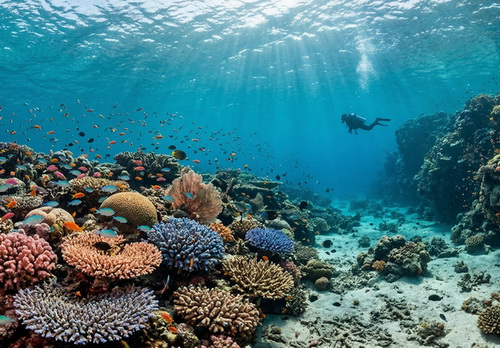
Sharks are a major draw across many South African dive locations, with various species frequenting sites like Protea Banks and Aliwal Shoal. Protea Banks attracts bull sharks, scalloped and great hammerheads, oceanic blacktip sharks, giant guitar sharks, ragged tooth sharks, and tiger sharks throughout the year. Aliwal Shoal is known for ragged-tooth shark sightings, especially during their mating season from May to October, and also hosts tiger and hammerhead sharks. Sodwana Bay, a rich coral reef environment, boasts around 1,200 fish species, 15 types of sharks, manta rays, and breeding colonies of turtles. Divers exploring the 7 Mile Reef there might encounter larger pelagic species, eagle rays, and occasional manta rays. Wreck sites like the Produce Wreck at Aliwal Shoal and the SS Maori near Cape Town teem with schools of fish, octopus, and occasionally larger species like rays and sharks.
Dive Centers Near Number One
No Dive Centers Local To Number One
Are you a dive center visiting this location? Get listed to reach divers.
Frequently Asked Questions
What is the best time of year to see sharks in South Africa?
From May to October is generally considered the peak season for ragged-tooth shark aggregations, particularly at Aliwal Shoal and Protea Banks, as they gather for mating. Other shark species, like bull sharks and hammerheads, are present year-round, though their numbers can fluctuate seasonally.
Are there dive sites suitable for beginner divers in South Africa?
Yes, while many sites feature strong currents, locations such as Aliwal Shoal offer more protected dive sites suitable for all levels of certified divers. Sodwana Bay also has sections, like 2 Mile Reef, that cater to both novice and experienced divers, with shallower sections starting around 8 meters.
What kind of water temperatures can I expect?
Water temperatures vary significantly by region and season. Cape Town's waters typically range from 12-18°C (54-64°F), while the eastern coast, including Aliwal Shoal and Protea Banks, sees 22-27°C (72-81°F) from November to April, dropping to 19-23°C (66-73°F) from May to October. Sodwana Bay can reach up to 27°C (80°F).
How is visibility generally in South Africa?
Visibility is often good, generally exceeding 20 meters in places like Sodwana Bay. At Aliwal Shoal and Protea Banks, visibility is typically around 20 meters, though it can range between 10 to 20 meters during the South African summer months.
Is it common to encounter strong currents?
Yes, strong currents are a frequent characteristic of many dive sites in South Africa, especially at offshore locations like Protea Banks. Divers should be prepared for these conditions and possess appropriate experience or training.
Are there any notable wreck dives?
Several fascinating wreck dives exist. The Produce Wreck at Aliwal Shoal, a Norwegian bulk carrier, is split into two sections and is rich in marine life. Near Cape Town, the SS Maori wreck lies in shallower waters, covered in marine growth and home to various species.
What is the Sardine Run?
The Sardine Run is a natural phenomenon occurring typically in June or July, where billions of sardines migrate along the coast, attracting a spectacular array of predators. Diving during this event is considered a unique experience for those visiting at that time.
Liveaboards Sailing to Number One
Explore highly rated liveaboards visiting this dive site and discover the best routes in South Africa.
Resorts & Accommodation
Find partner hotels and dive resorts directly accessing the reef.
Around This Area
Explore top-rated restaurants, activities, and attractions near Number One reviewed by travelers.
Planning to dive Number One?
Send one inquiry and receive offers directly from the best verified local dive operators.