
Diving atTLU 2 (Colombia)
Certain dive profiles in the Providencia region, particularly tunnels like Espiral, demand advanced training for safe exploration due to overhead environments. Most sites, however, present calm conditions, requiring standard safety protocols and attentive diving practices. Currents are generally minimal here, contributing to an overall sense of tranquility underwater. Dive staff in the area are often noted for their focus on safety and guidance.
Tonight's objective overview for TLU 2 shows an air temperature of 28.3°C. The measured surface conditions include wave heights around 0.22m. This environmental data is logged for the close of the day.
Dive Site Coordinates
9.4833, -75.6667
Key Dive Site Facts
Dive Site Overview
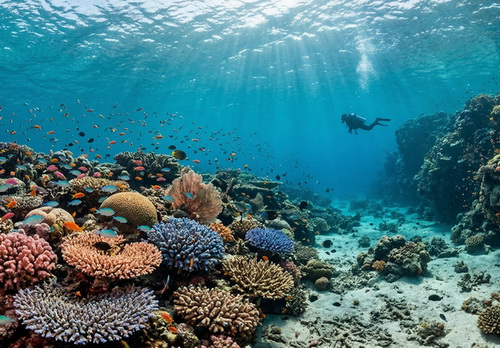
Diving in this Colombian region often feels like descending into a vibrant, natural aquarium, characterized by remarkably clear visibility that frequently stretches 24-30 meters / 80-100 feet. Gentle currents are typically encountered, contributing to an overall sense of tranquility and making conditions manageable for various skill levels.
The underwater topography often presents a distinctive 'ladder-like' structure, where a series of ledges at differing elevations gradually lead to dramatic vertical walls. These formations provide extensive exploration opportunities, from the sunlit shallow areas to more profound regions where the walls descend into the blue. Divers here uncover a rich tapestry of marine habitats.
This includes expansive shallow patch reefs bustling with schools of colorful fish, deeper rocky formations providing shelter for larger species, and the intrigue of historic wrecks. The numerous and diverse dive sites are generally within a short boat ride from shore, enhancing the accessibility of this destination for many, including those new to tropical diving or seeking varied profiles across multiple dives.
Water temperatures consistently remain warm, generally in the 27-31°C / 80s°F range, making for comfortable extended bottom times.
Best Time to Dive
For an optimal dive experience, the period from May to November typically offers the most favorable surface conditions and contributes to higher overall dive satisfaction. During these months, average wave heights are notably lower, measuring around 0.3-0.4 meters, or 1-1.3 feet, which translates to significantly smoother boat rides to and from dive sites. These calmer conditions are further supported by lighter winds, generally approximately 14-16 km/h / 9-10 mph, ensuring more comfortable entry and exit experiences. While rainfall does see a slight increase during this timeframe, it rarely impacts underwater clarity, with robust clear water visibility often persisting. Surface air temperatures consistently hover between a pleasant 26.8-27.8°C / 80-82°F, ensuring comfortable topside conditions between dives. Furthermore, for those interested in larger marine encounters, the peak season for whale watching in the broader region runs from July to October, adding an extra dimension to the dive trip during these specific months. Even with a slight increase in precipitation, the benefits of calm seas and excellent visibility generally outweigh this factor, solidifying this period as ideal for most divers.
Climate Historical Averages
Monthly records compiled from satellite and marine observation nodes over the last 3 years. Data provided by Open-Meteo and MET Norway.
Dive Experience & Conditions
The varied depth profiles in this region cater to a range of experience levels. Shallow patch reefs, like Manta's Place, are found at easily accessible depths, while sites such as Piedra de la Tortuga (Turtle Rock) begin to reveal their formations from a sandy bottom around 30 m / 100 ft. At San Andres, the underwater topography commonly features a 'ladder' effect, with distinct ledges in the shallower range, typically around 4.5 meters (15 feet) and 9 meters (30 feet), before progressing to a wall that begins at roughly 18 meters (60 feet). Visibility consistently offers expansive views, often extending beyond 24 meters (80 feet), and water temperatures remain warm, generally in the 27-31°C / 80s°F throughout the year.
Dive Difficulty & Safety Guidelines
Diver skill requirements vary across the sites in this area. While many locations offer calm conditions suitable for all levels, some advanced sites, such as Espiral, involve deeper profiles and overhead environments, necessitating specific training and experience. Dive operators in the region are often noted for their attentive and safety-oriented staff, who provide thorough guidance. However, certified divers remain primarily responsible for their own safety and adherence to standard protocols. Always respect the marine environment, appreciating it with your eyes rather than hands to avoid inadvertently disturbing or touching marine life. It's crucial to observe the 24-hour no-fly time after diving.
Recommended Equipment
No verified equipment items yet.
Verified equipment recommendations for this dive site are being reviewed and may be added as additional source checks are completed.
Recommended Dive Suit
With water temperatures around 30°C (86°F), many divers find a dive skin or rash guard provides comfortable protection.
Divers performing multiple dives may appreciate slightly warmer protection later in the day.
Environmental conditions may feel slightly cooler as the week progresses. Cooler days are ahead; you might want a warmer option for later in the week. A warmer option can provide additional comfort if conditions shift.
Conditions last reviewed: 18:00 using the latest environmental data.
Dive Logistics & Preparation
Hyperbaric Chamber
Check local Colombia medical facilities.
Entry Requirements
View Colombia Visa Hub
Currency
COP
Nearest Airports
Nearest airports to help plan travel to this dive area.
Marine Life at TLU 2
The marine ecosystem in this part of Colombia provides consistent opportunities for encountering diverse life. Divers frequently observe an abundance of Caribbean reef sharks, particularly at sites like Chromix, and large schools of white snapper. Patch reefs and extensive stony corals serve as critical habitats for numerous species, including sea turtles, sergeant majors, butterflyfish, goatfish, and parrotfish. Pillar coral formations are also vibrant with activity. Furthermore, seasonal whale watching from July to October adds another layer of marine interest to the region, complementing sightings of eels and tuna throughout the rest of the year.
Dive Sites Near TLU 2
View all dive sites in ColombiaDiscover more underwater gems in this area.

Dive Centers Near TLU 2
No Dive Centers Local To TLU 2
Are you a dive center visiting this location? Get listed to reach divers.
Frequently Asked Questions
What is the typical water temperature?
Water temperatures in the Providencia and San Andres region remain consistently warm, generally in the 27-31°C / 80s°F throughout the year. This allows for comfortable diving experiences in most seasons.
What is the visibility usually like?
Visibility in the area is typically excellent, often providing clear views well beyond 24 meters (80 feet).
Are there sharks in this region?
Yes, the Providencia area is known for an abundance of Caribbean reef sharks. They are frequently sighted at various dive sites, soaring over sea fan forests.
Are there dive sites suitable for beginners?
Absolutely. The region, especially San Andres, is ideal for divers of all levels, including those learning to dive. Many shallow sites with calm conditions and stunning patch reefs are available.
What kinds of dive sites can I expect?
You can expect a variety of sites, from shallow patch reefs and rocky structures to dramatic walls and ledges. There are also shipwrecks and specific sites with tunnels for advanced exploration.
Is shore diving an option?
Yes, San Andres offers plenty of shore diving opportunities. This allows divers flexibility to explore the underwater landscape without being constrained by boat schedules.
When is the best time for whale watching?
Whale watching season in this part of Colombia, particularly around Bahía Solano, is from July to October. This period could be ideal for those interested in encountering these larger marine animals.
Are there any specific sites for advanced divers?
Yes, sites like Espiral in Providencia feature tunnels that descend to advanced depths, commonly ranging from 27 to 35 meters (90-115 feet). Due to the depth and overhead environment, these sites are recommended for advanced divers with proper training.
Liveaboards Sailing to TLU 2
Explore highly rated liveaboards visiting this dive site and discover the best routes in Colombia.
Resorts & Accommodation
Find partner hotels and dive resorts directly accessing the reef.
Around This Area
Explore top-rated restaurants, activities, and attractions near TLU 2 reviewed by travelers.
Planning to dive TLU 2?
Send one inquiry and receive offers directly from the best verified local dive operators.