Marine Life

What Divers Should Know About Parrotfish

Learn all about the Parrotfish, including dynamic specs, encounter highlights, habitats, and the best dive sites to find them.
Parrotfish
Scientific Name

/

Size

/

Depth

/

Habitat

/

Conservation

Not Evaluated

Danger Level

/

About the Parrotfish

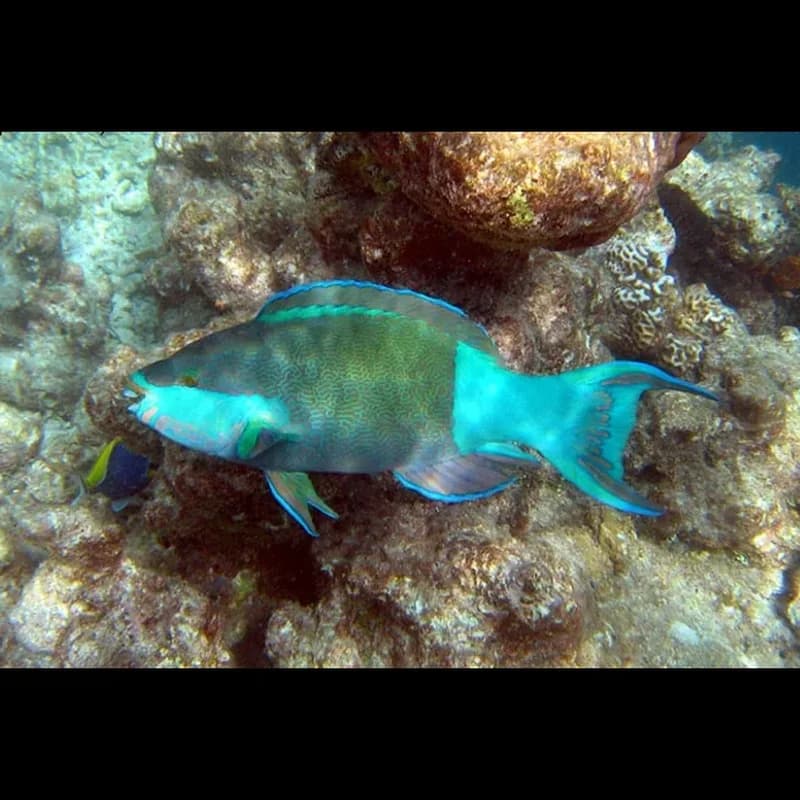
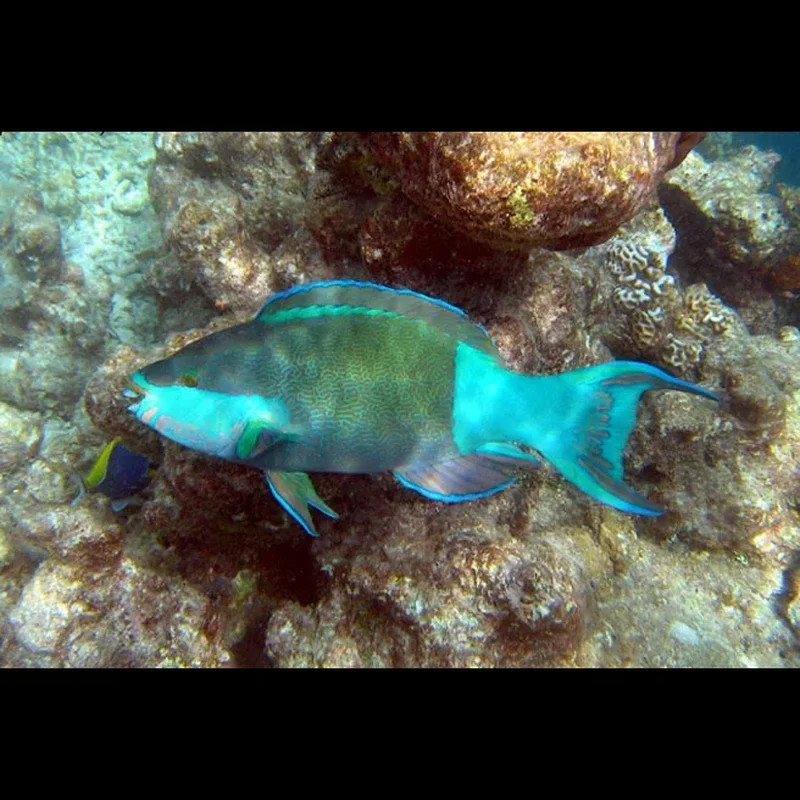
Parrotfish significantly contribute to the health and formation of marine environments. These fascinating fish, named for their distinctive beak-like mouths, are major players in bioerosion by continuously rasping algae from coral and rocky substrates. This activity, often seen by divers across coral reefs, rocky coasts, and seagrass beds, also enriches the sand content on the surrounding ocean floor. Their unique dentition, a tightly packed mosaic of teeth forming a parrot-like beak, makes this powerful feeding behavior possible.

Encountering these vibrant members of the wrasse family is a highlight across many dive sites, particularly in the Indo-Pacific, which hosts their greatest species richness. While the majority of the roughly 95 species typically reach 30–50 cm (12–20 in) in length, divers might spot larger individuals. Some species exceed 1 meter (3 ft 3 in), with the impressive green humphead parrotfish growing up to 1.3 meters (4 ft 3 in). Conversely, the smallest, the bluelip parrotfish, measures just 13 cm (5.1 in).

Where You Can See Parrotfish

Detailed regional distribution data for Parrotfish is not available yet. This species may still appear on related dive site pages when local sightings or habitat information are available.

Dive Sites with Parrotfish

Discover 12 of 377 breathtaking locations where you can encounter this species.
Related Marine Life

Explore other incredible species you can encounter on your diving adventures.