Loading...

Diving at Jabuka Caves (Croatia)
Published
Last updated
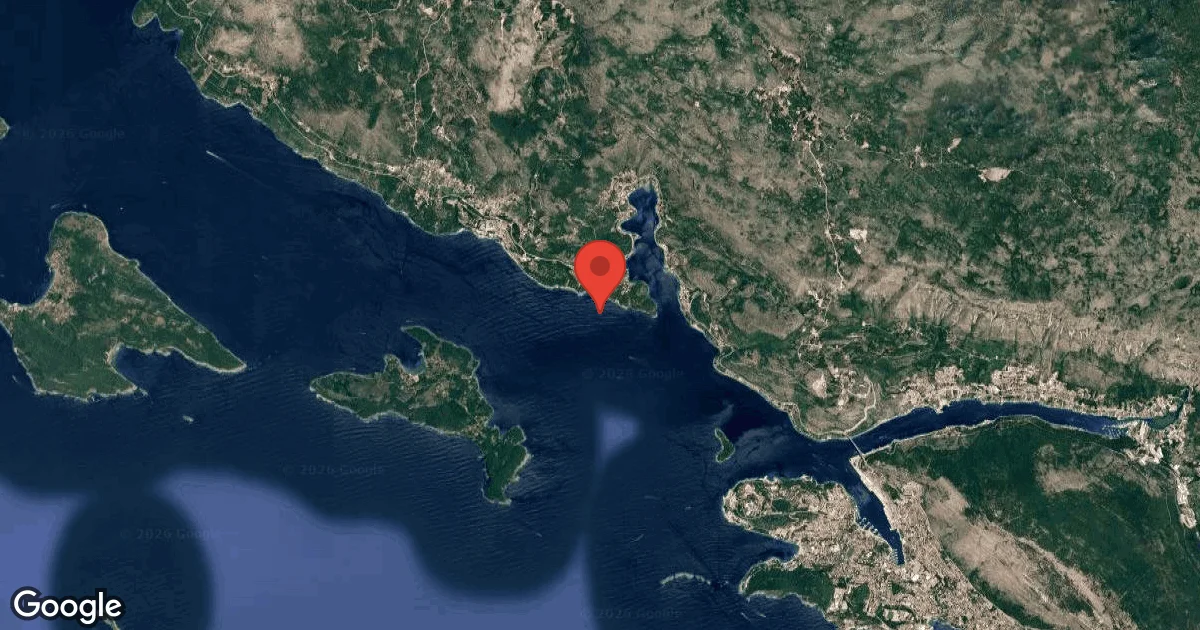
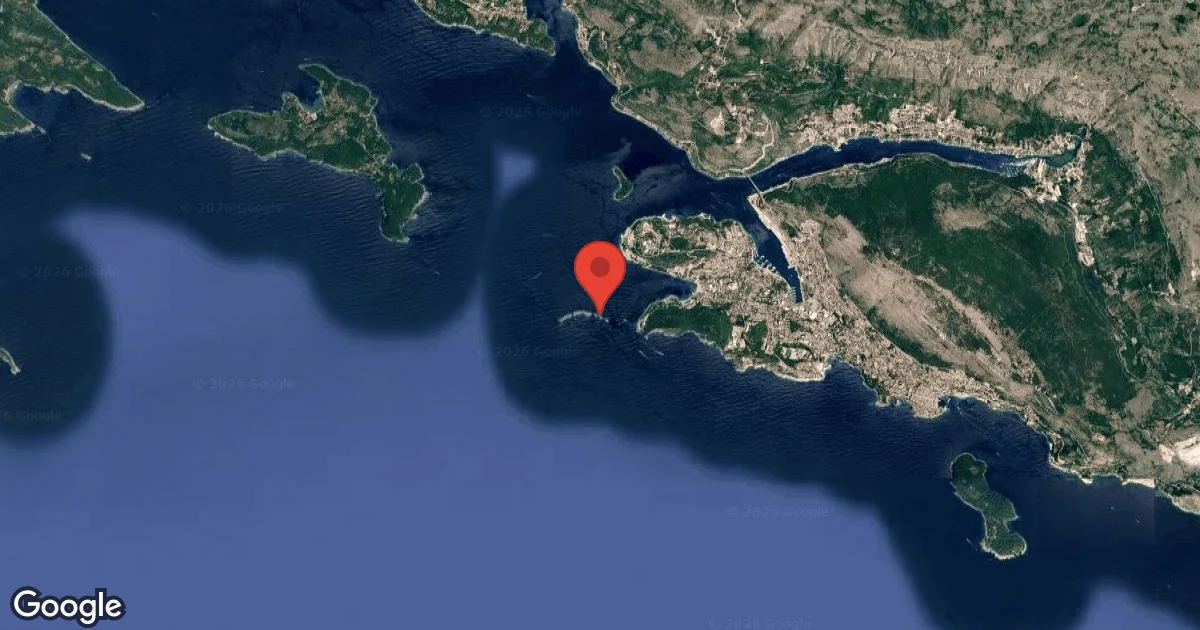
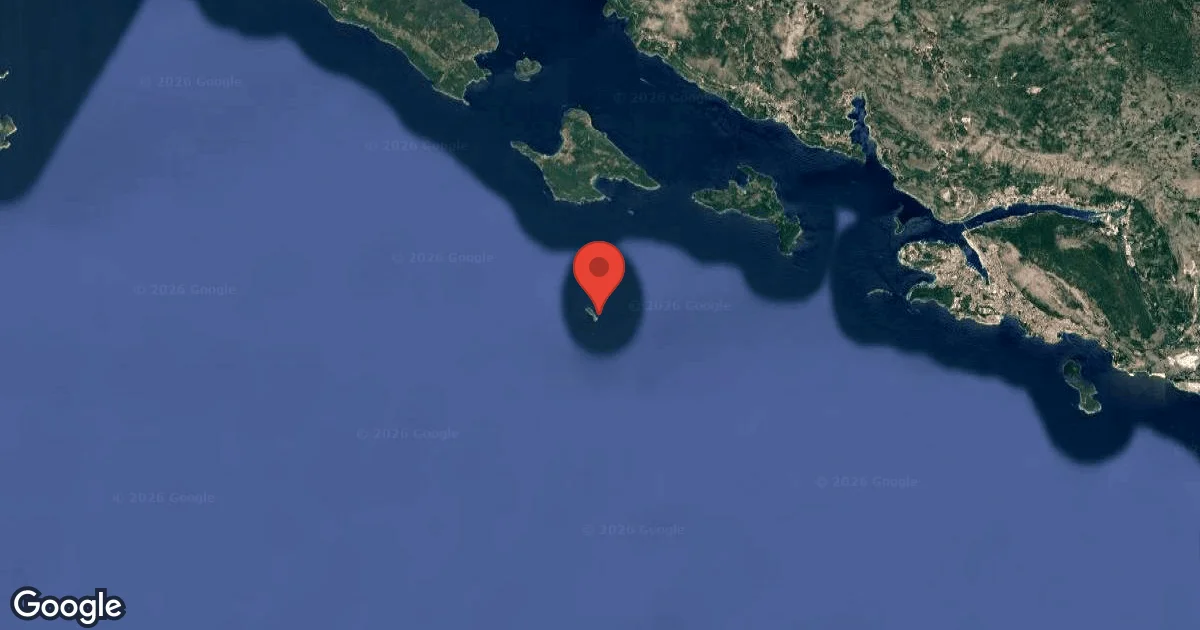
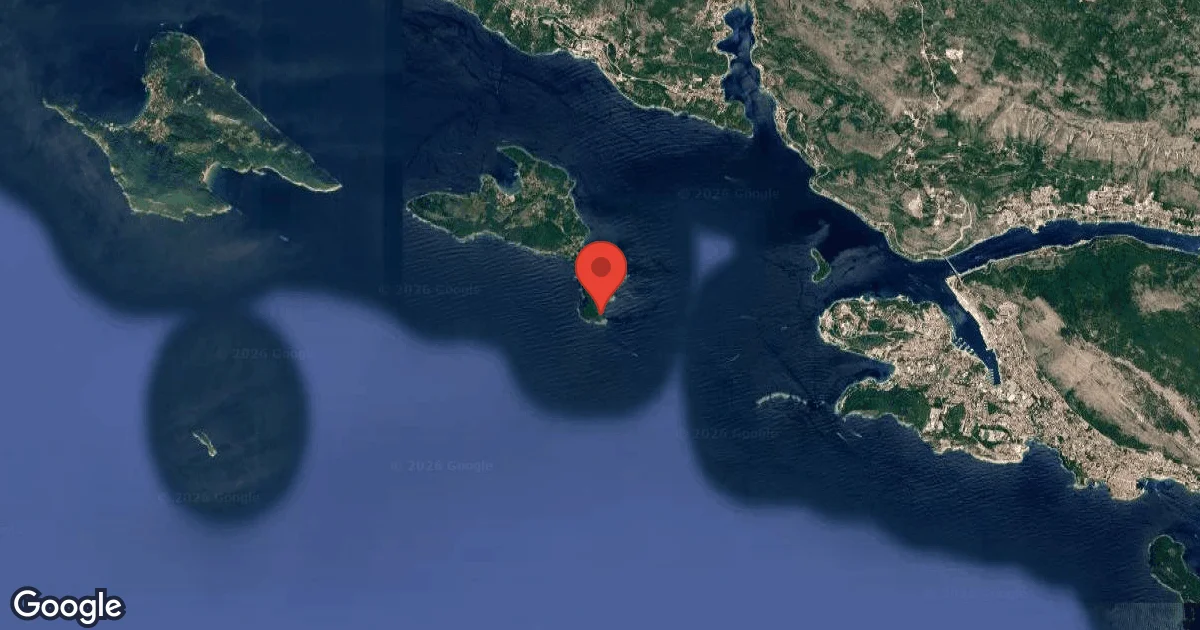
Carved into the sheer 60 m / 197 ft limestone sea cliffs along the southwestern coast of Koločep Island, Jabuka Caves combine ancient submerged stalactite chambers with a dramatic 50 m / 164 ft South Adriatic wall just 10 minutes by boat from Dubrovnik's Lapad peninsula. Flooded by rising seas after the last ice age, the cliff base opens between 6 and 18 m / 20 and 59 ft into dark karst recesses and an enclosed overhead air dome framed by cobalt entrance arches. Open Water divers can explore the sunlit outer cavern portals and shallow boulder ledges, while Advanced Open Water and overhead-trained divers inspect speleothems, a prominent 38 m / 125 ft boulder, and the recreational 40 m / 131 ft drop-off. Protected within the Elaphite Islands ecological network mapped by Croatia's Ministry of Environmental Protection and Green Transition, the deeper 40 to 50 m / 131 to 164 ft escarpment extends into technical decompression range.
Starting the day at Jabuka Caves, the ambient air temperature is recorded at 13°C. Ongoing monitoring shows wave heights measuring 1.9 m. This data represents the current surface conditions for early activities.
Dive Site Location & Key Facts
Site Characteristics
Max Depth50m / 164ft
Entry Typeboat
Water Typesalt
Dive Types
CaveCavernReef
Dive Site Overview
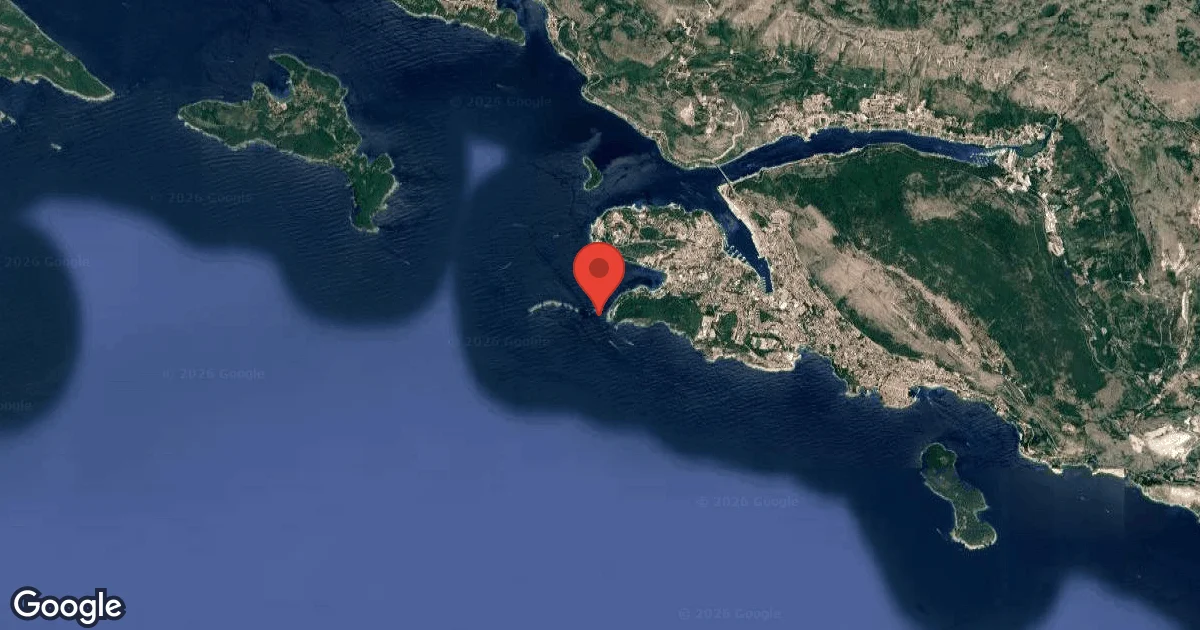
Sculpted along the faulted seaward rim of Koločep, the southernmost inhabited member of Dubrovnik's Elaphite Archipelago profiled in the Official Encyclopedia of Croatia, Jabuka Caves sit roughly 520 m / 1,706 ft west-northwest of Cape Bezdan. Geomorphological surveys in Geoadria show that this southwestern headland consists of exceptionally pure Upper Cretaceous Senonian limestone reaching 99.98 percent calcium carbonate, allowing rainwater and fractures to hollow out spacious chambers before rising Holocene seas submerged the cliff base.
Visiting divers should distinguish this Koločep cliff system from two similarly named Croatian landmarks: the small Jabuka rock sitting 1 minute off Lapad inside the Grebeni chain and uninhabited volcanic Jabuka Island covering 22,585 sq m / 243,103 sq ft in the central Adriatic per Geoadria's hydrographic island inventory. Here off Koločep, tower-like cliffs rise up to 60 m / 197 ft straight out of deep open water as recorded in the Maritime Encyclopedia, leaving no beach or shore path and keeping boat access mandatory.
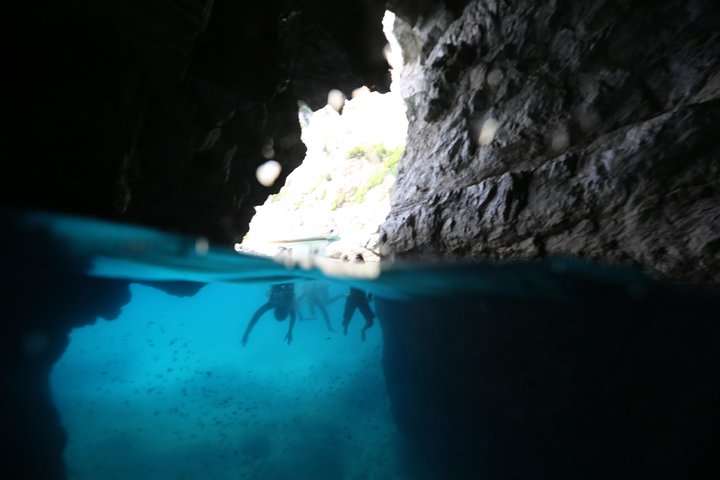
Underwater, the upper rock terrace between 3 and 6 m / 10 and 20 ft leads directly into a series of arched openings along the cliff foot from 6 to 18 m / 20 to 59 ft. Torch beams inside the darker inner chambers reveal submerged stalactites and flowstone columns encrusted by marine organisms alongside an enclosed air dome trapped under the limestone roof.
Outside the cavern portals, a steep rocky talus slope drops past a massive detached boulder resting at 38 m / 125 ft before the outer coralligenous wall plunges to 50 m / 164 ft. Both the submerged karst caves and the vertical reef face belong to European Union priority habitats 8330 and 1170 within Elaphite conservation site HR4000028 documented in Croatia's Maritime Domain Conservation Screening and the Croatian Marine Habitats Manual.
Jabuka Caves
Conditions are Moderate
5/10
Confidence: 8/10
Indicates meteorological model agreement and data availability.
DIVE WARNING
High Swell Advisory. Not recommended.
06:12
18:45
H: 10:45
L: 16:20
Air / Sea Temp
13° / 19°
Wave Height
2.0 m
Wind Speed
39 km/h NNE
Rain Chance
50%
Current conditions near Jabuka Caves show 13° air, 19° sea temperature, 2.0 m waves, and 39 km/h wind. Forecast data is refreshed regularly to ensure accuracy.
Radius: ~12km
Updated: Nov 23, 2026, 06:24 local timeMARINE: OPEN-METEOWEATHER: YR.NO
Best Time to Dive
Calm seas and bright sunlight make May through October the prime season to dive Jabuka Caves, when southern Koločep's exposed cliffs are free from winter storm surf. Long-term records from the Croatian Meteorological and Hydrological Service for Dubrovnik show mean air temperatures rising from 18.7°C / 66°F in May to 25.4°C / 78°F in August with more than 350 monthly sunshine hours in midsummer. Coastal oceanographic monitoring in Acta Adriatica records late-summer surface water between 21.7 and 26.6°C / 71 and 80°F while deeper layers at 38 to 50 m / 125 to 164 ft stay cool around 14 to 16°C / 57 to 61°F. Morning departures during June, July, and August avoid afternoon northwesterly sea breezes that push chop against the cliff portals, while September and early October combine warm upper water down to 22 m / 72 ft with quiet boat moorings. From November through March, southeasterly gales drive heavy open-sea swells above 3.5 m / 11.5 ft straight into the caverns and halt safe boat anchoring.
PEAK SEASON SCORE
95/100
ExcellentScores combine air & water temps, waves, wind & rainfall for overall conditions.
BEST MONTHS TO DIVE
JUN
JUL
AUG
DIVE SCORE GUIDE (0–100)
Excellent (90–100)
Very Good (80–89)
Good (70–79)
Moderate (50–69)
Poor (30–49)
Not Recommended (0–29)
Monthly records compiled from satellite and marine observation nodes over the last 3 years. Data provided by Open-Meteo and MET Norway.
Dive Experience & Conditions
Dive boats depart western Lapad and cross Koločep Channel in roughly 10 minutes, mooring under towering vertical limestone walls on the southwestern side of Koločep Island. Dropping onto a bright rocky ledge at 5 m / 16 ft, divers check buoyancy and primary lights before gliding down to the cave entrances between 6 and 18 m / 20 and 59 ft. Inside the sheltered recesses, daylight fades quickly into cool shadow while dive lights pick out ancient drowned stalactites and vivid yellow and orange sponges coating the walls, followed by a brief surface look inside the enclosed ceiling air pocket with regulators kept securely in the mouth. Looking back toward the entrance arches, backlit cobalt water frames silhouettes of schooling seabream against open-sea visibility of 15 to 30 m / 49 to 98 ft at 38.1 to 38.4 PSU salinity documented in Geoadria. Exiting onto the seaward drop-off, advanced teams descend past a distinct thermocline around 18 m / 59 ft to inspect the large 38 m / 125 ft boulder, while technical teams continue down the sheer face to 50 m / 164 ft. Along the exposed cliff, the northwest-flowing Adriatic coastal current averages 0.5 to 0.7 knots, guiding divers smoothly back up terraced ledges for a 5 m / 16 ft safety stop beneath the boat.
Dive Difficulty & Safety Guidelines
Jabuka Caves offers multi-level routing: Open Water divers stay along the sunlit cliff shelf and wide daylight cavern portals down to 18 m / 59 ft, Advanced Open Water divers explore the outer wall and submerged boulder down to Croatia's 40 m / 131 ft compressed-air limit established under Article 9 of Croatia's Underwater Activities Regulation, and dives onto the 40 to 50 m / 131 to 164 ft lower cliff require technical decompression training. Recreational divers must follow the overhead rules published by the Croatian National Tourist Board for cave and cavern diving and underwater lighting, carrying independent primary and backup torches, applying conservative thirds gas planning in overhead zones, and never penetrating dark passages beyond clear sight of natural daylight without full cave certification. Inside the chambers, teams use slow frog kicks to avoid stirring floor silt or snapping fragile Pleistocene stalactites, and divers peering into the overhead air dome must never remove their regulators because unventilated karst pockets can hold hypoxic or carbon-dioxide-rich air.
Captains skip the site whenever southerly swell builds piston-like surge inside the cliff openings, and boat crews must display a regulation dive buoy and flag near Koločep Channel shipping lanes monitored under the Hydrographic Institute VTS framework. Every team should carry a delayed surface marker buoy to ascend close to the cliff and avoid drifting into open water. Emergency marine rescue operates round the clock through Croatia's Maritime Rescue Coordination Centre on 195 with immediate hospital stabilization in Dubrovnik at the Emergency Admission Department of General Hospital Dubrovnik and 24-hour hyperbaric recompression at the Naval Medical Institute in Split.
Recommended Equipment
Technical depth range. Advanced planning, gas management, and appropriate certification required.
Overhead environment. Do not enter beyond training and gas planning limits.
- Dive Computer
- DSMB
- Primary & Backup Lights
- Reel / Spool
- Cutting Tool
This gear list is based on verified equipment signals for Jabuka Caves, Croatia. Always confirm final gear choices with your dive operator, guide, or liveaboard.
Recommended Dive Suit
Individual comfort in the water can vary significantly from diver to diver, even under the same conditions.
For most recreational dives, 5mm wetsuit should provide comfortable protection. Consider warmer surface protection (like a boat coat) due to brisk winds. A thermal robe or jacket is recommended between dives. Forecast trends indicate little change in overall diving conditions during the next few days.
Current temperature readings suggest that the water at Jabuka Caves is around 19°C (67°F). Surface air temperatures are resting at 13°C (55°F).
Jabuka Caves conditions last reviewed: 06:24 local time (UTC+1), Nov 23, 2026
Emergency & Medical Support
Essential information to help you plan your dive trip to Jabuka Caves.

Hyperbaric chambers are a critical part of dive safety infrastructure. Availability varies significantly by region, and not all dive areas have immediate access.
Before diving, it's recommended to:
- confirm nearest medical facilities
- check emergency procedures with local dive operators
- ensure dive insurance covers evacuation if required
24/7 Available
Divers Alert Network
Diving emergency assistance available through DAN Europe.
+39 0642115685- 24/7 emergency hotline
- Diving medical assistance
- Evacuation coordination
Emergency contacts are provided for reference. Always verify local emergency services before diving.
Closest Listed Hyperbaric Chambers (≤ 200 km)
Approximate straight-line distances from this dive site — emergency travel times may vary.
157 km157 kmZavod za pomorsku medicinu Split – Odjel za podvodnu i hiperbaričnu medicinu
Split, Croatia24/7ICU194Details157 kmZavod za pomorsku medicinu Split – Odjel za podvodnu i hiperbaričnu medicinu
24/7 ListedICU CapableSplit, Croatia · Multiplace
24/7 Emergency194CollapseHours: 24/7 EmergencyFacility: Zavod za pomorsku medicinu / KBC Split (Križine)ICU On-Site: YesSource: KBC Rijeka / Poliklinika OXY
157 km
Zavod za pomorsku medicinu Split – Odjel za podvodnu i hiperbaričnu medicinu
Split, Croatia24/7ICU194Details
157 km
Zavod za pomorsku medicinu Split – Odjel za podvodnu i hiperbaričnu medicinu
24/7 ListedICU CapableSplit, Croatia · Multiplace
24/7 Emergency194
CollapseHours: 24/7 Emergency
Facility: Zavod za pomorsku medicinu / KBC Split (Križine)
ICU On-Site: Yes
Source: KBC Rijeka / Poliklinika OXY
Chamber data is sourced from official Croatian hospital and baromedicine facility records and has not been independently verified by Dive Navigator. Always contact local emergency services, DAN, your dive operator, or the facility directly before travelling.
Reference onlyMarine Life at Jabuka Caves
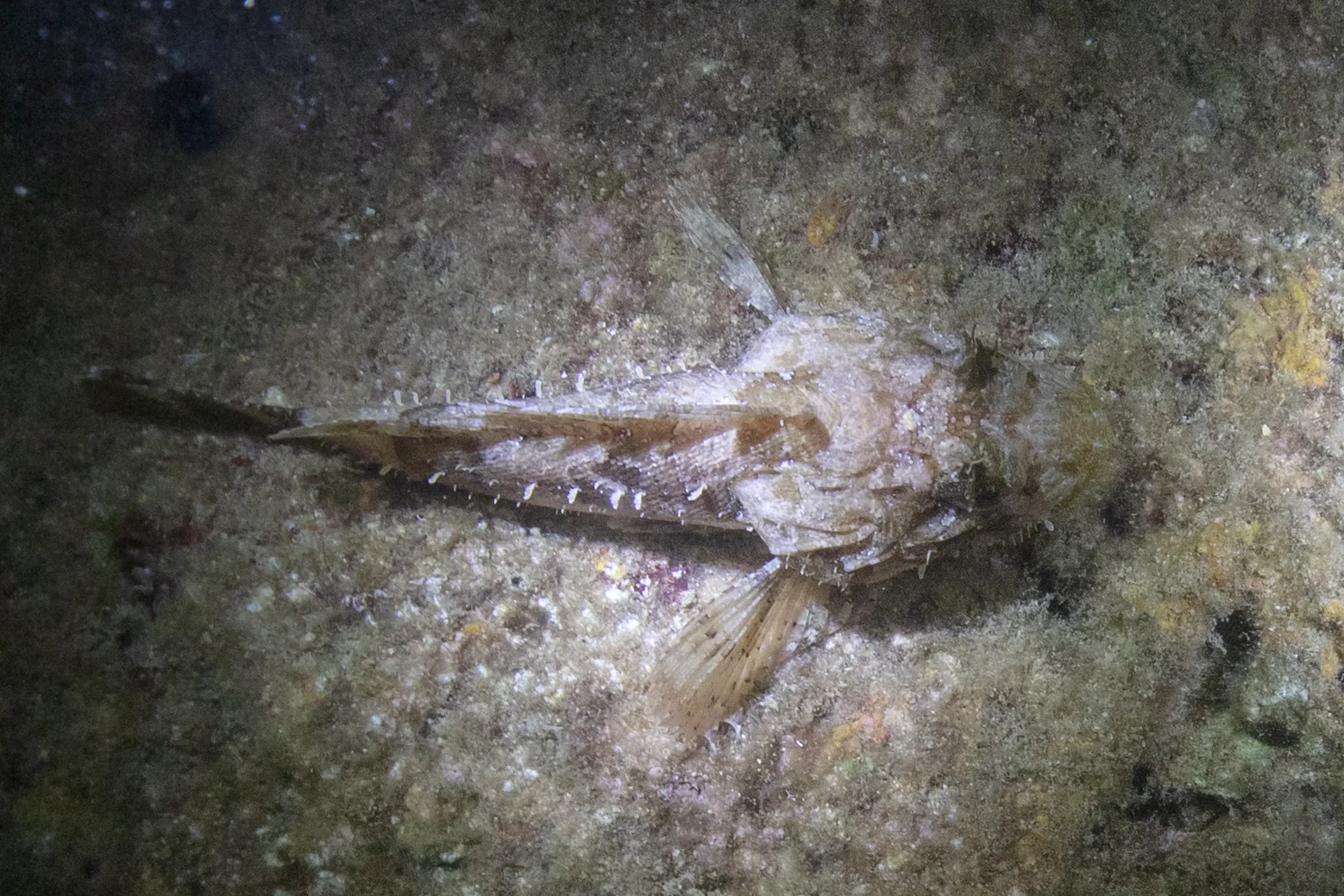
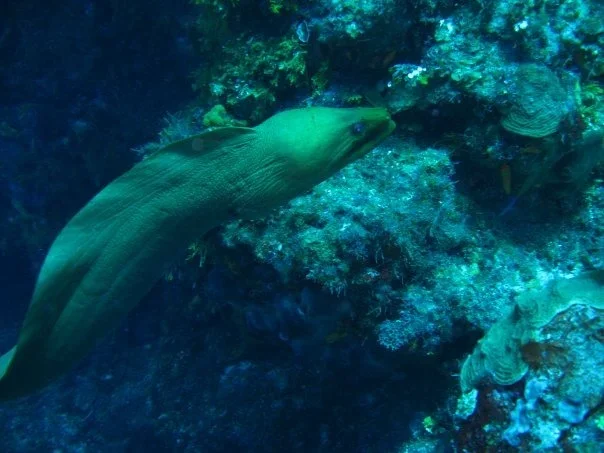
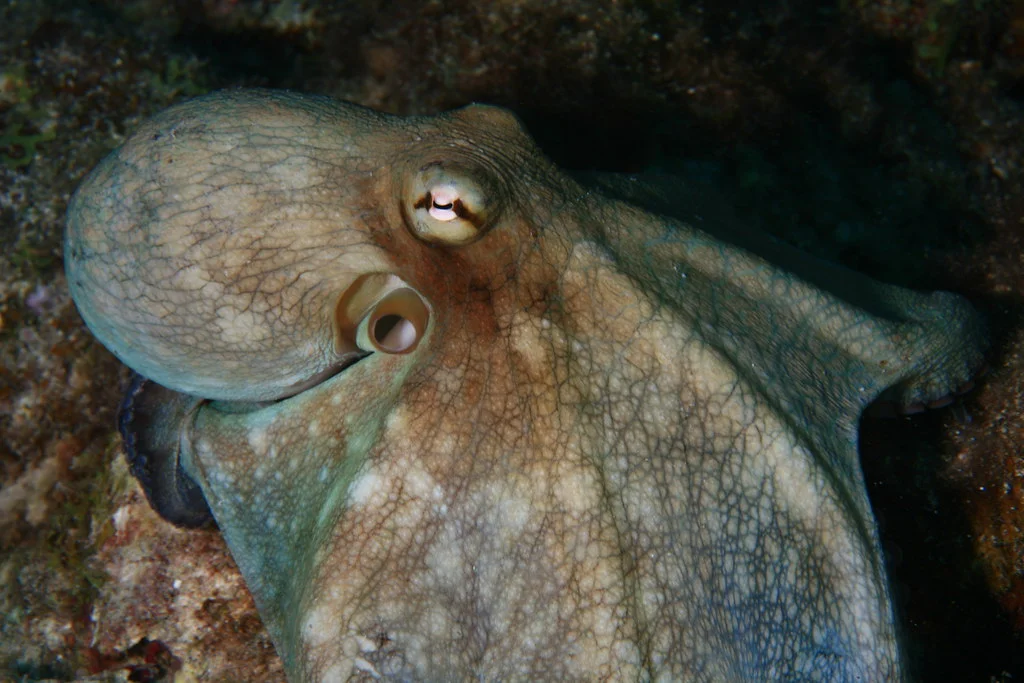
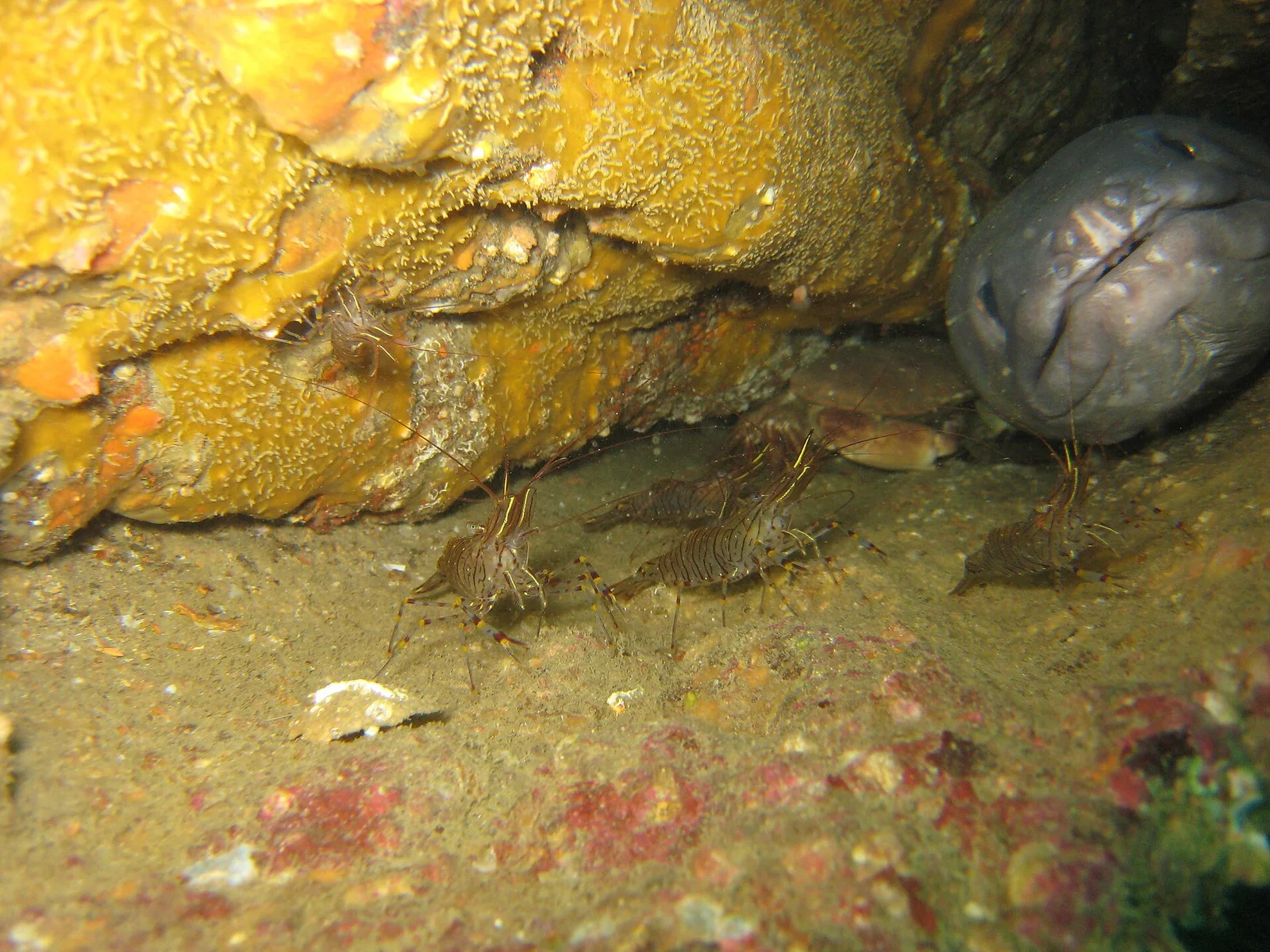
Dense beds of Mediterranean mussels cling to wave-washed entrance ledges alongside sunlit schools of gilt-head seabream, white seabream, and two-banded seabream feeding along the cliff face, as documented in Acta Adriatica coastal fish surveys. Boulders and crevices down to the 38 m / 125 ft rock shelter common octopuses, Mediterranean moray eels, European conger eels, and camouflaged red scorpionfish resting among coralline algae.
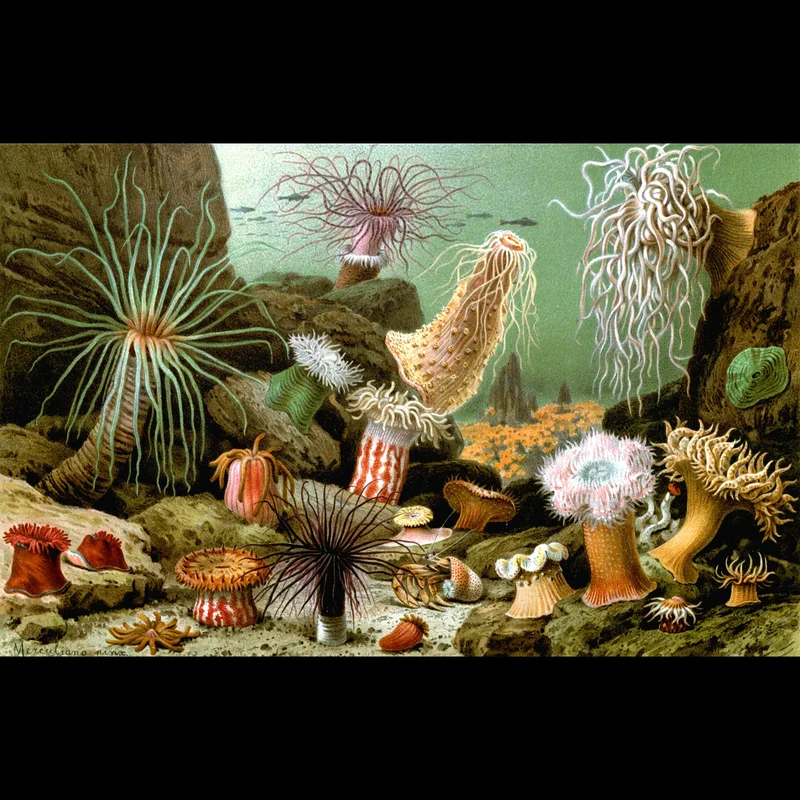
Where light diminishes inside the karst arches and along shaded overhangs described for submerged caves in the Croatian Marine Habitats Manual, bright yellow cluster anemones, sunset cup corals, and encrusting sponges carpet the limestone ceilings. Torch beams sweeping rear ledges regularly reveal cardinalfish, forkbeards, European spiny lobsters, and protected Mediterranean slipper lobsters listed under Croatia's Strictly Protected Species Ordinance.
1 / 2
Image contributors:Diego Delso, laszlo-photo + 3 more
Want to contribute photos or local dive knowledge? Learn how to contributeDive Sites Near Jabuka Caves
View all dive sites in CroatiaDiscover more underwater gems in this area.
Max 47 m
3.5 km
Maro's Cave
CaveOcean
Max 52 m
2.5 km
SS Taranto
BoatOcean
Max 30 m
2.8 km
Zaton Bay
BoatCavern
Max 40 m
3 km
Grebeni Islets
BoatCanyon
Max 80 m
5.7 km
St. Andrew Islet
BoatCavern
Max 40 m
0 km
Bezdan
CaveLake
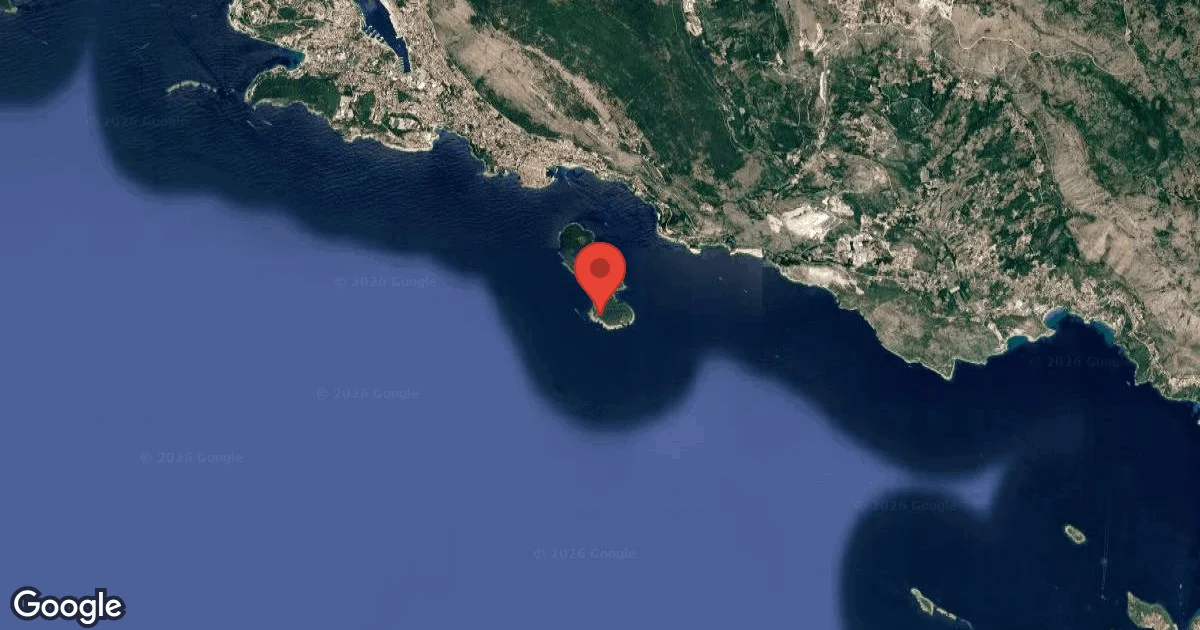
Max 30 m
9.4 km
Lokrum Island and Dead Sea Lake
BoatCavern
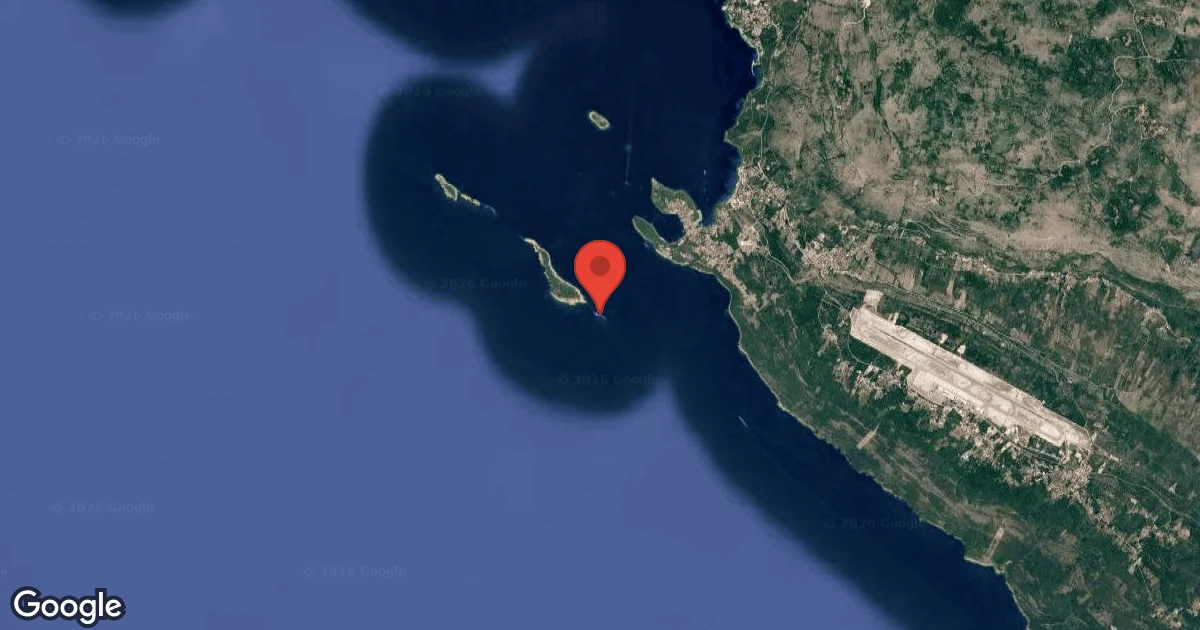
Max 50 m
18.1 km
Mrkanjac Reef
BoatDrift
Max 47 m
3.5 km
Maro's Cave
CaveOcean
Max 52 m
2.5 km
SS Taranto
BoatOcean
Max 30 m
2.8 km
Zaton Bay
BoatCavern
Max 40 m
3 km
Grebeni Islets
BoatCanyon
Max 80 m
5.7 km
St. Andrew Islet
BoatCavern
Max 40 m
0 km
Bezdan
CaveLake
Max 30 m
9.4 km
Lokrum Island and Dead Sea Lake
BoatCavern
Max 50 m
18.1 km
Mrkanjac Reef
BoatDrift
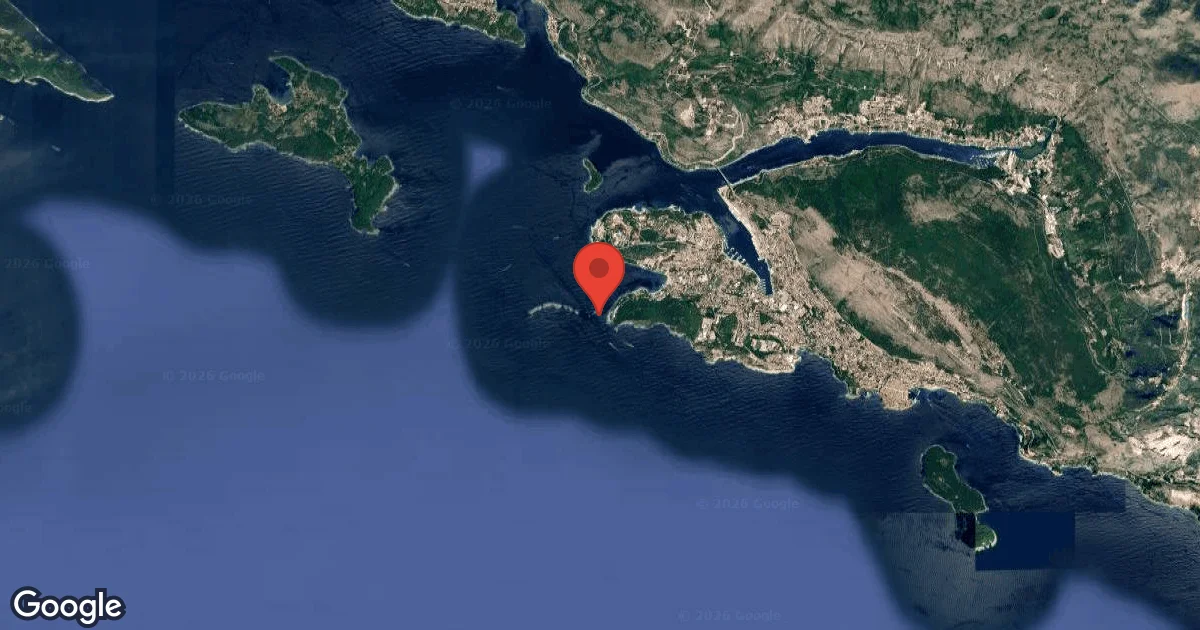
3.4 km
360°Mala Afrika
CaveReef
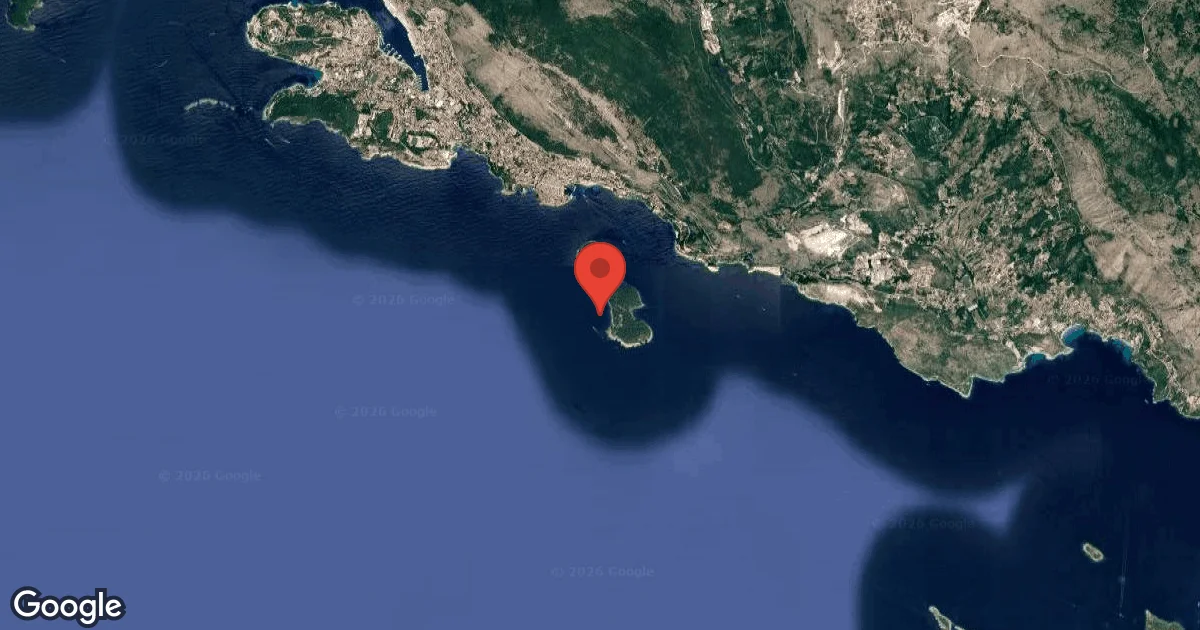
Max 35 m
9 km
Tomislav Wreck
BoatOcean
1 / 2
Dive Centers Near Jabuka Caves
Working Hours
SunClosed
Mon09:00 - 17:00
Tue09:00 - 17:00
Wed09:00 - 17:00
Thu09:00 - 17:00
Fri09:00 - 17:00
Sat09:00 - 17:00
Today: 09:00 - 17:00
SunClosed
Mon09:00 - 17:00
Tue09:00 - 17:00
Wed09:00 - 17:00
Thu09:00 - 17:00
Fri09:00 - 17:00
Sat09:00 - 17:00
4.7| 113 reviews
48.2 kmNearest Airports
Nearest airports to help plan travel to this dive area.
Dubrovnik Ruđer Bošković Airport DBV
23 km
Tivat Airport TIV
65 km
Brač Airport BWK
129 km
💵 Currency: EUR
Search Flights
Check available flights and routes on Expedia, using the nearby airports listed in this section.
Search Flights on ExpediaAffiliate link · Dive Navigator may earn a commission at no extra cost to you.
Frequently Asked Questions
Are Dubrovnik's Jabuka Caves connected to volcanic Jabuka Island in the central Adriatic?
No, Dubrovnik's Jabuka Caves lie carved into Upper Cretaceous limestone cliffs on southwestern Koločep Island just 10 minutes from Lapad, whereas remote volcanic Jabuka Island sits far north in the open central Adriatic as cataloged in Geoadria's island survey. It is also separate from the tiny Jabuka rock inside the Grebeni islets right off Cape Petka.
Can divers breathe the air inside the ceiling pocket at Jabuka Caves?
No, divers surfacing into the enclosed overhead air dome must keep their scuba regulators in their mouths at all times. Unventilated karst pockets trap exhaled carbon dioxide from previous dive groups and can hold stagnant, low-oxygen air.
How did stalactites form underwater inside Jabuka Caves?
The stalactites and flowstone columns grew in open air during late Pleistocene glacial periods when Adriatic sea levels stood roughly 120 m / 394 ft lower than today. Subsequent Holocene sea-level rise flooded the lower Koločep fault cliffs documented in Geoadria and preserved the speleothems beneath marine encrustations.
What certification level is needed to dive Jabuka Caves?
Open Water divers can explore the sunlit cliff terrace and wide daylight cavern entrances down to 18 m / 59 ft within direct sight of the exit per Croatian National Tourist Board cavern rules. Reaching the 38 m / 125 ft boulder requires Advanced Open Water certification, while penetrating dark cave zones or descending the outer cliff to 50 m / 164 ft requires overhead cave or technical decompression certification under Croatia's Underwater Activities Regulation.
Do divers need a special heritage or marine park permit for Jabuka Caves?
No paid park ticket or archaeological wreck permit is required to dive Jabuka Caves. Because the site lies within Elaphite ecological network zone HR4000028 reviewed by the Ministry of Environmental Protection, touching speleothems or disturbing protected crustaceans is strictly prohibited.
What are the water temperatures and currents like on the outer cliff?
Summer surface water reaches 22 to 26.6°C / 72 to 80°F according to Acta Adriatica coastal records, dropping across an 18 m / 59 ft thermocline to 14 to 16°C / 57 to 61°F inside deep chambers and at 38 to 50 m / 125 to 164 ft. While cavern interiors remain calm, the seaward cliff catches a 0.5 to 0.7 knot northwestward coastal drift.
Trip Inquiry
Planning to dive Jabuka Caves?
Tell us your dates and diving needs. We'll review your request and seek offers from relevant local dive centers.
Request Dive Offers Free request for offers • No booking obligation
Jabuka Caves
Conditions are Moderate
5/10
Confidence: 8/10
Indicates meteorological model agreement and data availability.
DIVE WARNING
High Swell Advisory. Not recommended.
06:12
18:45
H: 10:45
L: 16:20
Air / Sea Temp
13° / 19°
Wave Height
2.0 m
Wind Speed
39 km/h NNE
Rain Chance
50%
Current conditions near Jabuka Caves show 13° air, 19° sea temperature, 2.0 m waves, and 39 km/h wind. Forecast data is refreshed regularly to ensure accuracy.
Radius: ~12km
Updated: Nov 23, 2026, 06:24 local timeMARINE: OPEN-METEOWEATHER: YR.NO