
Diving atNo. 7 (Fiji)
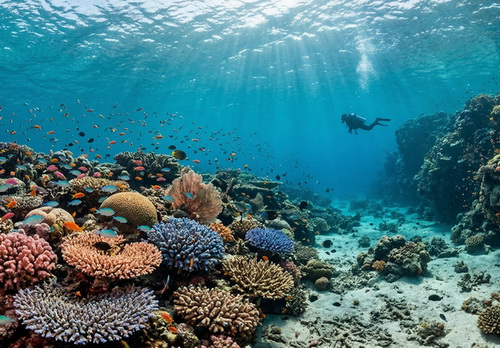
Fiji's waters consistently deliver exceptional clarity, allowing divers expansive views across diverse reef systems. Vibrant soft coral gardens transition into dramatic vertical drop-offs, revealing intricate marine ecosystems. These pristine conditions make appreciating the rich topography and abundant life beneath the surface a memorable experience, solidifying its place as a premier diving location.
Tonight's objective overview for No. 7 shows an air temperature of 27.1°C. The measured surface conditions include wave heights around 1.64m. This environmental data is logged for the close of the day.
Dive Site Coordinates
-19.0554, -169.9252
Dive Site Characteristics
Key Dive Site Facts
Dive Site Overview
Exploring Fiji's dive sites reveals a captivating array of underwater environments, from the nutrient-rich Bligh Water to the extensive Great Astrolabe Reef. Many sites feature impressive topography, including sloping pinnacles that concentrate schools of trevally and barracuda.
Significant areas like the Somosomo Strait host locations such as the Rainbow Reef, known for its vibrant corals and pelagic encounters, and the Great White Wall, a vertical wall descending deeper than 100 meters (300 feet). This drift dive often begins around 15 meters (49 feet), showcasing white Dendronepthya soft corals as divers descend. Dive conditions vary; some sites are accessible for beginners, yet many, especially in regions like Bligh Water and the Koro Sea, are best suited for experienced divers due to occasional medium to strong currents that facilitate superb drift dives.
The Beqa Lagoon's Shark Reef Marine Reserve also provides opportunities to observe various shark species among beautiful soft coral formations.
Best Time to Dive
Planning a dive trip to Fiji involves considering seasonal variations for optimal conditions. The months between April and October generally offer the best visibility across many sites. For those interested in specific marine encounters, manta ray season typically spans from November to May, while humpback whales may be sighted between July and September. Air temperatures are warmest from January to March, averaging 26.9-27.3°C (80.4-81.1°F), though these months also see higher rainfall, with January experiencing about 11.3 mm. Drier conditions and slightly cooler air temperatures, around 23.7-24.8°C (74.7-76.6°F), are common from July to September, aligning with peak visibility reports and lower wave heights, making these periods favorable for diving.
Climate Historical Averages
Monthly records compiled from satellite and marine observation nodes over the last 3 years. Data provided by Open-Meteo and MET Norway.
Dive Experience & Conditions
Navigating Fiji's diverse underwater environments often requires adaptability due to varying conditions. While some reef sites are accessible to beginner divers, particularly in calmer regions like the Mamanuca Islands with their gentle lagoons, many of Fiji’s premier locations recommend an Advanced Open Water certification. Currents can range from mild to strong, especially in areas like Somosomo Strait and parts of the Great Astrolabe Reef, making drift diving a common experience. The topography encompasses a dynamic mix of drop-offs, slopes, pinnacles, and intricate swim-throughs within canyons and tunnels. Water temperatures fluctuate, ranging from 24-30°C (75-86°F) in Somosomo Strait to 24-28°C (75-82°F) in Beqa Lagoon, and as low as 12-22°C (54-72°F) in the Great Astrolabe Reef, depending on the season.
Dive Difficulty & Safety Guidelines
Diving in Fiji presents specific conditions that require careful consideration for diver safety. Strong currents are a frequent occurrence at many sites, particularly those known for pelagic action and drift diving. It's crucial for divers to carry and be proficient in using a surface marker buoy (SMB) to enhance visibility to boats, especially after surfacing from a drift dive. A Nautilus Lifeline, a GPS device, is also recommended; it could significantly aid in location if a diver is carried away by currents. Divers should assess site conditions before entry and always dive within their certification limits. Understanding local currents and having appropriate training for such conditions is important.
Recommended Equipment
No verified equipment items yet.
Verified equipment recommendations for this dive site are being reviewed and may be added as additional source checks are completed.
Recommended Dive Suit
Water temperatures at No. 7 are currently estimated to be around 29°C (83°F), shaping the overall diving conditions for today. Surface air temperatures are resting at 27°C (81°F).
For the majority of recreational dives here, 2-3mm shorty or light wetsuit should provide suitable protection. Consider warmer surface protection (like a boat coat) due to brisk winds.
Environmental conditions are expected to remain consistent in the short-term outlook.
Conditions last reviewed: 18:00 using the latest environmental data.
Dive Logistics & Preparation
Hyperbaric Chamber
Check local Fiji medical facilities.
Entry Requirements
View Fiji Visa Hub
Currency
FJD
Nearest Airports
Nearest airports to help plan travel to this dive area.
Marine Life at No. 7
Underwater, Fiji supports a vibrant ecosystem, particularly celebrated for its abundance of colorful soft corals that often blanket the reef structures. These environments attract a wide range of marine life, from numerous species of tropical fish to larger pelagics. Divers frequently encounter a variety of sharks, including bull, tiger, white tip, black tip, grey reef, tawny nurse, sicklefin lemon, and silvertip sharks, especially in areas like the Shark Reef Marine Reserve. Fiji is also home to endemic species such as the Fiji anemone fish, flasher wrasse, and Terry’s dwarfgobie. Manta rays are a significant draw, congregating at cleaning stations, particularly around the Great Astrolabe Reef and Beqa Lagoon.
Dive Sites Near No. 7
View all dive sites in FijiDiscover more underwater gems in this area.

Dive Centers Near No. 7
No Dive Centers Local To No. 7
Are you a dive center visiting this location? Get listed to reach divers.
Frequently Asked Questions
Where are some of the best dive sites in Fiji?
Top dive sites include areas in Bligh Water, Namena Marine Reserve, and the Koro Sea, often accessed by liveaboard. The Somosomo Strait offers the Rainbow Reef and the Great White Wall. Beqa Lagoon's Shark Reef Marine Reserve and the extensive Great Astrolabe Reef are also highly regarded.
What kind of currents can I expect while diving in Fiji?
Currents vary significantly across sites. Many locations, particularly in Bligh Water and Somosomo Strait, are known for medium to strong currents, which create exciting drift dive opportunities. Some sheltered reefs in areas like the Mamanuca Islands generally offer calmer conditions.
Is Fiji suitable for beginner divers?
While many sites require some experience or an Advanced Open Water certification due to currents and depths, some reefs are accessible for beginners. The Mamanuca Islands, for example, are typified by calmer seas and easier-to-navigate coral reefs, making them suitable for less experienced divers.
What is the typical water temperature in Fiji?
Water temperatures in Fiji vary by region and season. Somosomo Strait ranges from 24° to 30°C (75° to 86°F), Beqa Lagoon is typically 24° to 28°C (75° to 82°F), and the Great Astrolabe Reef can range from 12° to 22°C (54° to 72°F) between summer and winter.
Are there specific seasons for encountering manta rays or whales?
Yes, manta ray season in Fiji is generally between November and May. For those hoping to see humpback whales, the prime viewing period is typically from July to September, aligning with cooler, drier months.
How do I get to Taveuni Island for diving in Somosomo Strait?
To reach Taveuni Island, you need to fly to Matei airport (TVU). Flights are available from the main island of Viti Levu, departing from either Nadi International Airport (NAN) or Nausori Airport (SUV). Once there, you can connect with local dive shops or resorts.
What types of sharks can be seen in Fiji?
Fiji is home to various shark species. Divers may encounter bull, tiger, white tip, black tip, grey reef, tawny nurse, sicklefin lemon, and silvertip sharks, particularly within marine reserves such as the Shark Reef Marine Reserve in Beqa Lagoon.
Liveaboards Sailing to No. 7
Explore highly rated liveaboards visiting this dive site and discover the best routes in Fiji.
Resorts & Accommodation
Find partner hotels and dive resorts directly accessing the reef.
Around This Area
Explore top-rated restaurants, activities, and attractions near No. 7 reviewed by travelers.
Planning to dive No. 7?
Send one inquiry and receive offers directly from the best verified local dive operators.