
Diving at Romagna (Italy)
Romagna's Adriatic seabed features a distinct topography, where a shallow coastal shelf gradually deepens, revealing historical wrecks. Artificial structures, such as the Paguro wreck, transform into vibrant marine habitats here. Submerged sites serve as foundational ecosystems, attracting diverse marine life and shaping the underwater landscape. It's a compelling dive destination for exploring history alongside biological observations, blending natural and human-made underwater features.
Evening condition tracking at Romagna features an air temperature of 26.5°C. We have recorded wave heights measuring 0.3 m during this period. These figures outline the environmental parameters currently present.
Dive Site Location & Key Facts
Dive Site Overview
Diving in Romagna offers an immersive journey into the Adriatic's rich, submerged past. Beneath the waves, a narrative of maritime history unfolds, inviting exploration.
A primary draw is the Paguro wreck, originally an oil platform that sank in 1965 following an explosion. Situated approximately 14 miles / 22.5 km offshore from Lido Adriano, it has since become a significant environmental conservation area, encompassing nearly 6,000 square meters.
Its extensive structure, a testament to industrial endeavor, now serves as a thriving habitat. Resting about 25 m / 82 ft down, the platform provides an accessible yet engaging deep dive for certified divers, attracting those keen on historical exploration combined with biological observation.
Beyond Paguro, Romagna's Adriatic seafloor conceals various other intriguing remnants. Divers can explore several cargo ships, bombers, and tugboats, each offering unique structural complexity and historical insight.
Many of these sites originate from World War II or early maritime trade, providing a tangible link to past events. These diverse submerged structures function as artificial reefs, fostering vibrant ecosystems where marine life thrives amidst the wreckage. Exploring these relics allows divers to witness the delicate balance between natural processes and human history, experiencing each descent as a discovery of both heritage and nature's resilience.
Witnessing these historical artifacts, now reclaimed by marine life, defines Romagna's distinctive underwater character.
Conditions are Good
07:00 - 14:00
Optimal conditions expected
Current conditions near Romagna show 27° air, 28° sea temperature, 0.3 m waves, and 24 km/h wind. Forecast data is refreshed regularly to ensure accuracy.
Best Time to Dive
Planning a dive in Romagna often prioritizes stable weather and clearer conditions, typically achieved during the warmer months. August generally offers excellent diving opportunities, marked by minimal rain, averaging just 0.17 mm, and the lowest average wave heights at 0.5 meters. Air temperatures during August can reach around 27°C / 81°F, contributing to comfortable surface conditions. While specific water temperature data isn't consistently reported for Romagna, it tends to align with air temperature trends, reaching its warmest in late summer. Other months, from February through December, also register 'Good' dive scores, particularly when rain is low (e.g., July at 0.01 mm) and wave heights remain manageable (e.g., June at 0.5 meters).
PEAK SEASON SCORE
Scores combine air & water temps, waves, wind & rainfall for overall conditions.
BEST MONTHS TO DIVE
Monthly records compiled from satellite and marine observation nodes over the last 3 years. Data provided by Open-Meteo and MET Norway.
Dive Experience & Conditions
Romagna's dive experience primarily centers around wreck exploration; sites like the Paguro wreck offer a distinct depth profile. A former oil platform, it sits approximately 25 m / 82 ft deep, providing a solid target for divers comfortable with moderate depths. Other identified wrecks, including cargo ships and military aircraft, add to the variety of submerged structures. Entry to these sites is exclusively by boat, typically arranged through local certified diving centers. Water here is consistently salt, typical of the Adriatic Sea. Visibility can vary, influenced by local weather patterns and proximity to the coastline, but often offers clear views of the wreck structures and their inhabitants.
Dive Difficulty & Safety Guidelines
Approaching diving in Romagna, especially its wreck sites, calls for specific training and adherence to local regulations. For divers keen to explore the deeper and more complex wreck environments, certifications such as PADI Advanced Open Water Diver, PADI Deep Diver, and PADI Wreck Diver are recommended.
These ensure divers possess the necessary skills and knowledge for overhead environments and extended bottom times. Paguro wreck itself is designated as an environmental conservation area, meaning fishing is strictly prohibited within its 6,000-square-meter boundaries.
Respecting this protected status is crucial for preserving the delicate ecosystem that has flourished around the wreck.
Recommended Equipment
Deep dive hazard. Increased narcosis and gas consumption risk.
Overhead / entanglement risk. Wreck penetration requires proper training.
- Dive Computer
- DSMB
- Primary & Backup Lights
- Wreck Reel
- Cutting Tool
This gear list is based on verified equipment signals for Romagna, Italy. Always confirm final gear choices with your dive operator, guide, or liveaboard.
Recommended Dive Suit
The latest conditions reported around Romagna place the water temperature close to 28°C (82°F). Surface air temperatures are resting at 27°C (80°F).
2-3mm shorty or light wetsuit generally offers enough warmth for most dives under these conditions. A hood or vest is suggested for sensitive divers due to surface winds.
Forecast trends indicate little change in overall diving conditions during the next few days.
Emergency & Medical Support
Essential information to help you plan your dive trip to Romagna.

Hyperbaric chambers are a critical part of dive safety infrastructure. Availability varies significantly by region, and not all dive areas have immediate access.
Before diving, it's recommended to:
- confirm nearest medical facilities
- check emergency procedures with local dive operators
- ensure dive insurance covers evacuation if required
Divers Alert Network
Diving emergency assistance available through DAN Europe.
+39 0642115685- 24/7 emergency hotline
- Diving medical assistance
- Evacuation coordination
Emergency contacts are provided for reference. Always verify local emergency services before diving.
Closest Listed Hyperbaric Chambers
Showing listed hyperbaric chamber facilities within 200 km of this dive site.
Distances are approximate straight-line distances and may not reflect emergency travel time.
Servizio di Medicina Iperbarica "Giancarlo Boero”
24/7 ListedICU CapableCagliari, Italy•Approx. 10 km straight-line
Servizio di Medicina Iperbarica "Giancarlo Boero”
24/7 ListedICU CapableInformation is provided for reference and planning purposes only. Dive Navigator does not verify operational status, staffing, availability, or quality of care at listed facilities. In an emergency, contact local emergency services, DAN, your dive operator, or the chamber directly. Do not travel to a facility without calling ahead.
CENTRO IPERBARICO SASSARESE SRL
Sassari, Italy•Approx. 196 km straight-line
CENTRO IPERBARICO SASSARESE SRL
Information is provided for reference and planning purposes only. Dive Navigator does not verify operational status, staffing, availability, or quality of care at listed facilities. In an emergency, contact local emergency services, DAN, your dive operator, or the chamber directly. Do not travel to a facility without calling ahead.
Marine Life at Romagna
Wrecks off Romagna, particularly the Paguro, are bustling with marine activity, often striking divers immediately upon approach. These artificial reefs act as magnets for a variety of species.
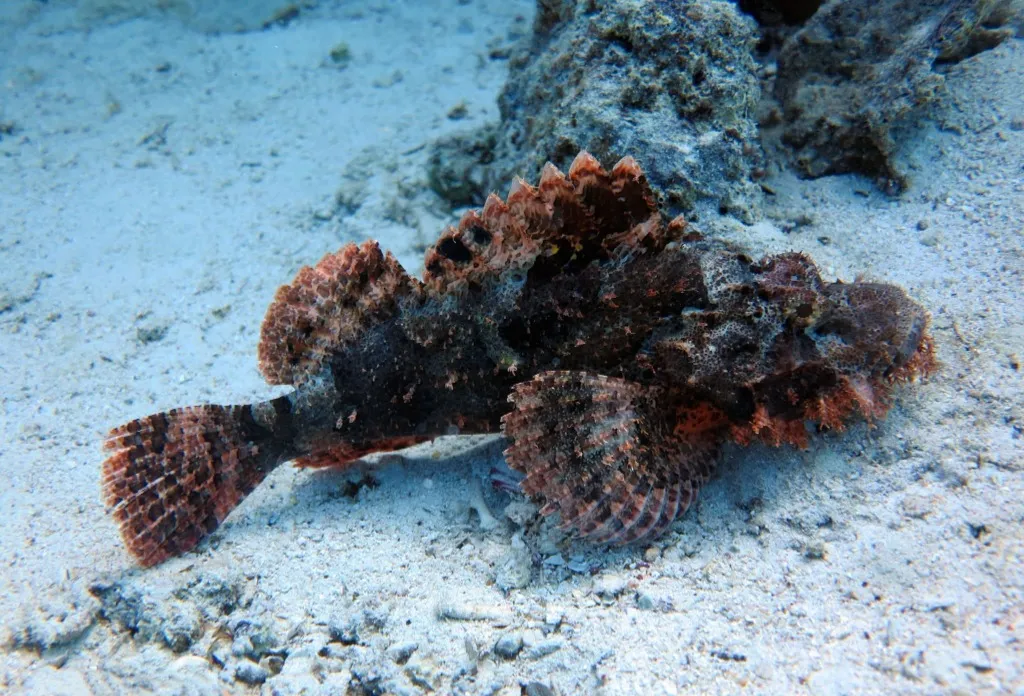
You'll likely encounter numerous invertebrates and crustaceans taking refuge in the wreck's crevices. Among the fish species, brown meagres, saddled seabreams, striped seabreams, and black scorpionfish are common sights. Night diving at these sites is noted to amplify encounters with a greater diversity of fauna.

Dive Sites Near Romagna
View all dive sites in ItalyDiscover more underwater gems in this area.
Dive Centers Near Romagna

Today: 08:30 - 13:00
Nearest Airports
Nearest airports to help plan travel to this dive area.
Search Flights
Check available flights and routes on Expedia, using the nearby airports listed in this section.
Search Flights on ExpediaFrequently Asked Questions
What is the primary dive attraction in Romagna?
The main attraction is the Paguro wreck, an former oil platform that sank in 1965. It's now a vibrant environmental conservation area and a popular dive site.
How deep is the Paguro wreck?
The Paguro wreck rests approximately 25 m / 82 ft down. This depth makes it accessible for divers with advanced open water certification.
What marine life can be seen around Romagna's wrecks?
Divers often observe various invertebrates, crustaceans, and fish species such as brown meagres, saddled seabreams, striped seabreams, and black scorpionfish. Night dives are reported to offer increased wildlife sightings.
Is Romagna suitable for beginner divers?
While general diving might be available, the primary attractions are wreck dives, which typically require specific training beyond entry-level certification, such as Advanced Open Water Diver.
What are the best months to dive in Romagna?
August generally provides excellent diving conditions with low rain and calm seas. Many other months, including February through December, also offer good diving, depending on daily weather patterns.
Are there any special regulations for diving the Paguro wreck?
Yes, the Paguro wreck is an environmental conservation area. Fishing is strictly prohibited within its boundaries to protect the marine ecosystem.
What types of wrecks are found in Romagna?
Beyond the Paguro oil platform, divers can explore various cargo ships, bombers, and tugboats resting on the Adriatic seafloor.
Planning to dive Romagna?
Send one inquiry and receive offers directly from the best verified local dive operators.
Conditions are Good
07:00 - 14:00
Optimal conditions expected
Current conditions near Romagna show 27° air, 28° sea temperature, 0.3 m waves, and 24 km/h wind. Forecast data is refreshed regularly to ensure accuracy.