
Diving at Alex van Opstal (United Kingdom)
Diving the Alex Van Opstal often provides a compelling experience, particularly during periods of settled weather. Accessible to qualified divers, the Belgian liner, a notable early casualty of World War Two, lies at a recreational depth range with its most intact sections. While conditions vary, the site is known as a potential 'good bad weather dive' due to its relative shelter and substantial structure.
As evening covers Alex van Opstal, the local air temperature is measured at 17.5°C. The current wave height at the surface is recorded at 1.7 m. These late-day readings characterize the surface conditions for the night.
Dive Site Location & Key Facts
Dive Site Overview
A Belgian liner built just two years prior, the Alex Van Opstal tragically became an early casualty of World War Two. On 15 September 1939, returning from New York to Antwerp and diverted to Weymouth for inspection, she struck a mine laid by a U-boat.
The explosion, occurring beneath the number two hold, was powerful enough to lift the 5965-ton cargo and passenger vessel from the water, breaking her back forward of the bridge. All 49 crew members and eight passengers were successfully rescued by the Greek steamship Atlanticos before the Alex Van Opstal sank. Its sinking also impacted local defences, disabling a submarine detection loop near the harbour.
Today, the wreck is a popular dive from Weymouth and Portland, particularly appreciated for its historical significance and structure. Her layout as a cargo and passenger vessel becomes apparent through the surviving features, even in her broken state.
The bow section remains largely intact, rising significantly from the seabed, presenting a substantial structure for exploration. Moving towards the midships, evidence of the violent explosion becomes clear, with plating peeled back and structural elements twisted.
Further aft, the stern reveals more extensive wreckage, offering a different landscape of debris and scattered components. Divers can explore various features, though careful navigation is essential given the ship's broken state and the potential for snagging on exposed metal. Visibility often dictates the scope of the exploration, with clearer days allowing a broader appreciation of the sheer scale of the vessel and her tragic end. Even in lesser visibility, the sheer mass of the wreck provides a compelling dive experience.
Conditions are Moderate
High Wind Advisory (44km/h). Unsafe surface.
Current conditions near Alex van Opstal show 17° air, 17° sea temperature, 1.8 m waves, and 44 km/h wind. Forecast data is refreshed regularly to ensure accuracy.
Best Time to Dive
Optimising the diving experience at Alex Van Opstal hinges on choosing the right conditions, with the late spring and summer months generally offering the most favourable window. May and June typically present 'Good' dive scores, benefiting from average air temperatures of 12.5°C (54°F) and 15°C (59°F) respectively, coupled with significantly lower wave heights (around 0.9m / 3 ft) and reduced wind speeds compared to winter. Rainfall is also minimal during these months, averaging 1.5mm (0.06 in) in May and 0.9mm (0.035 in) in June. July, August, and September also offer 'Moderate' dive scores, though with slightly increased wave heights and rainfall. For optimal safety and comfort, diving the Alex Van Opstal is best approximately 2.5 hours before high water Portland, aligning with specific tidal patterns east of the Shambles Bank.
PEAK SEASON SCORE
Scores combine air & water temps, waves, wind & rainfall for overall conditions.
BEST MONTHS TO DIVE
Monthly records compiled from satellite and marine observation nodes over the last 3 years. Data provided by Open-Meteo and MET Norway.
Dive Experience & Conditions
Descending onto the Alex Van Opstal, divers encounter a wreck tipped dramatically to port, lying with its bow just east of north. The deck is close to vertical, with the starboard side rising a good 5m (16 ft) from the 30m (100 ft) seabed. This initial bow section is easily identifiable, aiding orientation. Following the starboard side, divers will pass a pair of bollards, a reel of mooring cable, and an intact stockless anchor tight within its hawse-pipe. A mast stub and derrick beam mark the deck, with an anchor-winch behind it. Further aft, the wreck becomes more broken; a major break exists where the mine exploded, making navigation tricky. Without careful attention to the wreck's line or the keel, divers might find themselves looping back to the bow. In good visibility, features like cargo winches and goalpost masts are discernible, but poor visibility can significantly challenge navigation, potentially causing divers to lose the wreck's main line.
Dive Difficulty & Safety Guidelines
Approaching the Alex Van Opstal demands specific diving qualifications; PADI Advanced Open Water or BSAC Sports Diver certification is recommended, as parts of the wreck lie just a metre deeper than typical AOW limits. Given its position east of the Shambles Bank, precise tidal planning is crucial; the wreck is only safely diveable approximately 2.5 hours before high water Portland. Navigation, particularly between the more intact forward and broken aft sections, can be challenging, especially in limited visibility.
Divers must carefully judge the wreck's line to avoid disorientation or unintentionally circling back. While some internal spaces exist in the bow, their exploration requires appropriate experience and preparation.
Recommended Equipment
Overhead / entanglement risk. Wreck penetration requires proper training.
- Dive Computer
- DSMB
- Primary & Backup Lights
- Wreck Reel
- Cutting Tool
This gear list is based on verified equipment signals for Alex van Opstal, United Kingdom. Always confirm final gear choices with your dive operator, guide, or liveaboard.
Recommended Dive Suit
Repeated dives during the same day can gradually reduce overall body warmth.
Divers exploring Alex van Opstal today will likely encounter water temperatures close to 17°C (62°F). Surface air temperatures are resting at 17°C (63°F). Divers spending extended time underwater often rely on 5-7mm wetsuit for balanced warmth and flexibility. Strong winds are present; please take strong precautions against rapid cooling during surface intervals.
The upcoming forecast points to generally steady conditions in the area.
Emergency & Medical Support
Essential information to help you plan your dive trip to Alex Van Opstal.

Hyperbaric chambers are a critical part of dive safety infrastructure. Availability varies significantly by region, and not all dive areas have immediate access.
Before diving, it's recommended to:
- confirm nearest medical facilities
- check emergency procedures with local dive operators
- ensure dive insurance covers evacuation if required
Divers Alert Network
Diving emergency assistance available through DAN Europe.
+39 0642115685- 24/7 emergency hotline
- Diving medical assistance
- Evacuation coordination
Emergency contacts are provided for reference. Always verify local emergency services before diving.
Closest Listed Hyperbaric Chambers
Showing listed hyperbaric chamber facilities within 200 km of this dive site.
Distances are approximate straight-line distances and may not reflect emergency travel time.
Hyperbaric Medicine Unit, St Richard’s Hospital
24/7 ListedChichester, United Kingdom•Approx. 111 km straight-line
Hyperbaric Medicine Unit, St Richard’s Hospital
24/7 ListedInformation is provided for reference and planning purposes only. Dive Navigator does not verify operational status, staffing, availability, or quality of care at listed facilities. In an emergency, contact local emergency services, DAN, your dive operator, or the chamber directly. Do not travel to a facility without calling ahead.
DDRC Healthcare
24/7 ListedICU CapablePlymouth, United Kingdom•Approx. 131 km straight-line
DDRC Healthcare
24/7 ListedICU CapableInformation is provided for reference and planning purposes only. Dive Navigator does not verify operational status, staffing, availability, or quality of care at listed facilities. In an emergency, contact local emergency services, DAN, your dive operator, or the chamber directly. Do not travel to a facility without calling ahead.
London Hyperbaric Medicine
Leytonstone, London, United Kingdom•Approx. 197 km straight-line
London Hyperbaric Medicine
Information is provided for reference and planning purposes only. Dive Navigator does not verify operational status, staffing, availability, or quality of care at listed facilities. In an emergency, contact local emergency services, DAN, your dive operator, or the chamber directly. Do not travel to a facility without calling ahead.
Marine Life at Alex van Opstal
While specific marine life sightings vary with visibility and season, the Alex Van Opstal wreck serves as an artificial reef, attracting a range of temperate water species. Divers may observe various crustaceans sheltering within the wreckage, alongside different species of fish that use the structure for refuge and feeding.
Anemones and other invertebrates commonly colonise the metal surfaces, creating colourful patches across the ship's remains. Larger pelagic species are occasionally sighted, drawn to the concentration of life around the wreck, though these encounters are less consistently reported.
Dive Sites Near Alex van Opstal
View all dive sites in United KingdomDiscover more underwater gems in this area.
Dive Centers Near Alex van Opstal
Today: 09:00 - 17:00
Nearest Airports
Nearest airports to help plan travel to this dive area.
Search Flights
Check available flights and routes on Expedia, using the nearby airports listed in this section.
Search Flights on ExpediaFrequently Asked Questions
Where is the Alex Van Opstal located?
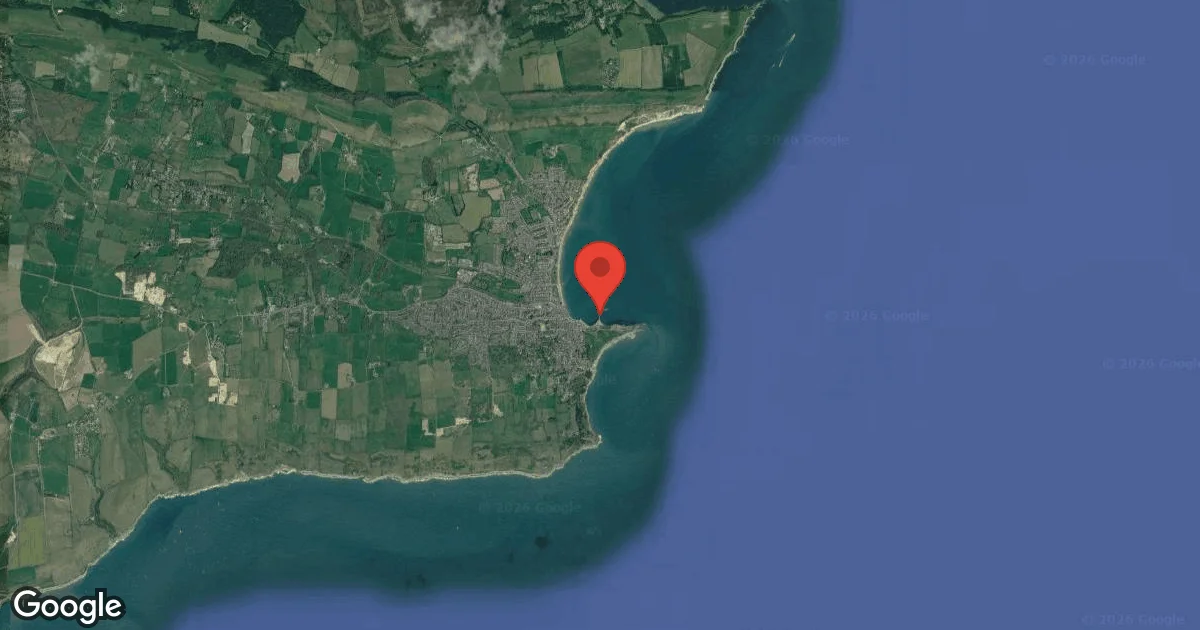
Located approximately five miles south of Lulworth Cove, near the Shambles Bank, off the coast of Weymouth, United Kingdom, the Alex Van Opstal wreck has GPS coordinates of 50 32.437N, 002 16.133W.
What is the maximum depth of the Alex Van Opstal?
Resting on a seabed of approximately 30m (100 ft), the Alex Van Opstal has shallower sections accessible where parts of the wreck, such as the bow, rise significantly.
What diving qualification is needed for this wreck?
PADI Advanced Open Water or BSAC Sports Diver certification is generally recommended. The wreck's depth and potential navigation challenges make it suitable for divers with intermediate experience.
When is the best time to dive the Alex Van Opstal?
Late spring and summer, particularly May and June, typically offer the best time for diving, with calmer weather and higher dive scores. Always plan your dive for approximately 2.5 hours before high water Portland due to specific tidal conditions.
What are the main navigational challenges on the wreck?
Extensively broken where the mine exploded, navigation beyond the bow section can be tricky. Divers must pay close attention to the wreck's general line, especially in poor visibility, to avoid getting disoriented or inadvertently looping back.
Can divers enter the Alex Van Opstal?
There are a few holes to explore inside the bow for those suitably experienced and prepared for wreck penetration. Any internal exploration should only be attempted by divers with appropriate training, equipment, and experience.
What was the Alex Van Opstal's historical significance?
This Belgian liner was one of the first large ships lost to mines at the start of World War Two. Sunk on 15 September 1939, just two weeks after the German invasion of Poland, its loss highlighted the early dangers of naval warfare in the region.
Planning to dive Alex van Opstal?
Send one inquiry and receive offers directly from the best verified local dive operators.
Conditions are Moderate
High Wind Advisory (44km/h). Unsafe surface.
Current conditions near Alex van Opstal show 17° air, 17° sea temperature, 1.8 m waves, and 44 km/h wind. Forecast data is refreshed regularly to ensure accuracy.