
Diving atGoing Throught (Greece)
Embark on an underwater journey through Greece's diverse dive sites, where ancient history meets vibrant marine ecosystems. With countless islands dotting the Aegean and Ionian seas, divers can discover everything from dramatic wall dives and expansive reefs to compelling shipwrecks and intricate cave systems. Whether you're a novice or an experienced explorer, the Mediterranean waters around Greece offer a rich tapestry of experiences awaiting discovery beneath the waves.
As evening covers Going Throught, the local air temperature is measured at 17.4°C. The current wave height at the surface is recorded at 0.34m. These late-day readings characterize the surface conditions for the night.
Dive Site Coordinates
35.4175, 25.0210
Key Dive Site Facts
Dive Site Overview
Across Greece, divers encounter a wide array of underwater topographies, largely dominated by extensive reef formations and dramatic wall dives. Many sites feature captivating shipwrecks, remnants of maritime history now serving as artificial reefs that attract a host of marine creatures.
For instance, the 'Marianna' wreck near Naxos provides an accessible experience at 23 m (75 ft), suitable for beginners and intermediate divers exploring a cargo ship from 1981. Another popular wreck, the 'Anna II' off Mykonos, lies at 25 m (82 ft), offering limited penetration diving within the light zone.
Beyond these historical sites, locations like Mirmigi Reef in Lesvos present otherworldly volcanic formations, starting at shallower depths and gradually descending to 36 m (118 ft). The varied seabed includes sandy areas alongside impressive rock formations, creating habitats for diverse species.
Greece's diving landscape also features numerous caverns and intricate cave systems, particularly around islands like Chios and Tragonisi, which cater to more advanced divers seeking overhead environments and unique geological features. Each site offers a distinct glimpse into the country's rich underwater world.
Best Time to Dive
Planning your dive in Greece often means prioritizing calm seas and optimal visibility. The summer months, particularly from June through October, generally offer the most stable conditions with notably low rainfall, often less than 1 mm in July and August. Air temperatures during this peak season range from approximately 25°C (77°F) to over 28°C (82°F), providing comfortable surface intervals. While wave heights remain relatively low year-round, averaging below 1 meter, summer typically sees the calmest waters, reducing chop and enhancing underwater clarity. This period is also characterized by consistent 'Good' dive scores. However, divers can find favorable conditions throughout the year; even the cooler months from January to May maintain 'Good' scores, with air temperatures between 13°C (55°F) and nearly 20°C (68°F), though rain activity is slightly higher.
Climate Historical Averages
Monthly records compiled from satellite and marine observation nodes over the last 3 years. Data provided by Open-Meteo and MET Norway.
Dive Experience & Conditions
Navigating the waters around Greece offers a range of experiences, primarily dictated by local current dynamics. While many areas, especially in the Cyclades, boast calm seas and an absence of fast-moving currents during the long summer months, strong meltemi winds can sometimes create choppy conditions and affect visibility in exposed sites like those off Mykonos. Visibility across Greek dive sites is frequently reported as excellent, with some areas like Naxos offering gin-clear waters extending beyond 30 meters (100 ft). Depths vary significantly across these dive environments, accommodating all certification levels. Shallow reef areas provide ideal training grounds for beginners, while deeper wall dives, wrecks, and caverns challenge advanced divers, some extending beyond recreational limits. This diversity ensures that whether you're seeking a gentle drift or a more demanding exploration, conditions can be found to match your skill and preference.
Dive Difficulty & Safety Guidelines
Adhering to established safe diving practices is paramount in Greece's waters. While specific hazards are not consistently reported for every site, divers should always assess local conditions, including currents and weather, before entering the water. Since blanket diving restrictions were lifted in 2005, the region has become more accessible, but responsible diving remains crucial. Respecting marine life and avoiding contact with delicate ecosystems like coral and sponges helps preserve these environments. Always dive within your certification limits and consider the guidance of local dive centers, particularly for advanced sites such as deep wrecks or intricate cave systems. Familiarize yourself with emergency procedures and ensure your equipment is well-maintained.
Recommended Equipment
No verified equipment items yet.
Verified equipment recommendations for this dive site are being reviewed and may be added as additional source checks are completed.
Recommended Dive Suit
Experienced divers often bring flexible gear options.
Environmental readings suggest that the waters surrounding Going Throught are about 18°C (65°F) at the moment. Surface air temperatures are resting at 17°C (63°F). Divers who spend longer periods underwater often choose 5mm wetsuit.
The next few days appear likely to bring similar environmental conditions.
Conditions last reviewed: 18:00 using the latest environmental data.
Dive Logistics & Preparation
Hyperbaric Chamber
Check local Greece medical facilities.
Entry Requirements
View Greece Visa Hub
Currency
EUR
Nearest Airports
Nearest airports to help plan travel to this dive area.
Marine Life at Going Throught
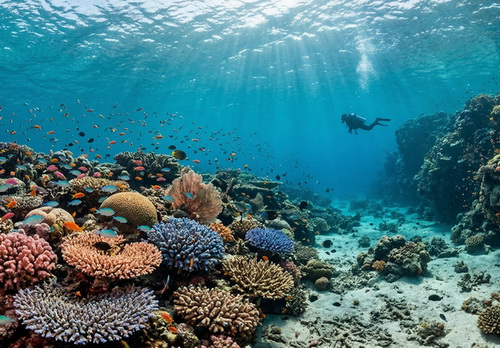
Among Greece's diverse underwater landscapes, a rich variety of marine life thrives across reefs, walls, and artificial structures. Reefs and shallower areas are home to vibrant wrasses, perches, and schools of small fish. Exploring the volcanic formations or older lava flows might reveal colorful sponges and moray eels subtly lurking within crevices. During spring and summer, fortunate divers may encounter sea turtles gliding gracefully along shallow reef edges. Deeper sections or open water can bring sightings of faster-moving tuna or even the occasional swordfish. For macro enthusiasts, looking closely reveals seahorses, octopuses, and squid, while the protected caverns around Tragonisi may, on rare occasions, offer glimpses of the endangered monk seal.
Dive Sites Near Going Throught
View all dive sites in GreeceDiscover more underwater gems in this area.

Dive Centers Near Going Throught
No Dive Centers Local To Going Throught
Are you a dive center visiting this location? Get listed to reach divers.
Frequently Asked Questions
What types of dive sites are most common in Greece?
Greece offers a broad range of dive sites, with a significant number being reef and wall dives. There are also numerous compelling wreck dives, from cargo ships to passenger vessels, and a growing number of accessible cave and cavern systems for various skill levels.
Is Greece suitable for beginner divers?
Absolutely. Many regions, like Naxos, feature calm, shallow waters with good visibility and an absence of strong currents, creating ideal conditions for beginners to hone their skills. Several wrecks, such as the 'Santa Maria' around 18 meters, are also suitable for entry-level wreck diving experiences.
What is the visibility like in Greek waters?
Visibility in Greece is generally excellent, often exceeding 30 meters in many locations, especially during the calmer summer months. The clear Mediterranean waters provide great conditions for underwater photography and exploration.
Are there many wrecks to explore?
Yes, Greece is rich in maritime history and offers numerous wrecks, both ancient and modern. Popular examples include the 'Marianna' and 'Anna II', which have become artificial reefs teeming with marine life, along with historical ships like the 'Peloponnisos'.
What marine life can I expect to see?
Divers can expect to see a variety of Mediterranean species, including wrasses, perches, tuna, and moray eels. Depending on the season and site, encounters with sea turtles, octopuses, seahorses, and colorful sponges are also possible. Rare sightings of swordfish or even monk seals have been reported.
When is the water warmest for diving?
While specific water temperature data is not consistently reported, the warmest conditions for diving typically align with the peak summer months, from July through September. Surface air temperatures during this period average well above 25°C (77°F), suggesting comfortable water temperatures for diving.
Liveaboards Sailing to Going Throught
Explore highly rated liveaboards visiting this dive site and discover the best routes in Greece.
Resorts & Accommodation
Find partner hotels and dive resorts directly accessing the reef.
Around This Area
Explore top-rated restaurants, activities, and attractions near Going Throught reviewed by travelers.
Planning to dive Going Throught?
Send one inquiry and receive offers directly from the best verified local dive operators.